
Human Health and Disease for NEET: Chapter 7 Guide and Traps
Human health and disease is Chapter 7 of NCERT Class 12 Biology and the first bullet of Unit 8, Biology and Human Welfare, in the NMC syllabus for NEET (UG). It covers the pathogens behind common diseases, how the immune system fights them, AIDS, cancer, and drug and alcohol abuse. The chapter is mostly facts to match: organism to disease, vector to pathogen, antibody to job. This guide maps human health and disease to the syllabus line by line, puts every match into tables, and lists the traps that cost marks.
What is human health and disease in NEET?
Human health and disease is the NEET chapter that explains what keeps the body healthy and what makes it ill. It names the pathogens and vectors behind ten common diseases, the innate and acquired arms of immunity, vaccines and allergies, and three major threats: AIDS, cancer, and drug, alcohol and tobacco abuse. It is NCERT Class 12 Biology Chapter 7.
NCERT opens with a definition worth learning word for word. Health "does not simply mean absence of disease or physical fitness". It is "a state of complete physical, mental and social well-being". The chapter then lists three things that affect health: genetic disorders, infections, and lifestyle, which includes food, water, rest, exercise and habits.
Diseases are split into two groups. Infectious diseases pass easily from one person to another; AIDS is the fatal example NCERT gives. Non-infectious diseases do not spread, and among them cancer is the major cause of death. Drug and alcohol abuse sits in its own section at the end.
Where is human health and disease in the NEET syllabus?
Human health and disease sits in Biology Unit 8, Biology and Human Welfare, of the NMC syllabus for NEET (UG) 2026, dated 22 December 2025. The second bullet of the same unit is microbes in human welfare, which NCERT teaches separately as Chapter 8. Read the first bullet as a checklist:
| Syllabus phrase (Unit 8) | Where NCERT teaches it | What questions ask |
|---|---|---|
| Health and Disease; Pathogens; parasites causing human diseases | Chapter opening and section 7.1 | Definitions, infectious vs non-infectious |
| Malaria, Filariasis, Ascariasis, Typhoid, Pneumonia, common cold, amoebiasis, ring worm | Section 7.1 | Pathogen, vector, organ, symptom, test |
| Dengue, chikungunya | One sentence in section 7.1 (Aedes vector) | Vector and its control |
| Basic concepts of immunology, vaccines | Section 7.2 | Barriers, antibodies, active vs passive, lymphoid organs |
| Cancer, HIV and AIDS | Sections 7.3 and 7.4 | HIV cycle, ELISA, benign vs malignant, carcinogens |
| Adolescence, drug and alcohol abuse, tobacco abuse | Section 7.5 | Drug source plant, action, effects, prevention |
Look closely at row three. The syllabus lists dengue and chikungunya by name, but NCERT mentions them only once, as vector-borne diseases spread by Aedes mosquitoes, while explaining vector control. So what can be asked? Only what that sentence supports: the Aedes vector and the measures that stop mosquitoes breeding. Do not hunt for a dengue life cycle; the textbook has none.
The NEET (UG) 2026 information bulletin answers "Is there any change in the syllabus?" with "No". As of 8 November 2026, NTA's examination calendar up to April 2027 lists no NEET (UG) 2027 date and no 2027 notice has appeared, so the 2026 text is the latest official version. Our NEET Biology syllabus guide shows where Unit 8 sits among all ten units.
How many marks can this chapter carry?
Human health and disease competes for marks inside a Biology section of 90 questions worth 360 of the 720 marks, as the 2026 bulletin fixes it. NTA does not publish how many questions come from each chapter, so any exact count you see online is an estimate. What is certain: plus four for a right answer, minus one for a wrong one.
That marking scheme matters more here than in most chapters. Questions on human health and disease are short, factual and quick to answer, which makes them easy marks if your matches are sharp and expensive guesses if they are not. Our page on negative marking in NEET explains when an educated guess is worth the risk.
Which pathogen causes which disease?
Every disease in section 7.1 of human health and disease belongs to one of five groups of pathogens: bacteria, viruses, protozoans, helminths (worms) and fungi. Learn this table across the rows, then cover a column and test yourself. All of it is from NCERT section 7.1.
| Disease | Pathogen | Group | How it spreads | Key NCERT detail |
|---|---|---|---|---|
| Typhoid | Salmonella typhi | Bacterium | Contaminated food and water | Sustained fever of 39 to 40°C; confirmed by the Widal test; "Typhoid Mary" |
| Pneumonia | Streptococcus pneumoniae, Haemophilus influenzae | Bacteria | Droplets, shared glasses and utensils | Infects the alveoli; lips and nails may turn grey to bluish |
| Common cold | Rhinoviruses | Virus | Droplets, contaminated objects | Nose and respiratory passage, not the lungs; lasts 3 to 7 days |
| Malaria | Plasmodium vivax, P. malaria, P. falciparum | Protozoan | Bite of the female Anopheles mosquito | Haemozoin causes chill and fever every 3 to 4 days |
| Amoebiasis | Entamoeba histolytica | Protozoan | Faecally contaminated food and water | Large intestine; houseflies are mechanical carriers |
| Ascariasis | Ascaris | Helminth (roundworm) | Eggs in soil, water, vegetables | Internal bleeding, anaemia, blocked intestine |
| Filariasis (elephantiasis) | Wuchereria bancrofti, W. malayi | Helminth (filarial worm) | Bite of female mosquito vectors | Chronic inflammation of lymphatic vessels of the lower limbs |
| Ringworm | Microsporum, Trichophyton, Epidermophyton | Fungi | Soil, shared towels, clothes, combs | Dry scaly itchy lesions; heat and moisture help |
| Dengue, chikungunya | Not named in NCERT | Spread by Aedes mosquitoes | Mosquito bite | Prevented by vector control |
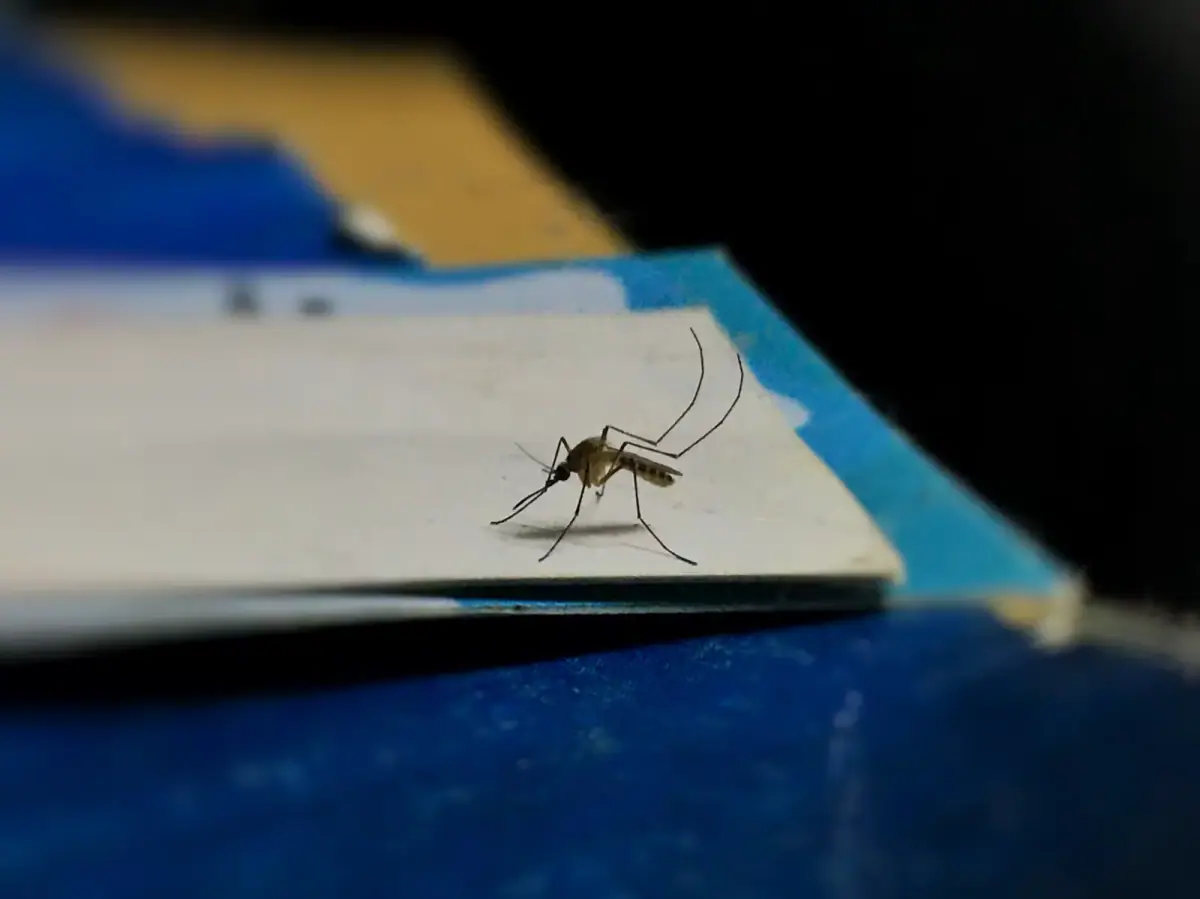
Prevention follows the route of spread. For food and water borne diseases (typhoid, amoebiasis, ascariasis), NCERT stresses personal and public hygiene: clean drinking water, proper disposal of waste and excreta, and disinfected water tanks. For air-borne ones (pneumonia, common cold), avoid close contact with the infected person and their belongings. For vector-borne ones (malaria, filariasis, dengue, chikungunya), control the mosquito: no stagnant water, clean coolers, mosquito nets, wire mesh on windows, insecticides, and Gambusia fish in ponds to eat the larvae.
How does the life cycle of Plasmodium work?
Plasmodium needs two hosts, a human and a female Anopheles mosquito, and the mosquito is also the vector. It enters humans as sporozoites, multiplies in liver cells, then bursts red blood cells. The toxin haemozoin, released when RBCs rupture, causes the recurring chill and high fever. Figure 7.1 in NCERT shows the full loop.
Here is the cycle in the order NCERT gives it:
- An infected female Anopheles mosquito bites a person and injects sporozoites, the infectious form.
- The parasites multiply inside liver cells.
- They then attack red blood cells, which rupture.
- Rupture releases haemozoin, which causes chill and high fever recurring every three to four days.
- A female Anopheles bites this infected person and takes up the parasites.
- The parasites develop and multiply inside the mosquito and form sporozoites, which are stored in its salivary glands.
- The mosquito bites the next person and the cycle starts again.
Of the three species NCERT names, P. falciparum causes malignant malaria, the most serious form, which can be fatal. The scale is real: the WHO malaria fact sheet estimates 282 million malaria cases and 610,000 malaria deaths worldwide in 2024. WHO also notes that there are five Plasmodium species that infect humans, so treat NCERT's list of three as the exam list, not the complete one.
What is the difference between innate and acquired immunity?
Immunity is the overall ability of the host to fight disease-causing organisms, conferred by the immune system. Innate immunity is non-specific and present from birth; it works through four types of barriers. Acquired immunity is pathogen specific and has memory: a weak primary response on first contact, then a much stronger secondary (anamnestic) response the next time.
The four innate barriers are the most listable part of human health and disease:
| Barrier | Examples in NCERT |
|---|---|
| Physical | Skin; mucus coating of the respiratory, gastrointestinal and urogenital tracts |
| Physiological | Acid in the stomach, saliva in the mouth, tears from the eyes |
| Cellular | Neutrophils (PMNL), monocytes and natural killer cells in blood; macrophages in tissues |
| Cytokine | Interferons secreted by virus-infected cells, which protect non-infected cells |
Acquired immunity runs on two kinds of lymphocytes. B lymphocytes produce antibodies into the blood; this is the humoral, antibody-mediated response. T lymphocytes do not secrete antibodies, but they help B cells make them, and they carry out cell-mediated immunity (CMI). CMI is why a transplanted organ is rejected unless tissues and blood groups are matched, and why the patient takes immunosuppressants for life.
Each antibody has four peptide chains, two light and two heavy, written H2L2. NCERT names four types: IgA, IgM, IgE and IgG. Figure 7.4 is the antibody cartoon, and the NEET Biology diagrams guide ranks it among the figures you should be able to label on sight.
Active vs passive immunity, with vaccines
Active immunity is what your own body makes after meeting an antigen, from natural infection or a vaccine. It is slow to build but lasts. Passive immunity is ready-made antibodies given from outside. It acts at once but your body did not make it. NCERT's examples sort neatly:
| Type | How you get it | NCERT examples |
|---|---|---|
| Active, natural | Infection by a pathogen | Recovering from an infection |
| Active, artificial | Vaccination with antigens or weakened or killed pathogens | Routine immunisation; hepatitis B vaccine made in yeast |
| Passive, natural | Antibodies from the mother | IgA in colostrum; antibodies across the placenta |
| Passive, artificial | Injected preformed antibodies | Tetanus antitoxin; anti-venom for snakebite |
Vaccination works because the immune system remembers. The vaccine triggers antibodies and also memory B and T cells, which recognise the real pathogen fast and overwhelm it. NCERT credits vaccines with eradicating smallpox and largely controlling polio, diphtheria, pneumonia and tetanus. The yeast-made hepatitis B vaccine is recombinant DNA technology in action, which our guide to biotechnology principles and processes explains step by step.
Two more ideas complete section 7.2. Allergy is an exaggerated immune response to allergens such as dust mites, pollen and animal dander; the antibodies are IgE, and mast cells release histamine and serotonin. Anti-histamines, adrenalin and steroids relieve the symptoms. Autoimmunity is when the body attacks its own cells, and rheumatoid arthritis is NCERT's example.
Which lymphoid organs should you know?
Lymphoid organs are where lymphocytes originate, mature and multiply. The primary lymphoid organs are the bone marrow and thymus, where immature lymphocytes become antigen-sensitive. The secondary ones are the spleen, lymph nodes, tonsils, Peyer's patches of the small intestine and the appendix, where lymphocytes meet antigens and become effector cells.
A few details are classic one-liners. The bone marrow produces all blood cells, lymphocytes included. The thymus is large at birth and shrinks to a very small size by puberty. The spleen filters blood, traps blood-borne microbes and holds a large reservoir of red cells. Lymph nodes trap antigens in the lymph. And mucosa-associated lymphoid tissue (MALT), in the lining of the respiratory, digestive and urogenital tracts, makes up about 50 per cent of the body's lymphoid tissue. If lymph and tissue fluid feel hazy, revise body fluids and circulation first.
How does HIV cause AIDS?
AIDS stands for Acquired Immuno Deficiency Syndrome. It is caused by HIV, a retrovirus with an RNA genome inside an envelope. HIV enters macrophages, where reverse transcriptase copies its RNA into DNA that joins the host's DNA, so macrophages become an "HIV factory". It then destroys helper T cells, and falling helper T counts leave the body open to infections.
The full sequence from NCERT section 7.3:
- HIV enters the body through sexual contact, contaminated blood or blood products, shared needles, or from an infected mother to her child through the placenta.
- It enters macrophages. Reverse transcriptase makes viral DNA from the RNA genome.
- The viral DNA is incorporated into the host cell's DNA, and the cell produces new virus particles.
- HIV also enters helper T lymphocytes (TH), replicates, and the new viruses attack more helper T cells.
- Helper T numbers fall steadily. The person has bouts of fever, diarrhoea and weight loss.
- Infections the body could normally overcome take hold, such as Mycobacterium, viruses, fungi and Toxoplasma.
The gap between infection and symptoms ranges from a few months to many years, usually 5 to 10. HIV does not spread by touch; it spreads only through body fluids. ELISA (enzyme linked immuno-sorbent assay) is the widely used test. In India, NACO (National AIDS Control Organisation) leads awareness work.
One number in the textbook has aged. NCERT says AIDS has killed "more than 25 million persons" since 1981. The current WHO HIV fact sheet says HIV has claimed an estimated 44.2 million lives to date, with 41.0 million people living with HIV at the end of 2025, 1.2 million new infections and 570,000 deaths that year. For NEET, answer with NCERT's figure if a question quotes the textbook.
How is cancer different from a normal cell?
Cancer cells have lost contact inhibition, the property that stops normal cells dividing when they touch other cells. So they keep dividing and form tumours. Benign tumours stay where they started and cause little damage. Malignant tumours invade nearby tissue, and their cells travel through blood to start new tumours elsewhere, a property called metastasis.
The cancer part of human health and disease is a set of lists you should be able to complete:
- Carcinogens (causes): ionising radiation (X-rays, gamma rays), non-ionising UV, chemical carcinogens in tobacco smoke (a major cause of lung cancer), and oncogenic viruses carrying viral oncogenes. Normal cells also carry proto-oncogenes, or cellular oncogenes (c-onc), which can cause cancer when activated.
- Detection: biopsy and histopathology, blood and bone marrow tests for leukaemia, radiography, CT and MRI, and antibodies against cancer-specific antigens. CT uses X-rays to build a three-dimensional image; MRI uses strong magnetic fields and non-ionising radiation.
- Treatment: surgery, radiotherapy, chemotherapy and immunotherapy, often in combination. Patients may get biological response modifiers such as α-interferon to activate the immune system.
Biopsy and histopathology are a pathologist's daily work, which is one reason our guide to becoming a pathologist in India starts from this chapter.
Which drugs does NCERT name, and what do they do?
NCERT groups commonly abused drugs into opioids, cannabinoids and coca alkaloids, mostly from flowering plants. Opioids such as heroin are depressants. Cannabinoids act on brain receptors and affect the cardiovascular system. Cocaine blocks dopamine transport and stimulates the central nervous system. Learn each drug with its source plant and its action.
| Drug | Source | Action in NCERT | Usual route |
|---|---|---|---|
| Heroin (smack), diacetylmorphine | Acetylation of morphine from the latex of the poppy, Papaver somniferum | Depressant; binds opioid receptors in the CNS and gut | Snorting, injection |
| Morphine | Poppy latex | Effective sedative and painkiller after surgery | Medical use |
| Marijuana, hashish, charas, ganja | Inflorescences, leaves and resin of Cannabis sativa | Act on cannabinoid receptors, mainly in the brain; affect the cardiovascular system | Inhalation, oral |
| Cocaine (coke, crack) | Erythroxylum coca, native to South America | Interferes with dopamine transport; euphoria; hallucinations at high doses | Snorting |
| Hallucinogenic plants | Atropa belladonna, Datura | Hallucinogenic properties | Not stated |
| Nicotine (tobacco) | Tobacco | Stimulates the adrenal gland to release adrenaline and noradrenaline; raises blood pressure and heart rate | Smoking, chewing, snuff |
Smoking also raises carbon monoxide in the blood and lowers haem-bound oxygen. NCERT then separates two words students mix up. Addiction is a psychological attachment to the effects of a drug, and it grows as receptor tolerance rises. Dependence is the body's withdrawal syndrome (anxiety, shakiness, nausea, sweating) when a regular dose stops. Anabolic steroid misuse in sport has a long list of side effects that differ for males and females, so learn them as two separate lists.
The section ends on adolescence, which NCERT places between 12 and 18 years, and on five prevention measures: avoid undue peer pressure, education and counselling, help from parents and peers, watching for danger signs, and professional and medical help. NCERT names exam pressure as one cause of drug use. If that pressure is something you feel, talking to a parent, teacher or doctor is the step the textbook itself recommends.
Eight traps in human health and disease questions
Most marks in human health and disease are lost on near-miss matches. Check every answer against this list.
- Male or female mosquito. Only the female Anopheles transmits malaria, and the vector for filariasis is also a female mosquito.
- Infectious form vs toxin. Sporozoites are the infectious form that enters humans; haemozoin is the toxin that causes the fever.
- Lungs or not. Pneumonia infects the alveoli. The common cold infects the nose and respiratory passage but not the lungs.
- Which antibody. IgE in allergy, IgA in colostrum. An antibody is H2L2, not H1L1 or H4L4.
- Active vs passive. A vaccine gives active immunity; antitoxin and anti-venom give passive immunity, even though all are injections.
- Primary vs secondary lymphoid organs. Bone marrow and thymus are primary. Spleen, lymph nodes, tonsils, Peyer's patches and appendix are secondary.
- The HIV target. HIV multiplies in macrophages but destroys helper T cells, not B cells.
- Depressant vs stimulant. Heroin is a depressant. Cocaine is a stimulant that interferes with dopamine transport.
A five-day revision plan
Human health and disease is short enough for one week at about an hour a day. Do it in this order, because each day builds on the one before.
- Day 1: Read section 7.1. Redraw the pathogen table from memory, then trace Figure 7.1, the Plasmodium cycle, without looking.
- Day 2: Section 7.2 up to vaccination. Write the four barriers, the active vs passive table and the antibody diagram.
- Day 3: Allergy, autoimmunity and lymphoid organs, then AIDS. List the HIV steps in order and answer NCERT Exercises 6, 7, 8 and 11.
- Day 4: Cancer and section 7.5. Build your own drug table: name, plant, action. Answer Exercises 12, 13 and 14.
- Day 5: A timed set of 30 mixed questions on human health and disease at under a minute each. Log every wrong match by type: pathogen, vector, antibody or drug.
Once human health and disease feels solid, move on to the next chapter in the same unit, microbes in human welfare, and keep a running set of NEET Biology MCQ practice to mix both. For your wider plan, the NEET 2027 chapter-wise weightage guide on futureMBBS helps you decide where Unit 8 fits in your revision order, and its NEET syllabus overview shows all ten Biology units on one page. When you start full papers, the time management guide for the NEET exam helps you bank quick Biology answers early.
If human health and disease is where easy Biology marks keep slipping, NEETsheet's chapter-wise practice and timed mocks show whether the gap is the pathogen table, the immunity terms or the drug list, so your next hour goes to the right place. Start at neetsheet.in.
Sources
All links were checked on 8 November 2026.
- National Medical Commission (UGMEB), Syllabus for NEET (UG) 2026, public notice of 22 December 2025 (Biology Unit 8, Biology and Human Welfare: Health and Disease bullet with the ten named diseases; Microbes in human welfare bullet): https://cdnbbsr.s3waas.gov.in/s37bc1ec1d9c3426357e69acd5bf320061/uploads/2026/01/202601081066816297.pdf
- National Testing Agency, Information Bulletin NEET (UG) 2026 (pattern: Biology 90 questions and 360 of 720 marks; plus four and minus one marking; syllabus FAQ "no change"): https://cdnbbsr.s3waas.gov.in/s37bc1ec1d9c3426357e69acd5bf320061/uploads/2026/02/202602231394640855.pdf
- National Testing Agency, Examination Calendar December 2026 cycle onwards and 2027 (no NEET (UG) 2027 date listed up to April 2027): https://nta.ac.in/Download/Notice/ExamcalendarRevised.pdf
- NCERT, Biology Class 12, Chapter 7 Human Health and Disease, reprint 2026-27 (sections 7.1 to 7.5, Figures 7.1 to 7.11, Summary and Exercises): https://ncert.nic.in/textbook/pdf/lebo107.pdf
- World Health Organization, Malaria fact sheet (282 million cases and 610,000 deaths in 2024; five Plasmodium species infect humans): https://www.who.int/news-room/fact-sheets/detail/malaria
- World Health Organization, HIV and AIDS fact sheet (44.2 million lives claimed to date; 41.0 million living with HIV, 1.2 million new infections and 570,000 deaths in 2025): https://www.who.int/news-room/fact-sheets/detail/hiv-aids
- World Health Organization, Typhoid fact sheet (about 9 million cases and 110,000 deaths a year, as of 2019): https://www.who.int/news-room/fact-sheets/detail/typhoid
Frequently Asked Questions
Human health and disease is Chapter 7 of NCERT Class 12 Biology. It defines health as complete physical, mental and social well-being, and covers the pathogens behind common diseases, innate and acquired immunity, vaccines, allergy, AIDS, cancer, and drug and alcohol abuse. In NEET it is the first bullet of Biology Unit 8.
Human health and disease is a Class 12 chapter. It is Chapter 7 of NCERT Class 12 Biology, followed by Chapter 8, Microbes in Human Welfare. In the NMC syllabus for NEET (UG) 2026 both sit in Biology Unit 8, Biology and Human Welfare.
Innate immunity is non-specific, present from birth, and works through physical, physiological, cellular and cytokine barriers. Acquired immunity is specific to one pathogen and has memory: a weak primary response first, then a strong secondary response. It is carried out by B lymphocytes, which make antibodies, and T lymphocytes.
The NMC syllabus for NEET (UG) 2026 names ten: malaria, filariasis, ascariasis, typhoid, pneumonia, common cold, amoebiasis, ringworm, dengue and chikungunya. NCERT describes the first eight in detail and mentions dengue and chikungunya once, as diseases spread by Aedes mosquitoes, while explaining vector control.
Yes. It is a full NCERT chapter named in the NMC syllabus, and its questions are short factual matches that can be answered quickly. NTA does not publish chapter-wise question counts, so no exact number is official. Biology as a whole carries 90 questions and 360 of the 720 marks.