
NEET Biology Diagrams: All 260 NCERT Figures, Sorted
NEET biology diagrams are the numbered figures in the NCERT Class 11 and Class 12 Biology textbooks, and there are 260 of them: 145 in Class 11 and 115 in Class 12. We counted every one, chapter by chapter, in the PDFs NCERT publishes on its own website. That number matters because "learn all the diagrams" is advice nobody can act on. A list of 260 NEET biology diagrams, sorted by chapter and by how hard you need to know each one, is something you can actually finish before May.
What counts as a NEET biology diagram?
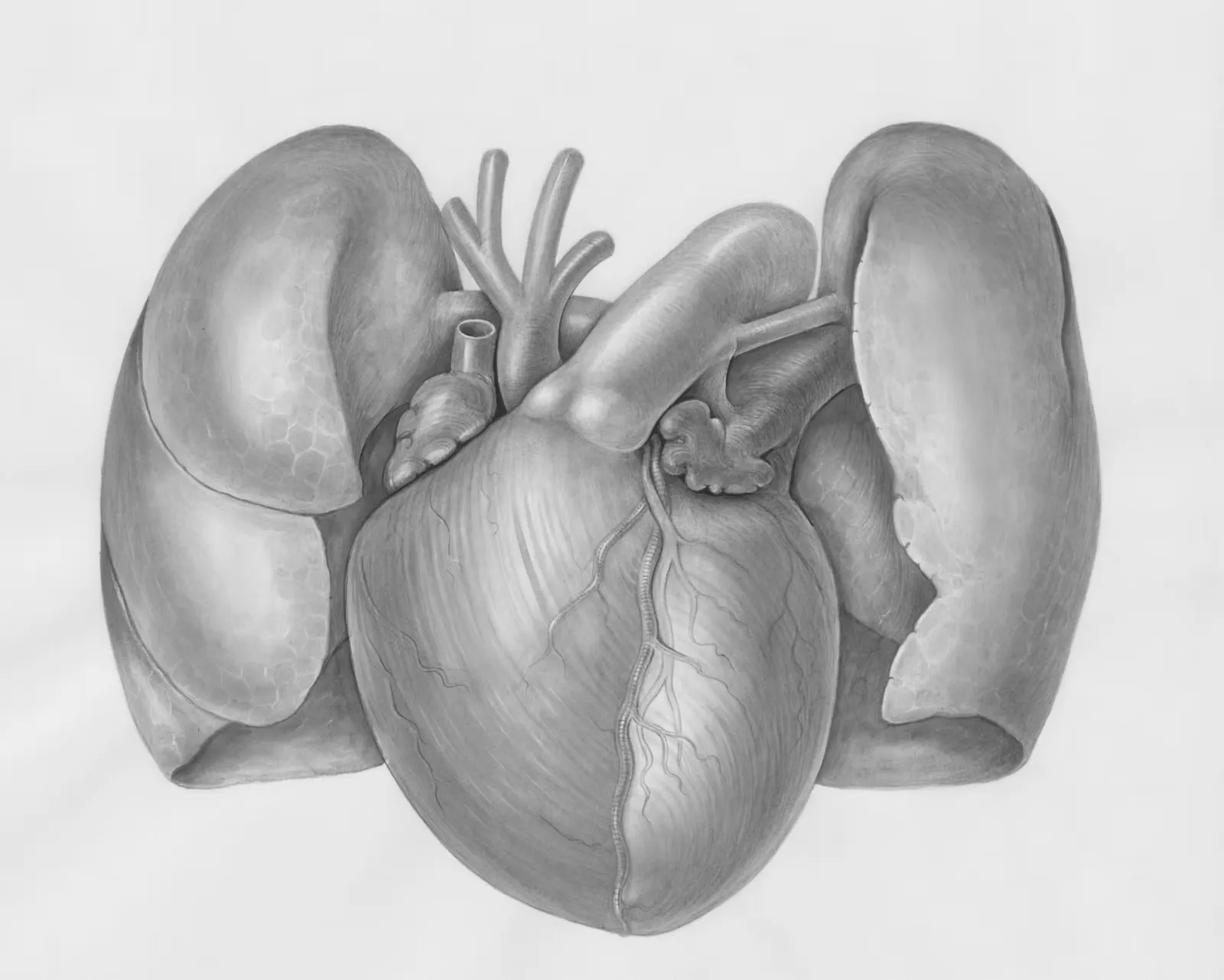
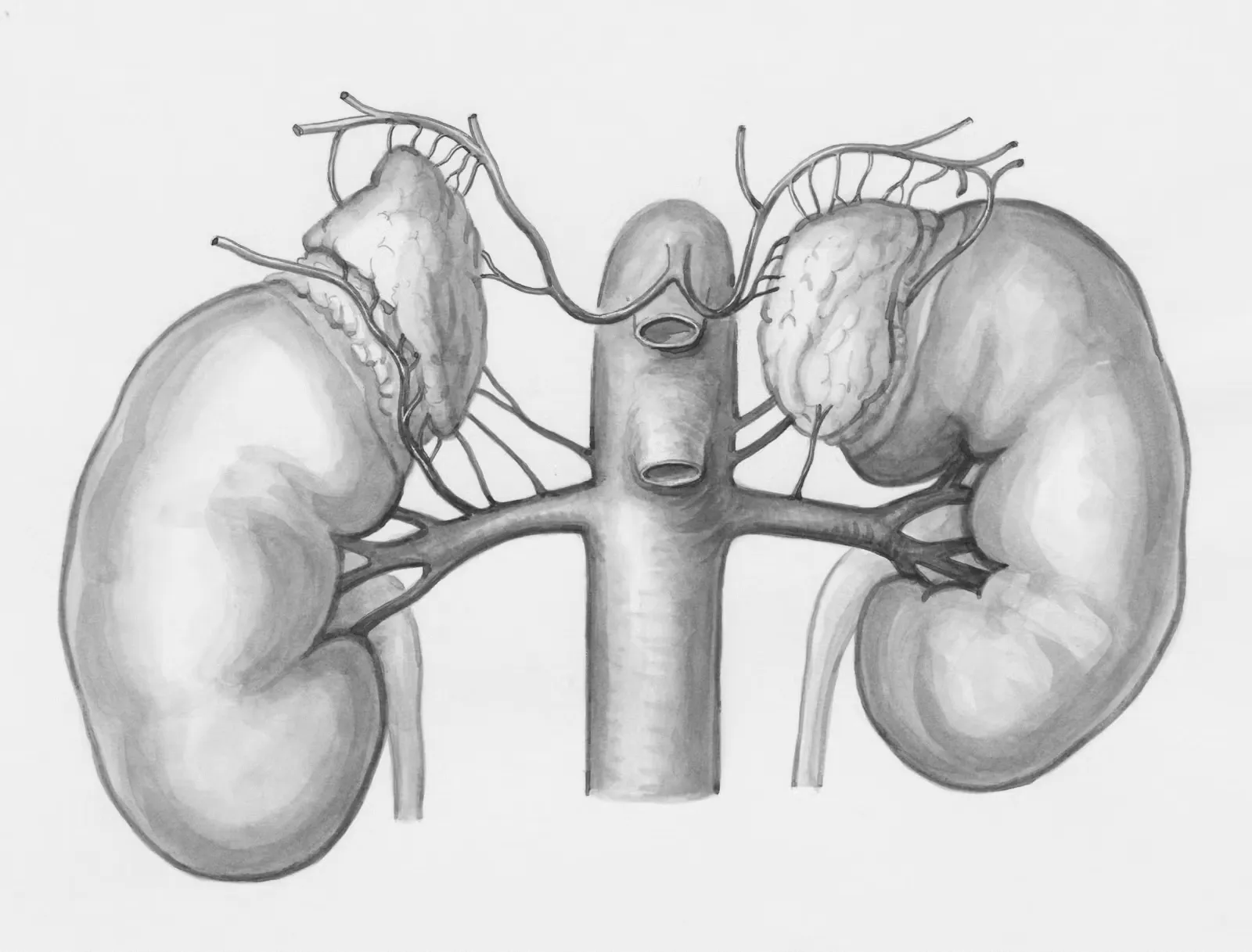
For this guide, NEET biology diagrams are the figures NCERT gives a number, such as "Figure 16.6" in Excretory Products and their Elimination. That is the only definition you can count, check and tick off. It includes labelled drawings (the heart, the nephron, the anther), flowcharts (the Calvin cycle, recombinant DNA steps), graphs (the oxygen dissociation curve, the sigmoid growth curve), and a smaller group of photographs and chemical structures, mostly in Human Health and Disease and Microbes in Human Welfare.
Some numbered figures hold several panels. Figure 10.2 in Cell Cycle and Cell Division, for example, runs from (a) to (e) across two pages to show the stages of mitosis. We counted it once. So the real number of separate images is higher than 260, but 260 is the number of distinct items you will see in the index of a chapter.
Two things are not in the count: the unnumbered sketches inside boxes and the figures in exercise questions. Read them anyway. They are part of the textbook that NEET's syllabus follows, even if they sit outside our count of NEET biology diagrams.
How many diagrams are in NCERT Biology, chapter by chapter?
Here is the full list of NEET biology diagrams by chapter. Every count comes from the chapter PDFs on NCERT's Class 11 Biology page and Class 12 Biology page, downloaded on 4 October 2026. In every chapter the figure numbers run without a gap from 1 to the last one, which is how we cross-checked the totals.
| Class 11 chapter | Figures | Class 12 chapter | Figures |
|---|---|---|---|
| 1. The Living World | 1 | 1. Sexual Reproduction in Flowering Plants | 15 |
| 2. Biological Classification | 6 | 2. Human Reproduction | 12 |
| 3. Plant Kingdom | 5 | 3. Reproductive Health | 4 |
| 4. Animal Kingdom | 24 | 4. Principles of Inheritance and Variation | 17 |
| 5. Morphology of Flowering Plants | 17 | 5. Molecular Basis of Inheritance | 16 |
| 6. Anatomy of Flowering Plants | 5 | 6. Evolution | 11 |
| 7. Structural Organisation in Animals | 4 | 7. Human Health and Disease | 11 |
| 8. Cell: The Unit of Life | 13 | 8. Microbes in Human Welfare | 8 |
| 9. Biomolecules | 5 | 9. Biotechnology: Principles and Processes | 7 |
| 10. Cell Cycle and Cell Division | 4 | 10. Biotechnology and its Applications | 3 |
| 11. Photosynthesis in Higher Plants | 10 | 11. Organisms and Populations | 5 |
| 12. Respiration in Plants | 6 | 12. Ecosystem | 4 |
| 13. Plant Growth and Development | 11 | 13. Biodiversity and Conservation | 2 |
| 14. Breathing and Exchange of Gases | 5 | ||
| 15. Body Fluids and Circulation | 4 | ||
| 16. Excretory Products and their Elimination | 6 | ||
| 17. Locomotion and Movement | 10 | ||
| 18. Neural Control and Coordination | 4 | ||
| 19. Chemical Coordination and Integration | 5 | ||
| Class 11 total | 145 | Class 12 total | 115 |
A word on scope. The syllabus for NEET (UG) is set by the National Medical Commission, not by NCERT, and the NEET (UG) 2026 Information Bulletin says there was no change in the syllabus from the previous year. Before you strike any chapter off, check it against the official list. futureMBBS keeps a readable summary of the NEET syllabus, pattern and unit list if you want a quick map.
Where do the NEET biology diagrams cluster?
Group the chapters the way the syllabus groups them and a clear shape appears. Genetics and evolution carries the most figures of any block, and Class 11 human physiology is close behind, even though its six chapters each look modest on their own.
Two readings of that chart are worth acting on.
First, Animal Kingdom's 24 figures are mostly labelled specimens: Aurelia, Taenia, Ascaris, Nereis, Pila, Petromyzon and the rest. You do not need to draw a jellyfish. You do need to look at a figure and name the phylum, and to recall the one feature NCERT points at. That is a recognition job, and flashcards handle it better than a sketchbook. Our guide to NEET flashcards shows how to set those up.
Second, Ecology and Biotechnology are light on figures, 21 between them. That does not make them light on questions. It means those chapters are tested through text, tables and processes rather than pictures, so your NCERT reading has to do the work there.
Which NEET biology diagrams should you be able to draw from memory?
No official list exists. NTA does not publish which figures it draws questions from, and any percentage you see online for "diagram-based questions" comes from coaching analyses, not from the exam body. So treat the three tiers of NEET biology diagrams below as our editorial judgement, built on one test: does the figure show a structure or a process where the position of a label, or the order of steps, is the fact being tested?
Tier 1: draw it from a blank page. 41 figures. These are the ones where you should be able to produce the whole thing, labels included, in under five minutes.
| Area | Figures to draw (NCERT number) |
|---|---|
| Cell biology | Plant and animal cell (Cl 11, 8.3), fluid mosaic model (8.4), mitochondrion (8.7), chloroplast (8.8), cilia and flagella cross-section (8.10), chromosome types by centromere (8.13), mitosis stages (10.2), meiosis I and II (10.3, 10.4) |
| Plant anatomy and morphology | Parts of a flower (5.10), floral diagram (5.16), dicot and monocot seed (5.14, 5.15), T.S. of dicot and monocot stem (6.4), T.S. of leaf (6.5) |
| Plant physiology | Z scheme (11.5), chemiosmosis (11.7), Calvin cycle (11.8), Hatch and Slack pathway (11.9), electron transport system (12.4) |
| Human physiology | Respiratory system (14.1), section of the heart (15.2), nephron and vasa recta (16.6), sarcomere and sliding filaments (17.2, 17.5), neuron (18.1), synapse (18.3), sagittal section of the brain (18.4) |
| Reproduction | L.S. of a flower (Cl 12, 1.1), T.S. of anther (1.3), ovule and embryo sac (1.8), male reproductive system (2.1), seminiferous tubule (2.2), sperm (2.6), ovary (2.7), spermatogenesis and oogenesis (2.8), menstrual cycle (2.9) |
| Genetics | DNA double helix (5.3), replication fork (5.8), transcription unit (5.9), lac operon (5.14) |
Tier 2: label it on sight. These figures matter, but you only need to name every label on an unlabelled copy. Most of Morphology of Flowering Plants falls here (root regions, phyllotaxy, inflorescence, aestivation, placentation), along with the frog organ systems (Cl 11, 7.2 to 7.4), the skull, vertebral column and girdles (17.6 to 17.10), the endocrine gland map (19.1), the Hershey and Chase and Meselson and Stahl experiments (Cl 12, 5.5, 5.7), pBR322 (9.4), PCR (9.6), the antibody molecule (7.4) and the retrovirus replication cycle (7.6).
Tier 3: recognise it. The specimen figures in Biological Classification, Plant Kingdom and Animal Kingdom, the drug plants and chemical structures in Human Health and Disease, the fermentors and biogas plant in Microbes in Human Welfare, and the curves in Ecology. Know what each one shows and which chapter idea it supports. That is enough.
How do diagrams turn into NEET questions?
Every NEET (UG) question is a multiple choice question with four options and one correct or best answer, marked +4 for a right answer and minus 1 for a wrong one, per the 2026 bulletin. So NEET biology diagrams reach you in one of a few shapes:
- A label to identify. A figure with parts marked A, B, C, D, and options that pair letters with names.
- A function to match. "The part labelled B is responsible for", with four functions to choose from.
- A sequence to order. Stages of meiosis, steps of the Calvin cycle, events of the menstrual cycle, laid out as statements to put in order.
- The text under the figure. Many questions never show the picture at all. They lift a line from the paragraph that explains it. This is why reading the caption and the paragraph that cites the figure matters as much as the drawing.
For real practice in those shapes, work through official previous papers. futureMBBS collects NEET previous year question papers, and our post on NEET Biology MCQ practice explains how to drill the 90 Biology questions under time.
How should you revise NEET biology diagrams?
Two pieces of evidence shape the method. A 2017 study in CBE Life Sciences Education tested a drawing technique called minute sketches with folded lists on college biology students. Compared with their preferred method, visual review, participants recalled an average of 48% more on investigator scoring, and 81% of them recalled more with sketching. A 2025 review of retrieval practice in the health professions reached the same broad conclusion from a different angle: pulling information out of memory beats reading it again.
Put together, that gives a routine for NEET biology diagrams you can run in 20 minutes a day.
- Read the figure with its paragraph. Open the chapter, find every sentence that says "see Figure X.Y", and read those sentences while looking at the figure. The text is what NEET quotes.
- Close the book and sketch. For a Tier 1 figure, draw it from memory in two to four minutes. Boxes and arrows are fine. Accuracy of labels beats artistic skill.
- Check and mark the gaps in red. Open NCERT again and correct every missing or misplaced label in a different colour. The red marks are tomorrow's revision.
- Write one question per figure. One line on the back of the page, such as "Which region of the nephron is impermeable to water?" This turns the figure into a retrieval prompt.
- Space the repeats. Redraw the same figure after a few days, then after about a week, then before each full mock. Drop a figure to Tier 2 once you get it right twice in a row.
- Use blank copies for Tier 2. Cover the labels on a printout or a phone screenshot and name them aloud. Two minutes per figure, no drawing needed.
- Mix in mock questions. After a full test, note every Biology question that came from a figure and add that figure to your next week's list.
Keep all of it in one place. A single diagram notebook, chapter by chapter, is easier to revise than sketches scattered across 32 chapters of notes. Our guide on making NEET notes you will actually revise explains how to fold it into your wider notes, and how to study NCERT for NEET covers the line-by-line reading that sits under step 1.
Is the frog still in the NEET syllabus?
Yes, for 2026 at least. The syllabus FAQ in the NEET (UG) 2026 Information Bulletin addresses it directly. Unit 2 of the Biology syllabus reads "of an insect (Frog)", which confused students because a frog is not an insect. NTA's reply: it should be read as "of an insect and a frog". So the four figures of Structural Organisation in Animals, the frog's external features (Cl 11, 7.1), internal organs (7.2) and male and female reproductive systems (7.3, 7.4), are in scope. You can see them in the Class 11 Chapter 7 PDF. Recheck this when the NEET (UG) 2027 bulletin and syllabus are published.
Which mistakes with NEET biology diagrams cost the most marks?
- Learning the picture, skipping the caption. Figure captions are short, exact and easy to turn into an option. "Diagrammatic representation of a nephron and vasa recta" tells you what NCERT considers the point of that figure.
- Using a coaching redraw instead of NCERT. Redrawn versions add, drop or rename labels. The exam follows the textbook's own labels.
- Treating all 260 NEET biology diagrams the same. Drawing the 24 Animal Kingdom specimens is slow and low return. Spend the drawing time on Tier 1.
- Never testing yourself blank. Recognising a figure with the labels visible feels like knowing it. It is not. Cover the labels.
- Leaving Class 12 Reproduction for the end. At 31 figures across three chapters, it is one of the densest blocks, and it sits in the middle of the book most students revise last.
Want to know which figures you actually get wrong? That is what NEETsheet's Biology question sets and full-length mocks are for: practise the four-option format, then see which chapters keep costing you marks.
Sources
Every count, rule and study finding above comes from these sources, opened and read on 4 October 2026.
- NCERT, Biology Textbook for Class XI, chapter PDFs 1 to 19 (figure counts): https://ncert.nic.in/textbook.php?kebo1=0-19
- NCERT, Biology Textbook for Class XII, chapter PDFs 1 to 13 (figure counts): https://ncert.nic.in/textbook.php?lebo1=0-13
- NCERT, Class XI Biology Chapter 7, Structural Organisation in Animals: https://ncert.nic.in/textbook/pdf/kebo107.pdf
- NTA, Information Bulletin NEET (UG) 2026 (pattern of the test, marking scheme, syllabus FAQs): https://cdnbbsr.s3waas.gov.in/s37bc1ec1d9c3426357e69acd5bf320061/uploads/2026/02/202602231394640855.pdf
- Heideman PD, Flores KA, Sevier LM, Trouton KE, "Effectiveness and Adoption of a Drawing-to-Learn Study Tool for Recall and Problem Solving: Minute Sketches with Folded Lists", CBE Life Sciences Education, 2017: https://pmc.ncbi.nlm.nih.gov/articles/PMC5459246/
- Serra MJ, Kaminske AN, Nebel C, Coppola KM, "The Use of Retrieval Practice in the Health Professions: A State-of-the-Art Review", Behavioral Sciences, 2025: https://pmc.ncbi.nlm.nih.gov/articles/PMC12292765/
- NTA, NEET (UG) official portal: https://neet.nta.nic.in/
Frequently Asked Questions
There are 260 numbered figures: 145 in the 19 chapters of Class 11 Biology and 115 in the 13 chapters of Class 12. We counted them in the chapter PDFs on the NCERT website on 4 October 2026. Some figures have several panels, and not all are drawings: a few are photographs, graphs or chemical structures.
No. NEET (UG) is entirely multiple choice, with four options and one correct or best answer per question. You never draw in the exam. Drawing is a study method that helps you remember labels, positions and sequences, which the questions then test through options.
Animal Kingdom, Class 11 Chapter 4, with 24 numbered figures, most of them labelled specimens. Morphology of Flowering Plants and Principles of Inheritance and Variation follow with 17 each, and Molecular Basis of Inheritance has 16.
Yes, for NEET (UG) 2026. The syllabus FAQ in the 2026 Information Bulletin says the phrase "of an insect (Frog)" should be read as "of an insect and a frog", so the frog figures in Class 11 Chapter 7 are in scope. Recheck this when the 2027 syllabus is published.
There is no official number. A workable rhythm is to sketch each key figure from memory, check it against NCERT, then redraw it after a few days, after about a week and before each full mock. Research on retrieval practice supports testing yourself over rereading.
If you are building your revision of NEET biology diagrams now, NEETsheet is our NEET UG prep app, with NCERT-aligned question sets and timed full-length mocks that show where the marks are slipping. And if you are already weighing what comes after the result, futureMBBS explains what an NCERT book is and how NEET uses it alongside its admissions guides.