
Body Fluids and Circulation for NEET: Chapter 15 Guide
Body fluids and circulation is a topic of Unit 5, Human Physiology, in the official NEET (UG) Biology syllabus, and it is taught in one NCERT chapter: Class 11 Biology, Chapter 15. It covers blood, lymph, the human heart, the cardiac cycle, the ECG, double circulation, how the heart is regulated, and four circulatory disorders. This guide matches each syllabus phrase to its NCERT section, lists the numbers the chapter prints, explains the two ideas students mix up most, and ends with a revision plan you can start this week.
What is body fluids and circulation in the NEET syllabus?
Body fluids and circulation is one bullet in Unit 5 of the NMC syllabus for NEET (UG) 2026, the latest official syllabus as of 19 October 2026. No 2027 syllabus or bulletin has appeared on the NTA notice board yet, so the 2026 wording is the one to study from until NTA says otherwise.
The bullet reads, in full: composition of blood, blood groups, coagulation of blood; composition of lymph and its function; human circulatory system, structure of human heart and blood vessels; cardiac cycle, cardiac output, ECG, double circulation; regulation of cardiac activity; disorders of circulatory system, hypertension, coronary artery disease, angina pectoris, heart failure.
That is the whole body fluids and circulation brief. Below it, the syllabus adds one line for the entire unit: diseases and disorders mentioned above are to be dealt with in brief. So you need the definition and the cause of each disorder, not a pathology lecture.
Here is how each body fluids and circulation phrase maps onto the chapter.
| Syllabus phrase | NCERT Class 11 Biology section | What it covers |
|---|---|---|
| Composition of blood | 15.1.1 Plasma, 15.1.2 Formed elements | Plasma proteins, RBC, WBC types, platelets |
| Blood groups | 15.1.3 ABO and Rh grouping | Table 15.1, universal donor and recipient, erythroblastosis foetalis |
| Coagulation of blood | 15.1.4 | Fibrinogen, thrombin, prothrombin, thrombokinase, calcium |
| Composition of lymph and its function | 15.2 Lymph (tissue fluid) | Interstitial fluid, lymphatic system, lacteals |
| Structure of human heart and blood vessels | 15.3.1 and the start of 15.4 | Chambers, septa, valves, nodal tissue, three layers of vessels |
| Cardiac cycle, cardiac output | 15.3.2 | Joint diastole, systole, stroke volume, heart sounds |
| ECG | 15.3.3 | Standard ECG, P wave, QRS complex, T wave |
| Double circulation | 15.4 | Pulmonary and systemic circulation, hepatic portal system, coronary system |
| Regulation of cardiac activity | 15.5 | Myogenic heart, medulla, sympathetic and parasympathetic signals |
| Disorders of circulatory system | 15.6 | Hypertension, CAD, angina, heart failure |
Section 15.3 also opens with open and closed circulatory systems and the hearts of fishes, amphibians, reptiles, crocodiles, birds and mammals. The syllabus line does not name these, but NCERT uses them to explain why "incomplete double circulation" and "double circulation" are different. It is one page. Read it.
If you are still building your Class 11 base, the guide to studying NCERT for NEET 2027 explains how to read a chapter like this line by line, and futureMBBS has a plain explainer on what the NCERT book is and why NEET leans on it.
How much is body fluids and circulation worth in NEET?
Nobody official publishes chapter-wise weightage. The NEET (UG) 2026 Information Bulletin fixes the paper by subject only: Physics 45 questions, Chemistry 45, Biology (Botany and Zoology) 90, for 180 questions in 180 minutes and 720 marks in total. Any per-chapter figure you see online comes from someone counting past papers, not from NTA.
What you can say about body fluids and circulation with certainty is this. Biology carries 360 marks, exactly half the paper, and Human Physiology is one of only ten Biology units. Body fluids and circulation is one of the six topics inside it. A wrong answer costs you one mark, so a chapter full of exact numbers rewards students who learned them exactly and punishes the ones who guessed. The negative marking guide shows how that arithmetic plays out.
The Chapter 15 numbers worth memorising
These. Every one is printed in the NCERT body fluids and circulation chapter, Reprint 2026-27, and NEET options are often built by nudging one of them.
| What | NCERT value |
|---|---|
| Plasma share of blood | Nearly 55% |
| Water in plasma | 90 to 92% |
| Proteins in plasma | 6 to 8% |
| Formed elements share of blood | Nearly 45% |
| RBC count, healthy adult man | 5 to 5.5 million per cubic millimetre |
| Haemoglobin | 12 to 16 g per 100 mL of blood |
| RBC life span | 120 days, destroyed in the spleen |
| WBC count | 6,000 to 8,000 per cubic millimetre |
| Platelet count | 1,50,000 to 3,50,000 per cubic millimetre |
| People who are Rh positive | Nearly 80% |
| SAN action potentials | 70 to 75 per minute |
| Heart rate | 72 beats per minute on average |
| One cardiac cycle | 0.8 seconds |
| Extra ventricular filling from atrial systole | About 30% |
| Stroke volume | About 70 mL per ventricle per beat |
| Cardiac output | About 5,000 mL (5 litres) per minute |
| Normal blood pressure | 120/80 mm Hg |
| Hypertension threshold | 140/90 or higher on repeated checks |
The cardiac output line is the one to understand, not just memorise. Cardiac output is stroke volume multiplied by heart rate. NCERT defines it as the volume pumped by each ventricle per minute. That definition is why an athlete, who can raise both stroke volume and heart rate, has a much higher cardiac output than an ordinary person.
The WBC percentages deserve a picture, because "most" and "least" questions come straight from them.
Neutrophils and monocytes are the phagocytes. Basophils release histamine, serotonin and heparin and take part in inflammation. Eosinophils resist infections and are linked to allergic reactions. Lymphocytes come in B and T forms and run the immune response. Granulocytes are neutrophils, eosinophils and basophils; agranulocytes are lymphocytes and monocytes. That split is easy to test in a two-statement question.
What blood actually contains
In body fluids and circulation, blood is a special connective tissue: a fluid matrix called plasma with formed elements floating in it. That one sentence answers NCERT's own exercise question on why blood counts as a connective tissue.
Plasma is straw coloured and viscous. Its three major proteins each have one job you should be able to name in a second: fibrinogen for clotting, globulins for defence, albumins for osmotic balance. Plasma without the clotting factors is called serum. A common slip is "serum is plasma without proteins". It is not. Only the clotting factors are gone.
Clotting is a chain. An injury makes platelets and damaged tissue release factors, which build an enzyme complex called thrombokinase. Thrombokinase helps turn prothrombin into thrombin, and thrombin turns soluble fibrinogen into fibrin threads that trap dead and damaged cells. Calcium ions are needed throughout. Learn the order as a single line and the matching questions get easy.
How do ABO and Rh blood groups work?
ABO grouping depends on two antigens, A and B, on the surface of red blood cells, and on natural antibodies in plasma. Group O has no antigens and both antibodies, so it can be given to anyone: the universal donor. Group AB has both antigens and no antibodies, so it can receive from all four groups: the universal recipient.
| Blood group | Antigens on RBCs | Antibodies in plasma | Can receive from |
|---|---|---|---|
| A | A | anti-B | A, O |
| B | B | anti-A | B, O |
| AB | A, B | none | AB, A, B, O |
| O | none | anti-A, anti-B | O |
Rh is a separate antigen, named after the similar one in Rhesus monkeys, and nearly 80% of people carry it. The case to know cold is an Rh negative mother carrying an Rh positive foetus. The first pregnancy is usually safe because the placenta keeps the two bloods apart. During delivery, a little foetal blood can reach the mother, and she starts making anti-Rh antibodies. In a later pregnancy those antibodies can cross into the foetus and destroy its red cells. That condition is erythroblastosis foetalis, and NCERT says it can be avoided by giving the mother anti-Rh antibodies right after the first delivery.
Lymph, the second body fluid
Lymph is the second body fluid in body fluids and circulation: the fluid that leaks out of capillaries into the spaces between cells, then gets collected by the lymphatic system and drained back into major veins. Out in the tissues it is called interstitial or tissue fluid; inside the lymphatic vessels it is called lymph.
It has the same mineral distribution as plasma but leaves behind the larger proteins and most of the formed elements. It is colourless and carries specialised lymphocytes. It also carries nutrients and hormones, and one fact that crosses chapters: fats are absorbed through lymph in the lacteals of the intestinal villi. If a question pairs "lacteal" with "lymph", that is where it comes from.
How does the human heart work, from SAN to Purkinje fibres?
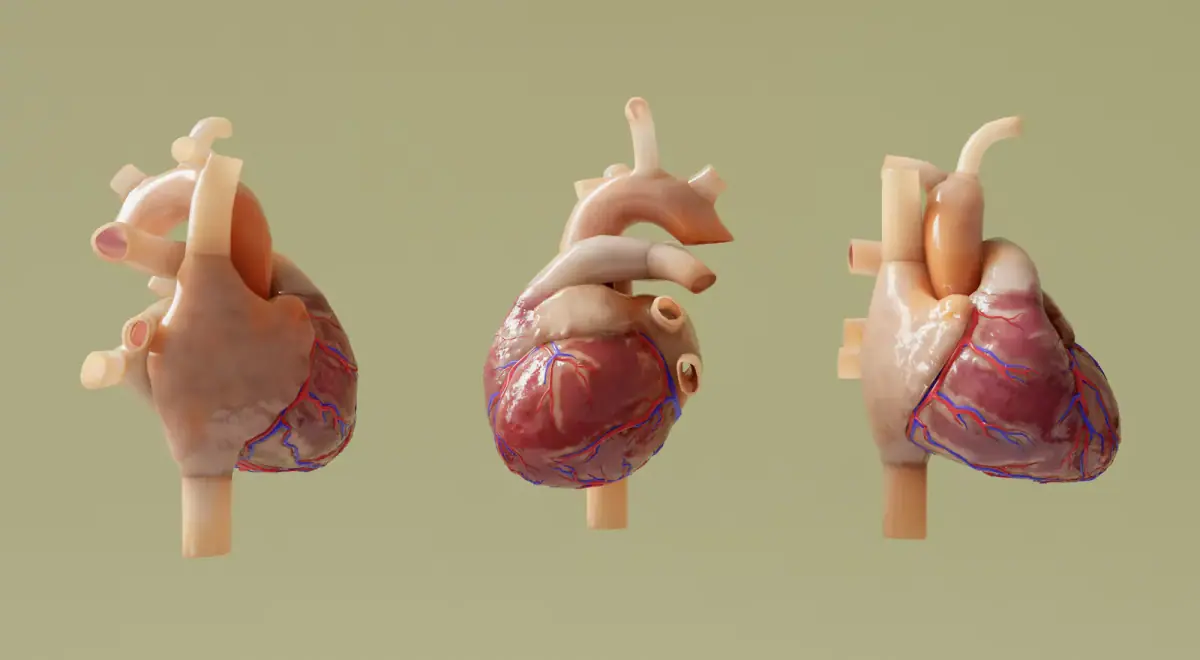
The heart sits in the thoracic cavity between the lungs, tilted slightly left, about the size of a clenched fist, inside a double-walled pericardium. Four chambers: two small atria on top, two larger ventricles below. A thin interatrial septum splits the atria, a thick interventricular septum splits the ventricles, and a thick fibrous atrio-ventricular septum separates the atrium and ventricle on each side.
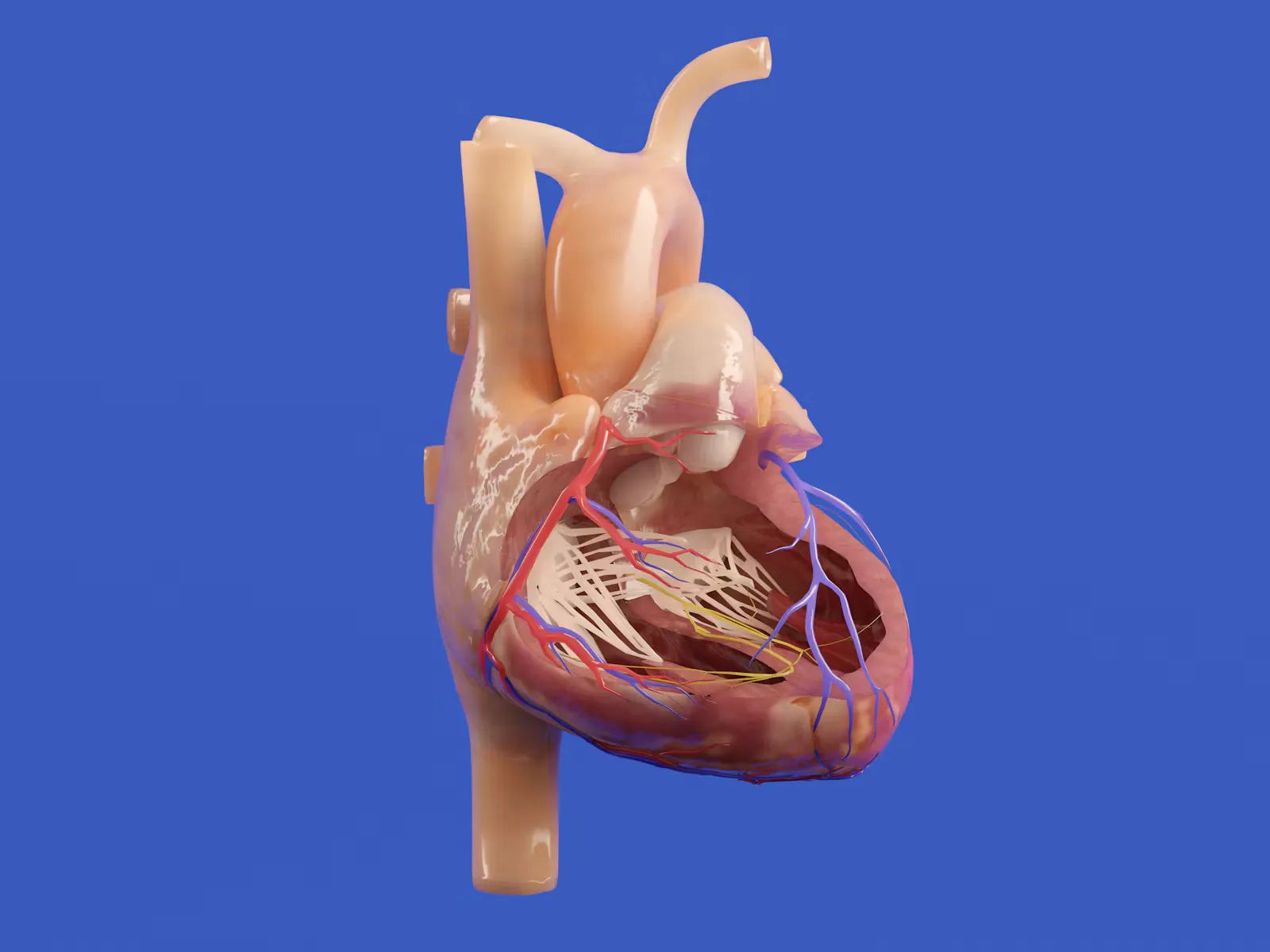
Valves keep blood moving one way. Tricuspid on the right, between right atrium and right ventricle. Bicuspid, also called mitral, on the left. Semilunar valves where the ventricles open into the pulmonary artery and the aorta.
Then the wiring. The sino-atrial node (SAN) sits in the right upper corner of the right atrium. The atrio-ventricular node (AVN) sits in the lower left corner of the right atrium, near the atrio-ventricular septum. Both nodes are in the right atrium, which is the detail that catches people. From the AVN, the AV bundle (bundle of His) runs to the interventricular septum, splits into right and left bundles, and ends as Purkinje fibres in the ventricle walls.
Nodal tissue is autoexcitable, so it fires without outside stimulus. The SAN fires the most, 70 to 75 action potentials a minute, so it sets the pace and is called the pacemaker. That is also why the heart is called myogenic. If cardiac careers interest you, the route to becoming a cardiologist in India starts with exactly this chapter.
What happens in one cardiac cycle, and what is the ECG showing?
The cardiac cycle is the sequence of systole (contraction) and diastole (relaxation) of the atria and ventricles that repeats with every heartbeat, about 72 times a minute, so each cycle lasts about 0.8 seconds. Walk through it in this order and you will not mix it up.
- Joint diastole. All four chambers are relaxed. Tricuspid and bicuspid valves are open, semilunar valves are closed, and blood flows from the veins through the atria into the ventricles.
- Atrial systole. The SAN fires and both atria contract together, pushing about 30% more blood into the ventricles.
- Ventricular systole. The impulse passes through the AVN and bundle of His. Ventricles contract while the atria relax. Rising pressure shuts the tricuspid and bicuspid valves: the first heart sound, lub.
- Ejection. Ventricular pressure rises further and forces the semilunar valves open. Blood leaves through the pulmonary artery on the right and the aorta on the left.
- Ventricular diastole. The ventricles relax, pressure falls and the semilunar valves close: the second heart sound, dub.
- Back to joint diastole. Atrial pressure pushes the AV valves open again, blood flows in, and the SAN starts the next cycle.
The ECG records the electrical side of the same cycle. A standard ECG uses three leads, one on each wrist and one on the left ankle. The P wave is depolarisation of the atria, which leads to atrial contraction. The QRS complex is depolarisation of the ventricles, and contraction starts shortly after Q. The T wave is repolarisation of the ventricles, and the end of the T wave marks the end of systole. Count QRS complexes over a set time and you have the heart rate.
Draw it once from memory, label P, QRS and T, and write one line under each. That is NCERT's own last exercise question, and it is the single best check for this section. The NEET biology diagrams guide has a routine for practising figures like this one.
What is double circulation, and why does it matter?
Double circulation means blood passes through the heart twice on every full trip around the body, along two separate pathways that never mix. The right ventricle pumps deoxygenated blood into the pulmonary artery to the lungs, and pulmonary veins bring oxygenated blood back to the left atrium: that is pulmonary circulation. The left ventricle pumps oxygenated blood into the aorta, out to the tissues, and veins return deoxygenated blood to the right atrium: that is systemic circulation.
To see why body fluids and circulation uses this term, compare the vertebrate hearts in NCERT section 15.3 and the term makes sense.
- Fishes: 2 chambers, single circulation.
- Amphibians and most reptiles: 3 chambers (two atria, one ventricle), so blood mixes in the ventricle: incomplete double circulation.
- Crocodiles, birds and mammals: 4 chambers, no mixing: double circulation.
Crocodiles are the exception inside reptiles. Expect them in an "all except" option.
Two more vessels systems close the section. The hepatic portal vein carries blood from the intestine to the liver before it reaches systemic circulation, and a separate coronary system supplies the heart muscle itself. Vessel structure sits here too: arteries and veins both have three layers (tunica intima, tunica media, tunica externa), and the tunica media is comparatively thin in veins.
How is the heart regulated, and which disorders are in the syllabus?
The heart regulates itself through nodal tissue, but the nervous system can turn it up or down. A neural centre in the medulla oblongata works through the autonomic nervous system. Sympathetic signals raise heart rate, strength of ventricular contraction and cardiac output. Parasympathetic signals lower heart rate, slow conduction and reduce cardiac output. Adrenal medullary hormones can also raise cardiac output.
The four disorders, kept as brief as the syllabus asks:
- Hypertension: blood pressure higher than the normal 120/80 mm Hg; repeated readings of 140/90 or more. The WHO hypertension fact sheet uses the same 140 and 90 thresholds and estimates that 1.4 billion adults aged 30 to 79 had hypertension worldwide in 2024.
- Coronary artery disease (atherosclerosis): deposits of calcium, fat, cholesterol and fibrous tissue narrow the arteries that supply the heart muscle.
- Angina pectoris: acute chest pain when not enough oxygen reaches the heart muscle.
- Heart failure: the heart does not pump effectively enough for the body's needs. It is also called congestive heart failure, because congestion of the lungs is a main symptom.
NCERT adds a distinction worth one mark: heart failure is not cardiac arrest (the heart stops beating) and not a heart attack (heart muscle suddenly damaged by poor blood supply).
Seven mistakes that cost marks in body fluids and circulation
These are the body fluids and circulation confusions that come up again and again when students check their answers against the chapter.
- Serum versus plasma. Serum is plasma minus clotting factors, not minus all proteins.
- Swapping the heart sounds. Lub is the AV valves closing at the start of ventricular systole; dub is the semilunar valves closing at the start of ventricular diastole.
- Placing the AVN in the ventricle. Both SAN and AVN are in the right atrium.
- Calling all reptiles 3-chambered. Crocodiles have four chambers.
- Reading T as the start of something. The T wave is ventricular repolarisation, and its end marks the end of systole.
- Mixing up donor and recipient. O gives to all; AB receives from all.
- Defining cardiac output for the whole heart. NCERT defines it per ventricle per minute.
If any of these surprised you, turn it into a card tonight. The flashcards method for NEET is built for exactly these one-line traps.
How should you revise body fluids and circulation?
Plan on two or three focused body fluids and circulation sessions rather than one long one. This order works because each step uses the one before.
- Read NCERT Chapter 15 once without stopping. It is twelve pages. Mark every number and every "is called" sentence.
- Copy the numbers table above from memory. Check it against the book, and redo only the lines you missed.
- Draw three figures from memory. The section of the heart with both nodes and all valves, the standard ECG, and the double circulation plan. Label everything.
- Answer all 14 NCERT exercise questions in writing. They cover the whole syllabus line, including the differences between blood and lymph, open and closed systems, systole and diastole, and the P and T waves.
- Solve timed MCQs on the chapter. Use previous NEET papers first, then practice sets. The [NEET biology MCQ guide](/blogs/neet-biology-mcq/) and the [previous year question papers guide](/blogs/neet-2027-previous-year-question-papers/) show where to find official papers.
- Re-test after a week. Repeat steps 2 and 3 cold. Whatever you still get wrong goes into your [revision notes](/blogs/neet-notes/).
For where this chapter fits in a full year, the NEET 2027 biology preparation strategy lays out the unit order, and futureMBBS has a month-by-month view of NEET UG 2027 preparation. For the whole three-subject syllabus in one place, see futureMBBS's NEET syllabus guide. If you enjoy the blood side of this chapter, the pathologist career guide shows where it leads.
Want to know whether you really know Chapter 15 or just recognise it? That is what timed practice is for. NEETsheet is our NEET UG prep app, with NCERT-aligned questions and full-length mocks that show which chapters keep costing you marks.
Sources
Every syllabus line, number and definition above comes from these official documents, opened and read on 19 October 2026.
- National Medical Commission, Undergraduate Medical Education Board, "Syllabus for NEET (UG) 2026", 22 December 2025, circulated by NTA (Biology Unit 5, Human Physiology, body fluids and circulation bullet and the "dealt in brief" note): https://nta.ac.in/Download/Notice/Notice_20260108180635.pdf
- National Testing Agency, Information Bulletin NEET (UG) 2026 (pattern: Biology 90 questions and 360 of 720 marks; plus four and minus one marking): https://cdnbbsr.s3waas.gov.in/s37bc1ec1d9c3426357e69acd5bf320061/uploads/2026/02/202602231394640855.pdf
- NCERT, Biology, Class 11, Chapter 15 "Body Fluids and Circulation" (Reprint 2026-27): https://ncert.nic.in/textbook/pdf/kebo115.pdf
- NCERT, online textbooks index: https://ncert.nic.in/textbook.php
- World Health Organization, "Hypertension" fact sheet, 25 September 2025: https://www.who.int/news-room/fact-sheets/detail/hypertension
- National Testing Agency, notice board archive, checked on 19 October 2026 for any NEET (UG) 2027 notice: https://nta.ac.in/NoticeBoardArchive
Frequently Asked Questions
NCERT Class 11 Biology, Chapter 15, titled Body Fluids and Circulation. Its six sections are blood, lymph, circulatory pathways, double circulation, regulation of cardiac activity and disorders of the circulatory system. In the NMC syllabus for NEET (UG) 2026 it sits under Unit 5, Human Physiology.
About 0.8 seconds. NCERT takes an average heart rate of 72 beats per minute, so 72 cardiac cycles happen in 60 seconds, which works out to 0.8 seconds each. During one cycle each ventricle pumps out about 70 mL of blood, the stroke volume, giving a cardiac output of about 5 litres per minute.
Lub, the first heart sound, comes from the closure of the tricuspid and bicuspid valves when the ventricles start to contract. Dub, the second heart sound, comes from the closure of the semilunar valves when the ventricles relax. NCERT notes both sounds are of clinical diagnostic significance and can be heard with a stethoscope.
Because its normal beat starts in specialised heart muscle, the nodal tissue, not in nerves. The sino-atrial node generates 70 to 75 action potentials a minute without any outside stimulus, which is why it is called the pacemaker. The medulla oblongata and the autonomic nervous system can only speed the heart up or slow it down.
Class 11. It is Chapter 15 of the NCERT Class 11 Biology textbook, and droppers revising for NEET need it as much as Class 11 students do. Because Biology is 360 of the 720 marks in NEET (UG), a Class 11 physiology chapter like this one is worth revising again in Class 12.
If you are working through Human Physiology this term, NEETsheet is our NEET UG prep app: NCERT-aligned questions chapter by chapter, timed mocks, and a clear view of where your marks go.