
How to Become a Pathologist in India: The Lab Doctor Route
A pathologist is a doctor who diagnoses disease by studying tissue, blood and body fluids in the lab, so other doctors know what they are treating. If you want to know how to become a pathologist in India, the route has two entrance exams: NEET UG for MBBS, then NEET-PG for a three-year MD or DNB in Pathology. From Class 12, that is about 8.5 years.
What does a pathologist actually do?
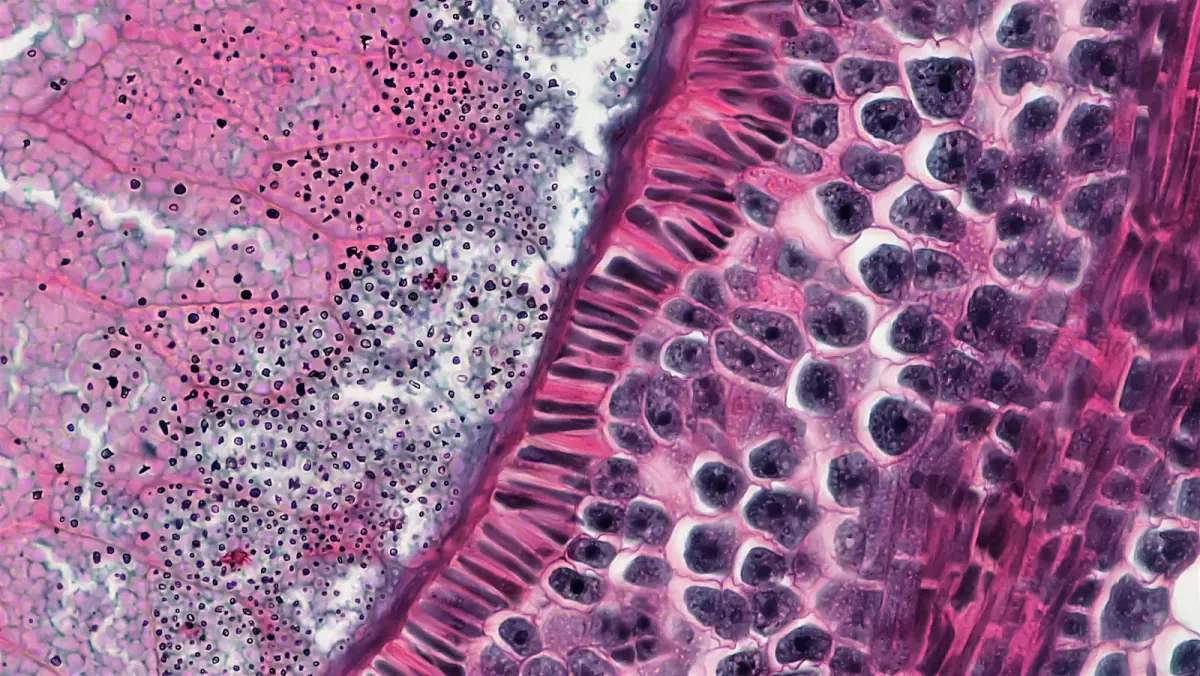
A pathologist gives the diagnosis behind the treatment. A surgeon removes a lump; the pathologist slices it, stains it, looks at it under the microscope and writes the report that says whether it is cancer, what kind, and how far it has spread. A physician orders a blood count; the pathologist's lab runs it, checks the smear and flags the leukaemia.
NBE's guideline for DNB Pathology lists the areas a trained pathologist must cover: histopathology, haematopathology, immunopathology, surgical pathology, cytopathology, clinical pathology, clinical biochemistry and blood banking. That is a wider job than "the person behind the microscope". It includes running blood banks, checking a lab's quality control and teaching.
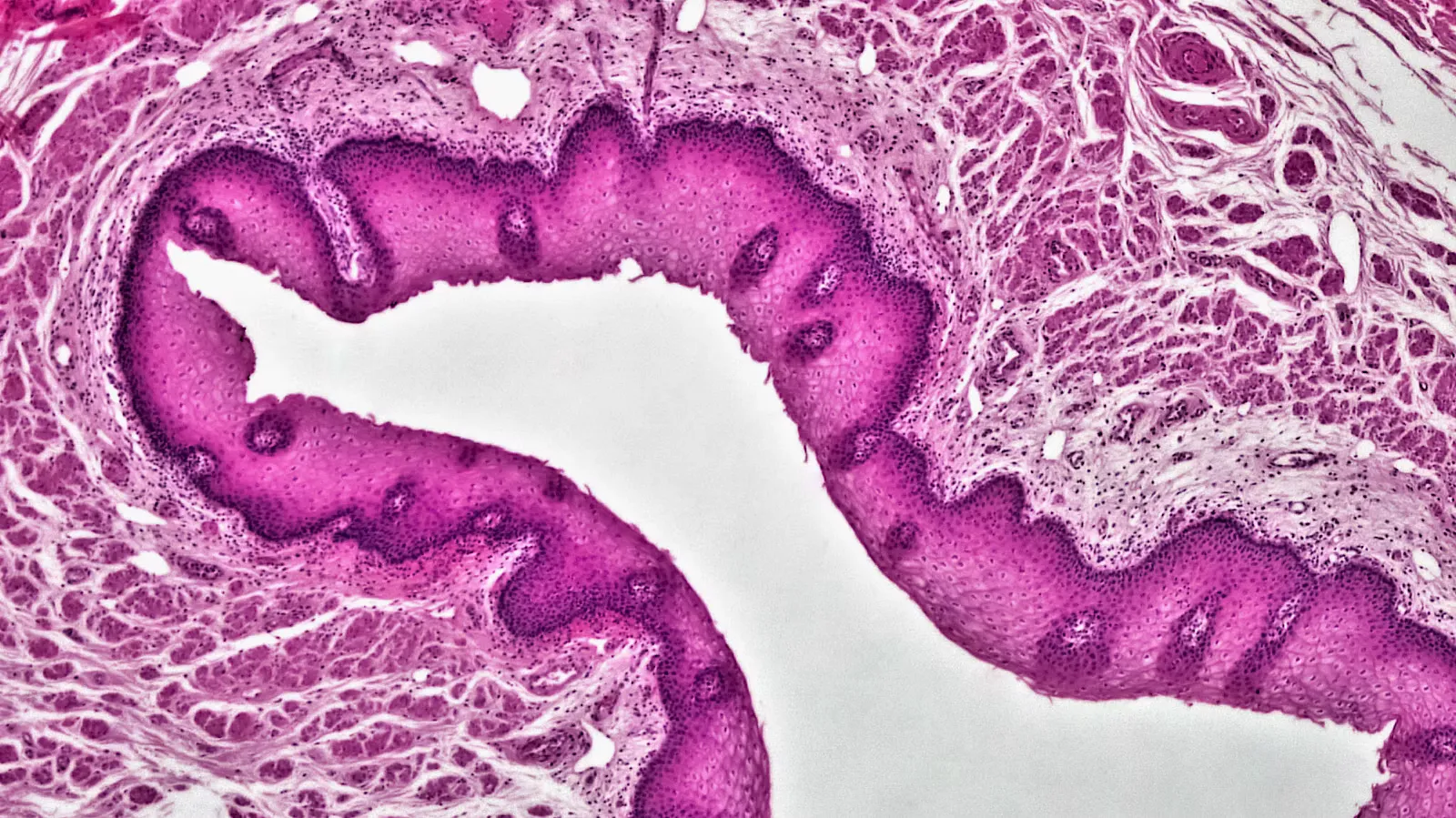
You have already studied the first step of it. Chapter 7 of NCERT Class 12 Biology, Human Health and Disease, explains that cancer detection "is based on biopsy and histopathological studies of the tissue and blood and bone marrow tests for increased cell counts in the case of leukemias". In a biopsy, it says, a piece of tissue "cut into thin sections is stained and examined under microscope (histopathological studies) by a pathologist." That paragraph is a fair one-line summary of a pathologist's day.
How to become a pathologist in India, stage by stage?
How to become a pathologist in India is a chain of two degrees, each behind its own exam. You clear NEET UG and finish MBBS with the internship. You clear NEET-PG and finish MD or DNB Pathology. At that point you are a pathologist. NEET-SS and a DM come later, only if you want to specialise inside pathology.
| Stage | Exam you sit | What you study | Length |
|---|---|---|---|
| 1. MBBS | NEET UG | Bachelor of Medicine and Bachelor of Surgery, with internship | 5.5 years |
| 2. Broad specialty | NEET-PG | MD Pathology or DNB Pathology | 3 years |
| 3. Optional super-specialty | NEET-SS | DM Onco-Pathology, or DM/DrNB Clinical Haematology or Medical Genetics | 3 years |
The lengths come from Chapter II of NMC's Post-Graduate Medical Education Regulations 2023 (PGMER-23), in the NMC Compendium 2024: 3 years for a broad-specialty degree such as MD, 3 years for a super-specialty course such as DM, 2 years for a PG diploma and 1 year for a Post-Doctoral Certificate Course (PDCC). The MBBS length of five and a half years, including one year of internship, comes from a 2016 government release.
Pathology is a para-clinical subject in MBBS, taught in the second phase along with pharmacology and microbiology. Our guide to the MBBS syllabus in India shows where it sits year by year, and the full path from NEET to doctor covers the stages before PG.
Which PG course makes you a pathologist?
MD Pathology or DNB Pathology. Both are three-year broad-specialty degrees entered through NEET-PG. MD is the university degree from a medical college; DNB is the equivalent from the National Board of Examinations in Medical Sciences (NBEMS), earned at an NBEMS-accredited hospital. PGMER-23 Annexure 1 lists MD (Pathology) among its 32 MD subjects.
NEET-PG itself is the same exam for every MD and MS. The NEET-PG 2025 bulletin describes 200 multiple choice questions in 3 hours 30 minutes, on computer, in English only, split into five timed sections of 40 questions with 42 minutes each. The marking is plus 4, minus 1, with 25% negative marking for a wrong answer. If the arithmetic of guessing worries you, our post on NEET negative marking works it through for the UG paper, and the logic is the same.
What about the diploma? PGMER-23 Annexure 3 still lists the Diploma in Clinical Pathology (DCP) as a recognised two-year PG diploma. But the same chapter adds that colleges may apply to convert diploma seats into degree seats, and that "no more new applications will be entertained" to start or increase diploma seats. So DCP is a door that is slowly closing. A DCP holder can still move up: NBE's guideline offers a two-year post-diploma DNB Pathology, filled through its own PDCET counselling, and PGMER-23 sets a two-year MD for students who already hold a recognised diploma in the same subject. futureMBBS has a detailed look at how the remaining PG diplomas work after MBBS.
Two neighbouring MDs are worth knowing about if the lab appeals to you. PGMER-23 lists MD Laboratory Medicine and MD Immuno Haematology and Blood Transfusion as separate degrees. They overlap with pathology at the edges (lab quality, blood banking) but they are not MD Pathology, and they feed different super-specialties.
What happens in the three years of MD or DNB Pathology?
Most guides on how to become a pathologist stop at the exam. The training is where the job is learned, and NBE's DNB Pathology guideline gives the clearest public picture of it. It plans the three years as 35 months of postings, rotating through surgical pathology, haematology, cytology and lab medicine in every year:
A third of the training is surgical pathology, which is why biopsies and cancer reports are the core of the job. Haematology comes second, at 6 months. Autopsy gets 1 month, which surprises people who picture pathologists at the mortuary all day.
The same guideline lists what you should be able to do with your own hands by the end:
- Grossing of specimens, processing, cutting paraffin sections and staining, and making frozen sections (the quick slides read while a patient is still on the operating table).
- Collecting samples yourself: venepuncture, finger-prick, fine needle aspiration cytology (FNAC) of palpable lumps and bone marrow aspirates.
- Performing an autopsy and displaying the organs for teaching.
- Running quality assurance in a lab and handling biomedical waste.
Two more requirements apply. Every MD and MS student under PGMER-23 spends a compulsory three months in district hospitals, the District Residency Programme, in the third, fourth or fifth semester. And every DNB trainee submits a thesis at the end, which NBE caps at 80 pages. One honest caveat: the rotation above is NBE's DNB plan. A university MD follows NMC's curriculum and its own university's rules, so the months can differ, but the core is the same.
Where can a pathologist go after MD?
Most pathologists stop after MD or DNB and work as consultants in hospital labs, diagnostic labs, blood banks or medical colleges. For those who want to go deeper, the NEET-SS 2025 Information Bulletin lists exactly three super-specialty courses open to an MD or DNB Pathology holder:
| Super-specialty | Degree offered | Other feeder degrees | NEET-SS paper |
|---|---|---|---|
| Onco-Pathology | DM only | None, Pathology is the only feeder | Pathology Group |
| Clinical Haematology | DM or DrNB | General Medicine, Paediatrics, Biochemistry | Medical Group |
| Medical Genetics | DM or DrNB | Any MD, MS or DNB (PGMER-23) | Medical Group |
PGMER-23 Annexure 7 matches this: DM Onco-Pathology has one feeder, MD/DNB Pathology, and DM Clinical Haematology accepts Pathology alongside Biochemistry, General Medicine and Paediatrics. If the genetics column interests you, our revision guide to genetics for NEET is where that subject starts.
There are smaller steps too. PGMER-23 Annexure 4 lists one-year PDCC courses, including a PDCC in Renal Pathology and a PDCC in Haemato-Oncology. Admission rules for a PDCC are set by the institution that runs it, so check them with that institute directly. For a wider map of which MD leads where, futureMBBS has a clear overview of medical specialisations after MBBS, and our own guide on the difference between MD and MS explains why pathology is an MD and not an MS.
The NEET-SS twist for pathologists
This is the detail almost every career page misses. Onco-Pathology is the only course in the NEET-SS Pathology Group, and that paper is built on the MD Pathology curriculum at PG exit level. Clinical Haematology and Medical Genetics are not in the Pathology Group. They sit in the Medical Group, whose primary feeder is MD General Medicine.
Rule 4.4.7 of the bulletin settles what that means: when more than one broad specialty feeds a super-specialty, candidates of all of them "shall be required to appear in the question paper of respective group". So a pathologist who wants Clinical Haematology sits the Medical Group paper, a General Medicine paper, against physicians. Rule 4.4.7(d) adds that, after sitting a group's paper, you can only choose the courses in that group for which your own MD is a feeder.
| Feature | NEET-SS 2025 rule |
|---|---|
| Questions | 150 multiple choice questions in 150 minutes |
| Marking | Plus 4 correct, minus 1 wrong (25% negative marking), 0 unattempted |
| Fee | Rs. 3,500 per question paper group, not refundable |
| Qualifying | 50th percentile or above in your group's merit list |
| Normalisation | None; merit is strictly on marks obtained |
| 2025 Pathology Group paper | 27 December 2025, 2:00 PM to 4:30 PM |
| Counselling | Medical Counselling Committee (MCC), DGHS |
The fee rule matters when you want both doors. A pathologist who sits the Pathology Group paper for Onco-Pathology and the Medical Group paper for Clinical Haematology pays twice: Rs. 3,500 plus Rs. 3,500, Rs. 7,000 in all, by the bulletin's own fee example. Dates change every cycle, so check the NBEMS NEET-SS page for yours. The same Medical Group paper is the gate for the route in our guide on how to become an endocrinologist, if you want to see it from a physician's side.
Pathologist or forensic doctor: who does the autopsy?
Both can, but for different reasons. A pathologist does a clinical autopsy to understand disease, and the DNB guideline gives it 1 month of the 35. A forensic doctor holds a different degree, MD Forensic Medicine and Toxicology, which PGMER-23 Annexure 1 lists separately from MD Pathology. Medico-legal autopsies (deaths that involve the police or courts) are forensic medicine's work, not pathology's.
| Pathologist | Forensic doctor | |
|---|---|---|
| PG degree | MD or DNB Pathology | MD Forensic Medicine and Toxicology |
| Main work | Biopsies, cytology, blood and bone marrow, lab reports | Medico-legal autopsies, injury reports, toxicology |
| Autopsy | A short training posting | The core of the job |
| Super-specialty options | Onco-Pathology, Clinical Haematology, Medical Genetics | Not covered in this guide |
If the legal side is what draws you, futureMBBS explains how to become a forensic doctor step by step. If it is diagnosis, cells and slides, pathology fits.
How long does it take to become a pathologist?
About 8.5 years from Class 12 with no gaps: 5.5 years of MBBS including the internship, then 3 years of MD or DNB Pathology. Add a 3-year DM through NEET-SS and it becomes about 11.5 years. These totals are our arithmetic on the official course lengths in PGMER-23 and the 2016 release, not an official figure.
Real life adds time. A repeat NEET-PG attempt adds a year. So does a year between MBBS and PG spent preparing. Compared with the super-specialty routes in our guides to neurosurgery or plastic surgery, pathology is one of the shorter ways to become a specialist, because the MD alone already qualifies you.
What can you do now, in Class 11 and 12?
You can't study pathology yet, but you can build the base it stands on. Pathology starts from normal biology: you can't spot an abnormal cell until you know a normal one. Here is a practical order:
- Master the blood chapter. NCERT Class 11 Biology Chapter 15, Body Fluids and Circulation, gives the numbers a pathologist checks daily: 5 to 5.5 million RBCs and 6,000 to 8,000 WBCs per cubic millimetre of blood, plus the ABO and Rh blood groups.
- Know Chapter 7 of Class 12 cold. Human Health and Disease covers pathogens, the Widal test for typhoid, cancer, biopsy and the pathologist's role. It is also a regular NEET chapter.
- Learn the diagrams. Tissue and cell figures train the same eye a pathologist uses. Our list of [NEET Biology diagrams](/blogs/neet-biology-diagrams/) sorts every NCERT figure by chapter.
- Clear NEET UG for an MBBS seat. No MBBS, no MD Pathology. Every route above starts here.
- Pay attention in second-year MBBS. Pathology is a full subject in the second phase, and NEET-PG's syllabus covers every MBBS subject, pathology included.
- Decide on MD Pathology at NEET-PG counselling. Your NEET-PG rank and the seat matrix of that year decide whether you get it, MD or DNB, and in which college.
Not sure pathology is the right fit? Our overview of medical specialisations for NEET aspirants puts it next to the other diagnostic fields, like microbiology and radiology.
Sources
Every rule, date and figure above comes from these official documents, opened and read on 17 October 2026.
- National Board of Examinations, Guidelines for Competency Based Training Programme in DNB Pathology (programme objectives, psychomotor skills, eligibility, primary 3 years and post-diploma 2 years, recommended 35-month rotation, thesis): https://www.nbe.edu.in/mainpdf/curriculum/Pathology.pdf
- National Medical Commission, NMC Compendium 2024, Volume 2: Regulations (PGMER-23 Chapter II course durations and diploma conversion note, District Residency Programme, Annexure 1 MD list, Annexure 2 DM list, Annexure 3 diploma list, Annexure 4 PDCC list, Annexure 7 feeder qualifications): https://nmc.org.in/storage/publications/e-compendium-2024/OhPCE85gIEukF690oyRZDo3p37wrUp22ArQ3FGTM.pdf
- National Board of Examinations in Medical Sciences (NBEMS), NEET-SS 2025 Information Bulletin (Table 1 question paper groups, rules 4.4.6 to 4.4.8, Table 3 exam schedule, section 5 fee, clause 10 qualifying criteria, Annexure B and C feeder lists): https://nbe.edu.in/IB/NEET-SS%202025%20information%20bulletin.pdf
- NBEMS, NEET-PG 2025 Information Bulletin (rules 5.3 to 5.8, exam pattern and marking): https://nbe.edu.in/IB/IB%20NEET-PG%202025.pdf
- NBEMS, NEET-SS overview page: https://natboard.edu.in/viewnbeexam?exam=neetss
- NCERT, Biology Class 12, Chapter 7, Human Health and Disease (cancer detection and diagnosis, Widal test): https://ncert.nic.in/textbook/pdf/lebo107.pdf
- NCERT, Biology Class 11, Chapter 15, Body Fluids and Circulation (blood cell counts, ABO and Rh grouping): https://ncert.nic.in/textbook/pdf/kebo115.pdf
- Press Information Bureau, 29 November 2016 (MBBS duration of five years six months including one year of internship): https://www.pib.gov.in/newsite/PrintRelease.aspx?relid=154562®=48&lang=2
- Medical Counselling Committee, DGHS (super-specialty counselling): https://mcc.nic.in/
Frequently Asked Questions
No. After MBBS you need a postgraduate degree in pathology: a three-year MD or DNB Pathology, entered through NEET-PG. The two-year Diploma in Clinical Pathology still exists, but NMC accepts no new applications to start or increase diploma seats, so very few remain.
Two exams. NEET UG gets you into MBBS, and NEET-PG gets you into MD or DNB Pathology. NEET-SS is only needed for a super-specialty after that, such as DM Onco-Pathology through the Pathology Group paper.
About 8.5 years from Class 12 with no gaps: five and a half years of MBBS including the internship and three years of MD or DNB Pathology. A three-year DM brings it to about 11.5 years. These totals are our arithmetic on official course lengths.
Yes. A pathologist holds an MBBS and then an MD or DNB in Pathology, the same path as any other medical specialist. The difference is that most of the work happens in the lab, reading tissue, cells and blood, rather than at the bedside.
A pathologist holds MD or DNB Pathology and diagnoses disease from biopsies, cytology and blood. A forensic doctor holds MD Forensic Medicine and Toxicology, a separate degree in PGMER-23, and handles medico-legal autopsies and injury reports. Pathology training includes only a one-month autopsy posting.
If you're preparing for NEET UG right now, NEETsheet is our app for practice questions and full-length mocks, built around the NCERT chapters this career starts from. And if your score doesn't reach a government seat, futureMBBS explains studying MBBS abroad as another way to the same MD. Try NEETsheet.