
How to Become a Nephrologist in India: Route and Years
A nephrologist is a doctor who treats kidney disease with medicines, dialysis and transplant care, not with surgery. If you want to know how to become a nephrologist in India, the official route has four steps: NEET UG and MBBS, NEET-PG and a three-year MD or DNB in General Medicine or Paediatrics, then NEET-SS, then a three-year DM or DrNB in Nephrology. From Class 12, that is about 11.5 years.
What does a nephrologist actually do?
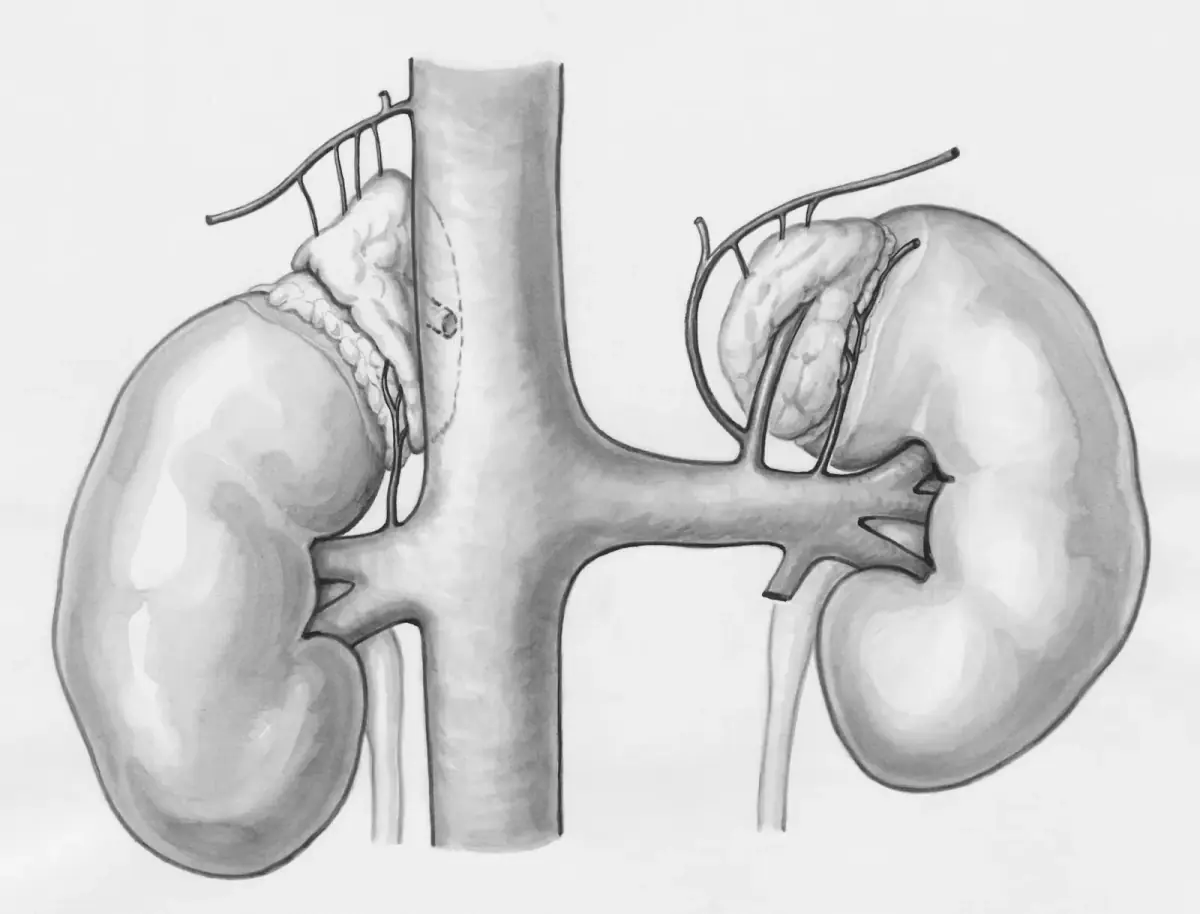
A nephrologist diagnoses and manages diseases of the kidney: acute kidney injury, chronic kidney disease, glomerular disease, kidney stones that keep coming back, salt and water disorders, high blood pressure driven by the kidneys, and kidney failure. When the kidneys stop working, the nephrologist runs dialysis and looks after transplant patients for life.
Before you look up how to become a nephrologist, notice that you have already met this subject. Chapter 16 of NCERT Class 11 Biology, Excretory Products and their Elimination, tells you each kidney has nearly one million nephrons and that the kidneys make about 180 litres of filtrate a day. Its section 16.8 then explains uremia, haemodialysis with an artificial kidney, and kidney transplantation. That page is, more or less, a nephrologist's job description in two paragraphs.
The patient load is huge. The Global Burden of Disease analysis of chronic kidney disease, published in The Lancet in 2020, counted 697.5 million cases of chronic kidney disease worldwide in 2017 and 1.2 million deaths from it. India alone had 115.1 million cases, and China and India together held almost a third of the world's patients. Numbers like that are why so many students ask how to become a nephrologist once they have seen a dialysis unit.

How to become a nephrologist in India, stage by stage?
How to become a nephrologist in India comes down to one chain with no shortcuts. You clear NEET UG and finish MBBS with the internship. You clear NEET-PG and finish MD or DNB in General Medicine or Paediatrics. Then you clear the NEET-SS Medical Group paper and complete a three-year DM or DrNB in Nephrology.
| Stage | Exam you sit | What you study | Length |
|---|---|---|---|
| 1. MBBS | NEET UG | Bachelor of Medicine and Bachelor of Surgery, with internship | 5.5 years |
| 2. Broad specialty | NEET-PG | MD or DNB General Medicine, or MD or DNB Paediatrics | 3 years |
| 3. Super-specialty | NEET-SS (Medical Group) | DM or DrNB Nephrology | 3 years |
The course lengths come from NMC's Post-Graduate Medical Education Regulations 2023 (PGMER-23): broad-specialty degrees such as MD run 3 years and super-specialty courses such as DM run 3 years. DM is the university degree. DrNB is the equivalent from the National Board of Examinations in Medical Sciences (NBEMS), awarded at NBEMS-accredited hospitals.
Can you skip the MD? No. PGMER-23's Annexure 6 lists exactly two six-year courses that start straight after MBBS: DM Neurology and MCh Neurosurgery. Nephrology is not on that list, so the MD years are part of how to become a nephrologist, every time.
If the MD and MS labels still confuse you, our guide to the difference between MD and MS explains why a kidney career runs through an MD.
Which MD leads to DM Nephrology?
Either MD or DNB General Medicine, or MD or DNB Paediatrics. Both are listed as feeders for DM Nephrology in PGMER-23 Annexure 7, and Annexure B of the NEET-SS 2025 bulletin lists the same two for DM or DrNB Nephrology. This is where nephrology differs from gastroenterology, which accepts General Medicine alone.
There is a catch that surprises paediatricians. Nephrology admissions are covered by the Medical Group paper, and the bulletin's rule 4.4.7 says that where more than one broad specialty is an eligible feeder, all of them sit the paper of that group. So a paediatrician aiming at DM Nephrology sits a paper built on MD General Medicine at PG exit level. That is a real disadvantage, and worth knowing before you choose.
A paediatrician who wants to stay with children has a second door: DM Paediatric Nephrology. The bulletin lists it as a DM-only course, open only to MD or DNB Paediatrics, and examined in the Paediatric Group paper. Here is how to become a nephrologist from each feeder degree:
| Your MD or DNB | Nephrology course you can aim for | NEET-SS paper you sit |
|---|---|---|
| General Medicine | DM or DrNB Nephrology | Medical Group |
| Paediatrics | DM or DrNB Nephrology | Medical Group |
| Paediatrics | DM Paediatric Nephrology | Paediatric Group |
If you are still working out how to become a nephrologist without closing other doors, General Medicine is the safer pick. For a wider map of which MD opens which DM, futureMBBS has a useful overview of medical specialisations after MBBS.
Nephrologist or urologist: who does what?
Both work on the kidneys and urinary tract, but one treats with medicines and dialysis and the other operates. Mixing them up is the most common mistake students make when they look up how to become a nephrologist. A nephrologist holds a DM, a medical super-specialty. A urologist holds an MCh or DrNB in Urology after MS or DNB General Surgery, and sits the NEET-SS Surgical Group paper instead.
| Nephrologist | Urologist | |
|---|---|---|
| Super-specialty degree | DM or DrNB Nephrology | MCh or DrNB Urology |
| Feeder degree | MD or DNB General Medicine or Paediatrics | MS or DNB General Surgery |
| NEET-SS paper | Medical Group | Surgical Group |
| Typical work | Kidney failure, dialysis, glomerular disease, salt and water disorders, transplant medicine | Operations on the kidney and urinary tract |
A kidney transplant shows the split well. The operation is surgical work, but the nephrologist's own training covers evaluating the donor and the recipient, immunosuppression to stop rejection, ICU care after the transplant and follow-up of the recipient for years. If cutting is what pulls you in, you belong on the surgical side, and how to become a nephrologist is the wrong question for you. If it is physiology and long-term care, nephrology fits. Our guide on how to become a cardiologist in India describes another career that shares the same Medical Group paper.
How does NEET-SS decide your nephrology seat?
NEET-SS is the single national entrance exam for every DM, MCh and DrNB seat in India, run by NBEMS. A future nephrologist sits the Medical Group paper and lands on one merit list with ten super-specialties, including cardiology, gastroenterology and neurology. Your rank then decides whether a nephrology seat is still open. For anyone serious about how to become a nephrologist, this paper is the real gate.
The rules, as the NEET-SS 2025 Information Bulletin lays them out:
| Feature | NEET-SS 2025 rule |
|---|---|
| Mode | Computer based |
| Questions | 150 multiple choice questions in 150 minutes |
| Sections | Three timed sections of 50 questions and 50 minutes each; no going back to a closed section |
| Marking | Plus 4 for a correct answer, minus 1 for a wrong one, 0 for unattempted |
| Nephrology paper | Medical Group, built on MD/DNB General Medicine at PG exit level |
| Qualifying | 50th percentile or above in your group's merit list |
| Normalisation | None; merit is strictly on marks obtained |
| Counselling | Medical Counselling Committee (MCC), DGHS |
The 2025 cycle gives you a feel for the calendar. Applications ran from 5 to 25 November 2025, the Medical Group paper was held on 27 December 2025 from 9:00 AM to 11:30 AM, and results were due by 28 January 2026. Dates change every year, so check the NBEMS NEET-SS page for your own cycle. futureMBBS also has a plain-English guide to NEET-SS if you want the exam in more detail.
Inside the three years of nephrology training
Most guides on how to become a nephrologist stop at the entrance exam. The training itself is where the job is learned. NBEMS's guideline for DNB Nephrology (2017) is the clearest public picture of it. It sets the course at 3 years and splits the time like this:
What happens in those postings:
- Wards: taking histories, running investigations and managing patients under a postgraduate teacher.
- Dialysis: placing the access lines for haemodialysis, inserting peritoneal dialysis catheters and doing kidney biopsies under supervision.
- Transplantation: evaluating donors and recipients, brain death criteria, counselling families about organ donation, ICU care of recipients and follow-up.
The guideline also sets numbers. By the end, a trainee is expected to have done at least 50 native kidney biopsies, 25 biopsies of transplanted kidneys and 300 haemodialysis procedures, including continuous therapies such as CVVHD and CRRT. It lists 50 peritoneal dialysis procedures too, while admitting that most hospitals rarely use that method now. There are weekly case discussions, journal clubs and a transplant meeting, a monthly nephro-urology conference, and a thesis due at the end of the three years.
One honest caveat: this is NBEMS's DNB document. A university DM course follows NMC's curriculum and its own university's rules, so the exact months can differ. The three pillars (wards, dialysis, transplant) are the same everywhere.
How many years does it take to become a nephrologist?
About 11.5 years from Class 12 with no gap years. MBBS takes five years and six months including the one-year internship, a length the government confirmed in a PIB release. MD adds 3 years and DM Nephrology another 3. That total is our arithmetic on official course lengths.
| Milestone | Years after Class 12 (no gaps) |
|---|---|
| MBBS with internship done | 5.5 |
| MD or DNB General Medicine or Paediatrics done | 8.5 |
| DM or DrNB Nephrology done | 11.5 |
So the honest answer to how to become a nephrologist quickly is that there is no quick version. Real life usually adds a year or two. A second NEET-PG attempt or a year of NEET-SS preparation after MD each add one. Plan for 12 to 13 years, and treat anything less as a bonus. The first half of the journey, up to NEET-PG, is laid out in our guide on how to become a doctor in India after NEET.
Why are nephrology seats limited?
Because NMC ties super-specialty seats to beds and teachers. Under its Minimum Standard Requirements for postgraduate courses (2023), a nephrology unit needs at least 16 beds to start a DM course with 2 seats. Going to 3 seats needs 20 beds, and 5 seats needs 30 beds.
| Beds in the nephrology unit | DM seats allowed |
|---|---|
| 16 | 2 (to start) |
| 20 | 3 |
| 30 | 5 |
So even a large department trains only a handful of nephrologists a year. That scarcity is part of how to become a nephrologist in India: the competition is for a small number of seats. The exact national seat count changes every cycle and appears only in that year's MCC seat matrix, which is why we do not quote a figure here.
What you can do now, in Class 11 or 12
If you are 16 or 17 and wondering how to become a nephrologist, the most useful step right now is a strong NEET score. Everything after that has its own exam and its own moment of choice. Here is the order that works:
- Get into MBBS first. Nothing on this route happens without it. Start with the NEET 2027 exam pattern so you know exactly what the paper looks like.
- Learn Chapter 16 of NCERT Class 11 Biology properly now. Filtration, tubular reabsorption and the regulation of kidney function are NEET questions today and the basis of nephrology later.
- During MBBS, spend time in the medicine wards and the dialysis unit. You will find out quickly whether long-term kidney care suits you.
- Clear NEET-PG and choose MD or DNB General Medicine. Paediatrics also keeps nephrology open, but you will sit a medicine-based NEET-SS paper.
- In MD, keep your whole General Medicine base strong. The Medical Group paper tests Medicine at PG exit level, not just the kidney.
- Sit the NEET-SS Medical Group paper and rank nephrology carefully against the other nine specialties in MCC counselling.
You don't need to settle how to become a nephrologist, or whether to, right now. MD General Medicine feeds many DM courses, so a student who starts out wanting nephrology and falls for cardiology or neurology during residency loses nothing. To compare branches side by side, read our post on medical specializations for NEET aspirants, and for what the years of training actually pay, see doctor salary in India.
Every answer to how to become a nephrologist in India starts with a NEET score. If you're building yours now, NEETsheet is our NEET UG prep app: NCERT-aligned questions, full-length timed mocks and a clear view of where you lose marks. Start at neetsheet.in.
Sources
Every rule, date and figure above comes from these official documents, opened and read on 10 October 2026.
- National Board of Examinations in Medical Sciences (NBEMS), NEET-SS 2025 Information Bulletin (clauses 4.1 and 4.3 on mode and sections, 4.4.6 to 4.4.8 on paper and marking, Table 1 question paper groups, Table 3 exam dates, clause 10 qualifying criteria and merit list, Annexures A and B feeder lists, important dates): https://nbe.edu.in/IB/NEET-SS%202025%20information%20bulletin.pdf
- NBEMS, NEET-SS overview page: https://natboard.edu.in/viewnbeexam?exam=neetss
- National Board of Examinations, Guidelines for Competency Based Training Programme in DNB Nephrology, 2017 (eligibility, 3-year duration, postings, procedure targets, thesis): https://www.nbe.edu.in/mainpdf/curriculum/Nephrology-2017.pdf
- National Medical Commission, NMC Compendium 2024, Volume 2: Regulations (PGMER-23, Chapter II course durations, Annexure 6 six-year courses, Annexure 7 feeder qualifications): https://nmc.org.in/storage/publications/e-compendium-2024/OhPCE85gIEukF690oyRZDo3p37wrUp22ArQ3FGTM.pdf
- National Medical Commission, NMC Compendium 2024, Volume 2: Minimum Standard Requirements for Post Graduate Courses 2023 (Category IV super-specialty bed and seat norms, Nephrology): https://nmc.org.in/storage/publications/e-compendium-2024/ZMRkwrHslyIOxOCMNvixTU8YSZfP6INYWZun5W1r.pdf
- NCERT, Biology Class 11, Chapter 16, Excretory Products and their Elimination (nephrons, filtration, section 16.8 on haemodialysis and transplantation): https://ncert.nic.in/textbook/pdf/kebo116.pdf
- GBD Chronic Kidney Disease Collaboration, "Global, regional, and national burden of chronic kidney disease, 1990 to 2017", The Lancet, 2020 (697.5 million cases and 1.2 million deaths worldwide in 2017; 115.1 million cases in India): https://pmc.ncbi.nlm.nih.gov/articles/PMC7049905/
- Press Information Bureau, 29 November 2016 (MBBS duration of five years six months including one year of internship): https://www.pib.gov.in/newsite/PrintRelease.aspx?relid=154562®=48&lang=2
- Medical Counselling Committee, DGHS (super-specialty counselling): https://mcc.nic.in/
Frequently Asked Questions
No. PGMER-23 lists only two six-year courses that start straight after MBBS, DM Neurology and MCh Neurosurgery. For nephrology you first need a three-year MD or DNB in General Medicine or Paediatrics through NEET-PG, then a three-year DM or DrNB in Nephrology through NEET-SS.
MD or DNB General Medicine, or MD or DNB Paediatrics. Both are listed as feeders for DM Nephrology in PGMER-23 Annexure 7 and in the NEET-SS 2025 bulletin. Paediatrics candidates still sit the Medical Group paper, which is built on General Medicine.
About 11.5 years from Class 12 with no gaps: five and a half years of MBBS including the internship, three years of MD and three years of DM Nephrology. That total is our arithmetic on official course lengths. Each repeat NEET-PG or NEET-SS attempt adds a year.
No. A nephrologist holds a DM, a medical super-specialty, and treats with medicines, dialysis, kidney biopsies and transplant care. Kidney and urinary tract operations are done by a urologist, who holds an MCh or DrNB in Urology after MS or DNB General Surgery and sits the Surgical Group paper.
A paediatric nephrologist treats children's kidney disease and holds DM Paediatric Nephrology, a course open only to MD or DNB Paediatrics and examined in the Paediatric Group paper of NEET-SS. DM or DrNB Nephrology is a different course, open to both General Medicine and Paediatrics graduates through the Medical Group paper.
If your NEET score does not get you a government MBBS seat, how to become a nephrologist is still a fair question to ask: the route is still open through a recognised MBBS degree elsewhere, and futureMBBS explains how to study MBBS abroad and come back for NEET-PG. Either way, the licensing step in between will be the National Exit Test (NExT) once NMC brings it in.