How to Become an Endocrinologist in India: The Full Route
An endocrinologist is a doctor who treats hormone disorders, from diabetes and thyroid disease to pituitary, adrenal and bone problems, with medicines rather than surgery. If you want to know how to become an endocrinologist in India, the route has three entrance exams: NEET UG for MBBS, NEET-PG for a three-year MD or DNB in General Medicine or Paediatrics, then NEET-SS for a three-year DM or DrNB in Endocrinology. From Class 12, that is about 11.5 years.
What does an endocrinologist actually do?
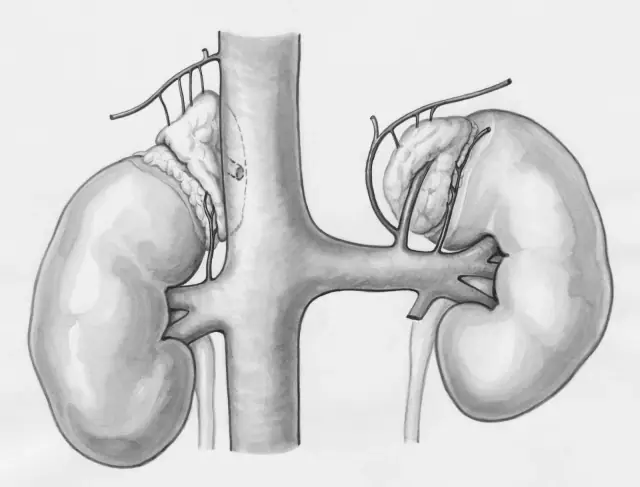
An endocrinologist works on the glands that run the body through hormones: the pituitary, thyroid, parathyroids, adrenals, pancreas, ovaries and testes. The day job is diabetes, thyroid disease, short stature and puberty problems, adrenal and pituitary tumours, osteoporosis, obesity, hormone-driven high blood pressure and infertility linked to hormones.
You have already met this subject. Chapter 19 of NCERT Class 11 Biology, Chemical Coordination and Integration, calls endocrine glands ductless and their secretions hormones. Then it walks through gigantism, pituitary dwarfism, diabetes insipidus, goitre, cretinism, Graves' disease, Addison's disease and diabetes mellitus. That chapter is close to an endocrinologist's outpatient list, and a good first answer to how to become an endocrinologist: start by mastering it for NEET.
The patient load explains why so many students look up how to become an endocrinologist. The WHO diabetes fact sheet (November 2024) counts 830 million people with diabetes in 2022, against 200 million in 1990. It adds that more than half of them were not taking medicine for it. In 2021, diabetes and diabetes-related kidney disease caused over 2 million deaths.

How to become an endocrinologist in India, stage by stage?
How to become an endocrinologist in India is a chain of three degrees, each behind its own exam. You clear NEET UG and finish MBBS with the internship. You clear NEET-PG and finish MD or DNB in General Medicine or Paediatrics. Then you clear the NEET-SS Medical Group paper and complete a three-year DM or DrNB in Endocrinology.
| Stage | Exam you sit | What you study | Length |
|---|---|---|---|
| 1. MBBS | NEET UG | Bachelor of Medicine and Bachelor of Surgery, with internship | 5.5 years |
| 2. Broad specialty | NEET-PG | MD or DNB General Medicine, or MD or DNB Paediatrics | 3 years |
| 3. Super-specialty | NEET-SS (Medical Group) | DM or DrNB Endocrinology | 3 years |
The lengths come from Chapter II of NMC's Post-Graduate Medical Education Regulations 2023 (PGMER-23): 3 years for a broad-specialty degree such as MD, and 3 years for a super-specialty course such as DM. DM is the university degree. DrNB is the equivalent from the National Board of Examinations in Medical Sciences (NBEMS), earned at an NBEMS-accredited hospital.
Is there a direct course after MBBS? No. PGMER-23's Annexure 6 lists exactly two six-year courses, DM Neurology and MCh Neurosurgery, and endocrinology is not one of them. So the MD years are always part of how to become an endocrinologist. If the MD and MS labels confuse you, our guide to the difference between MD and MS explains why this career runs through an MD.
Which MD leads to DM Endocrinology?
Either MD or DNB General Medicine, or MD or DNB Paediatrics. PGMER-23 Annexure 7 names both as feeders for DM Endocrinology, and Annexure B of the NEET-SS 2025 bulletin lists the same two for DM or DrNB Endocrinology. NBE's own DNB Endocrinology guideline repeats it: any doctor with MD or DNB in General Medicine or Paediatrics who clears the NBE entrance exam is eligible.
Two doors, but one exam paper. Rule 4.4.7 of the bulletin says that when more than one broad specialty feeds a super-specialty, all of them sit the paper of the group that covers it. Its first worked example is endocrinology itself: "Paediatrics candidates shall also have to appear in the question paper of Medical Group along with the candidates of General Medicine." That paper is built on MD General Medicine at PG exit level, so a paediatrician is answering an adult medicine paper.
| Your MD or DNB | Endocrinology course open to you | NEET-SS paper you sit |
|---|---|---|
| General Medicine | DM or DrNB Endocrinology | Medical Group |
| Paediatrics | DM or DrNB Endocrinology | Medical Group |
| General Surgery | MCh Endocrine Surgery (a surgical course) | Surgical Group |
If you are still working out how to become an endocrinologist without closing other doors, General Medicine is the safer pick: it also feeds cardiology, nephrology, gastroenterology and nine more DM courses in the bulletin's list. For a wider map of which MD opens which DM, futureMBBS has a clear overview of medical specialisations after MBBS.
The paediatric route has a twist
Children's hormone problems (growth, puberty, thyroid trouble in infants, type 1 diabetes) are their own field, and how to become an endocrinologist for children works differently. Yet PGMER-23's list of recognised DM courses has no DM Paediatric Endocrinology. Paediatric Nephrology, Paediatric Neurology, Paediatric Cardiology and five other children's DMs are there. Endocrinology is not.
What the regulations do list, in Annexure 4, is a PDCC in Paediatric Endocrinology, a Post-Doctoral Certificate Course that runs for 1 year under Chapter II. So a paediatrician who wants hormones has two official options: sit the Medical Group paper for the full DM Endocrinology, or look for a PDCC seat in paediatric endocrinology. The admission rules for a PDCC are set by the institution that runs it, so check them directly with that institute.
The fee rule matters here too, because how to become an endocrinologist from Paediatrics can mean sitting two papers. NEET-SS charges Rs. 3,500 per question paper group, and the bulletin's own example is a paediatrics candidate who wants both Endocrinology and Neonatology. That candidate sits the Medical Group and the Paediatric Group papers and pays Rs. 7,000. If you are reading this as a future paediatrician, futureMBBS's guide on how to become a pediatrician covers the MD stage in detail.
Endocrinologist or endocrine surgeon: who does what?
Both treat the thyroid, parathyroids and adrenals, but one prescribes and the other operates. This is the commonest mix-up for students who search how to become an endocrinologist. An endocrinologist holds a DM, a medical super-specialty. An endocrine surgeon holds an MCh in Endocrine Surgery, which PGMER-23 Annexure 7 opens only to MS or DNB General Surgery, and sits the NEET-SS Surgical Group paper.
| Endocrinologist | Endocrine surgeon | |
|---|---|---|
| Super-specialty degree | DM or DrNB Endocrinology | MCh Endocrine Surgery |
| Feeder degree | MD or DNB General Medicine or Paediatrics | MS or DNB General Surgery |
| NEET-SS paper | Medical Group | Surgical Group |
| Typical work | Diabetes, thyroid and pituitary disease, bone and growth disorders, hormone tests | Thyroid, parathyroid and adrenal operations |
The two meet often. NBE's endocrinology guideline schedules a weekly joint meeting of nuclear medicine, endocrine surgery and endocrinology for 50 weeks, and a pathology, endocrine surgery and endocrinology meeting every two weeks. If operating is what draws you, the path goes through MS General Surgery; futureMBBS explains how to become a surgeon. If it is physiology, lab tests and long-term care, endocrinology fits.
How does NEET-SS decide your seat?
NEET-SS is the single national entrance exam for every DM, MCh and DrNB seat in India, run by NBEMS. A future endocrinologist sits the Medical Group paper and lands on one merit list with nine other super-specialties, including cardiology, nephrology and neurology. Your rank then decides whether an endocrinology seat is still open, so for anyone serious about how to become an endocrinologist, this paper is the real gate.
The rules, from the NEET-SS 2025 Information Bulletin:
| Feature | NEET-SS 2025 rule |
|---|---|
| Questions | 150 multiple choice questions in 150 minutes |
| Marking | Plus 4 for a correct answer, minus 1 for a wrong one, 0 for unattempted |
| Endocrinology paper | Medical Group, built on MD/DNB General Medicine at PG exit level |
| Exam fee | Rs. 3,500 per question paper group, not refundable |
| Qualifying | 50th percentile or above in your group's merit list |
| Normalisation | None; merit is strictly on marks obtained |
| Counselling | Medical Counselling Committee (MCC), DGHS |
The 2025 calendar gives you a feel for the timing. Applications ran from 5 to 25 November 2025, the Medical Group paper was held on 27 December 2025 from 9:00 AM to 11:30 AM, and results were due by 28 January 2026. Dates change every cycle, so check the NBEMS NEET-SS page for yours.
Inside the three years of endocrinology training
Most guides on how to become an endocrinologist stop at the exam. The training is where the job is learned, and NBE's guideline for DNB Endocrinology (PDF dated December 2017) is the clearest public picture of it. Its postings: 12 months in the general ward, 10 in the private ward and 10 on interdepartmental and emergency consultations, plus 12 weeks of short rotations.
Those 12 weeks are revealing: 2 in biochemistry and the lab, 2 in reproductive medicine, 3 in paediatric endocrinology, and a week each in the diabetic foot lab, statistics, molecular biology, thyroid ultrasound and imaging, and FNAC (fine-needle sampling of lumps). Then come the weekly speciality clinics:
Read the chart and how to become an endocrinologist stops being abstract. Diabetes clinics fill the most weeks, but hormones in women, pregnancy and menopause get just as many. The rest of the week is academic:
- Weekly: a case presentation, a seminar, a journal club and a grand round.
- Monthly: a faculty lecture and a clinical audit.
- Across three years: at least 20 symposium topics presented, a poster and an oral presentation at a recognised conference, and a thesis submitted at the end.
One honest caveat: this is NBE's DNB document. A university DM course follows NMC's curriculum and its own university's rules, so the exact months can differ. The core (wards, clinics, lab tests and imaging) is the same everywhere.
How many years does it take to become an endocrinologist?
About 11.5 years from Class 12 with no gap years. MBBS takes five years and six months including the one-year internship, a length the government confirmed in a PIB release. MD adds 3 years and DM Endocrinology another 3. That total is our arithmetic on official course lengths.
| Milestone | Years after Class 12 (no gaps) |
|---|---|
| MBBS with internship done | 5.5 |
| MD or DNB General Medicine or Paediatrics done | 8.5 |
| DM or DrNB Endocrinology done | 11.5 |
Real life usually adds a year or two to how to become an endocrinologist. A second NEET-PG attempt, or a year spent preparing for NEET-SS after MD, each add one. Plan for 12 to 13 years and treat anything faster as a bonus. The first half of the journey, up to NEET-PG, is mapped out in our guide on how to become a doctor in India after NEET.
Why are endocrinology seats limited?
Because NMC ties super-specialty seats to beds and teachers. Under its Minimum Standard Requirements for postgraduate courses (2023), an endocrinology unit needs at least 16 beds to start a DM course with 2 seats. Going to 3 seats needs 20 beds, and 5 seats needs 30 beds. Endocrine Surgery has the same 16, 20 and 30 bed steps.
| Beds in the endocrinology unit | DM seats allowed |
|---|---|
| 16 | 2 (to start) |
| 20 | 3 |
| 30 | 5 |
So even a big department trains only a handful of endocrinologists a year. The national seat count changes every cycle and appears only in that year's MCC seat matrix, which is why we do not quote a figure. This scarcity is the part of how to become an endocrinologist that a Class 12 student cannot control. What you can control is the first exam.
What you can do now, in Class 11 or 12
If you are 16 or 17 and wondering how to become an endocrinologist, the useful step right now is a strong NEET score. Every later stage has its own exam and its own moment of choice. Here is the order that works:
- Get into MBBS first. Nothing on this route happens without it. Start with the NEET 2027 exam pattern so you know exactly what the paper looks like.
- Learn Chapter 19 of NCERT Class 11 Biology properly now. Hormones, their glands and their disorders are NEET questions today and endocrinology later. Our list of NEET biology diagrams includes the figure of where the endocrine glands sit.
- During MBBS, spend time in medicine outpatients and diabetes clinics. You will learn quickly whether long-term follow-up suits you.
- Clear NEET-PG and choose MD or DNB General Medicine. Paediatrics keeps endocrinology open too, but you will sit a medicine-based NEET-SS paper.
- In MD, keep your whole General Medicine base strong. The Medical Group paper tests medicine at PG exit level, not just hormones.
- Sit the NEET-SS Medical Group paper and rank endocrinology carefully against the other nine specialties in MCC counselling.
You don't need to decide all of this now. MD General Medicine feeds many DM courses, so a student who starts out set on endocrinology and falls for nephrology or cardiology during residency loses nothing. Our guide on how to become a nephrologist in India follows the same Medical Group route. To compare branches side by side, read medical specializations for NEET aspirants, and for what the training years pay, see doctor salary in India.
Every answer to how to become an endocrinologist in India starts with a NEET score. If you're building yours now, NEETsheet is our NEET UG prep app: NCERT-aligned questions, full-length timed mocks and a clear view of where you lose marks. Start at neetsheet.in.
Sources
Every rule, date and figure above comes from these official documents, opened and read on 11 October 2026.
- National Board of Examinations in Medical Sciences (NBEMS), NEET-SS 2025 Information Bulletin (Table 1 question paper groups, rule 4.4.6 question paper, rule 4.4.7 multiple feeders with the endocrinology example, rule 4.4.8 marking, exam schedule, section 5 fee and the paediatrics example, clause 10 qualifying criteria, Annexure B feeder list): https://nbe.edu.in/IB/NEET-SS%202025%20information%20bulletin.pdf
- NBEMS, NEET-SS overview page: https://natboard.edu.in/viewnbeexam?exam=neetss
- National Board of Examinations, Guidelines for Competency Based Training Programme in DNB Endocrinology (eligibility, 3-year duration, teaching activities, postings, speciality clinics, multi-departmental meetings, thesis): https://www.nbe.edu.in/mainpdf/curriculum/Endocrinology.pdf
- National Medical Commission, NMC Compendium 2024, Volume 2: Regulations (PGMER-23 Chapter II course durations, Annexure 2 DM and MCh list, Annexure 4 PDCC list, Annexure 6 six-year courses, Annexure 7 feeder qualifications): https://nmc.org.in/storage/publications/e-compendium-2024/OhPCE85gIEukF690oyRZDo3p37wrUp22ArQ3FGTM.pdf
- National Medical Commission, NMC Compendium 2024, Volume 2: Minimum Standard Requirements for Post Graduate Courses 2023 (Category IV super-specialty bed and seat norms, Endocrinology and Endocrine Surgery): https://nmc.org.in/storage/publications/e-compendium-2024/ZMRkwrHslyIOxOCMNvixTU8YSZfP6INYWZun5W1r.pdf
- NCERT, Biology Class 11, Chapter 19, Chemical Coordination and Integration (endocrine glands, hormones and the disorders named above): https://ncert.nic.in/textbook/pdf/kebo119.pdf
- World Health Organization, Diabetes fact sheet, 14 November 2024 (830 million people with diabetes in 2022, 200 million in 1990, more than half not taking medication, over 2 million deaths in 2021): https://www.who.int/news-room/fact-sheets/detail/diabetes
- Press Information Bureau, 29 November 2016 (MBBS duration of five years six months including one year of internship): https://www.pib.gov.in/newsite/PrintRelease.aspx?relid=154562®=48&lang=2
- Medical Counselling Committee, DGHS (super-specialty counselling): https://mcc.nic.in/
Frequently Asked Questions
No. PGMER-23 lists only two six-year courses that start straight after MBBS, DM Neurology and MCh Neurosurgery. For endocrinology you first need a three-year MD or DNB in General Medicine or Paediatrics through NEET-PG, then a three-year DM or DrNB in Endocrinology through NEET-SS.
MD or DNB General Medicine, or MD or DNB Paediatrics. Both are feeders for DM Endocrinology in PGMER-23 Annexure 7 and in the NEET-SS 2025 bulletin. The bulletin says paediatrics candidates must sit the Medical Group paper along with the General Medicine candidates.
About 11.5 years from Class 12 with no gaps: five and a half years of MBBS including the internship, three years of MD and three years of DM Endocrinology. That total is our arithmetic on official course lengths. Each repeat NEET-PG or NEET-SS attempt adds a year.
Not in PGMER-23. Its list of recognised DM courses has eight paediatric DMs but no paediatric endocrinology. It lists a one-year PDCC in Paediatric Endocrinology instead. A paediatrician can also take DM or DrNB Endocrinology through the NEET-SS Medical Group paper.
An endocrinologist holds a DM in Endocrinology and treats hormone disorders with medicines and tests. An endocrine surgeon holds an MCh in Endocrine Surgery after MS or DNB General Surgery, sits the NEET-SS Surgical Group paper and operates on the thyroid, parathyroid and adrenal glands.
If your NEET score does not get you a government MBBS seat, the question of how to become an endocrinologist is still a fair one: the route stays open through a recognised MBBS degree elsewhere, and futureMBBS explains how to study MBBS abroad and come back for NEET-PG. The licensing step in between will be the National Exit Test (NExT) once NMC brings it in.