Animal Kingdom for NEET: Every Phylum and Class, Sorted
Animal kingdom is NCERT Class 11 Biology Chapter 4, and in the NEET (UG) syllabus it is the last bullet of Unit 1, Diversity in Living World. The syllabus asks for something precise: non-chordates up to phylum level, chordates up to class level, with three to five salient features and at least two examples of each. This guide gives you exactly that, in two tables you can revise from, plus the lines in the chapter that most often turn a sure mark into a minus one.
What is animal kingdom in the NEET syllabus?
Animal kingdom, in the NEET sense, is the classification of Kingdom Animalia that NCERT teaches in Class 11 Biology Chapter 4. In the NEET (UG) Biology syllabus linked from the official NEET site, it is the fourth bullet of Unit 1, Diversity in Living World. The bullet reads: salient features and classification of animals, nonchordate up to phyla level and chordate up to classes level (three to five salient features and at least two examples).
Read that bracket twice. It is the most useful sentence in the whole unit, because it tells you when to stop. You need three to five features per group, not every detail, and two examples per group, not all of them.
That syllabus file is headed "Syllabus for NEET (UG) 2025". The NEET (UG) 2026 Information Bulletin answers its own FAQ on the point: there is no change in the syllabus of NEET (UG) 2026 with respect to the previous year. As of 22 October 2026, the NEET (UG) public notices list nothing about the 2027 cycle, so this is the wording to study until NTA publishes a new one. If you want to check whether any topic was dropped, our NEET 2027 deleted syllabus guide compares the lists.
How much is animal kingdom worth in NEET?
NTA does not publish marks per chapter, so nobody can tell you officially how many questions animal kingdom will get. What the bulletin does fix is the frame. In NEET (UG) 2026, Biology (Botany and Zoology) had 90 of the 180 questions and 360 of the 720 marks. A right answer earns plus four, a wrong one costs minus one, and a blank earns zero.
That marking matters more here than in most chapters. Animal kingdom questions are usually short recall: which phylum has comb plates, which class has a two-chambered heart. They take seconds. If you know the line, you gain four marks fast. If you half know it and guess, the cost of one wrong answer is real. The chapter rewards accurate memory, and accurate memory is something you can build in a week.
Which features does NCERT use to classify animals?
NCERT sorts every member of the animal kingdom with six fundamental features, set out in section 4.1. Learn these first, because the phylum table later is just these six features applied again and again.
| Feature | The options | Examples from NCERT |
|---|---|---|
| Level of organisation | Cellular, tissue, organ, organ system | Sponges cellular; coelenterates tissue; Platyhelminthes organ; annelids to chordates organ system |
| Symmetry | Asymmetrical, radial, bilateral | Sponges mostly asymmetrical; coelenterates, ctenophores, echinoderms radial; annelids, arthropods bilateral |
| Germ layers | Diploblastic (two), triploblastic (three) | Coelenterates diploblastic with mesoglea between; Platyhelminthes to chordates triploblastic |
| Coelom | Coelomate, pseudocoelomate, acoelomate | Annelids to chordates coelomate; Aschelminthes pseudocoelomate; Platyhelminthes acoelomate |
| Segmentation | Metameric or not | Earthworm shows metameric segmentation (metamerism) |
| Notochord | Present (chordates) or absent (non-chordates) | Porifera to echinoderms are non-chordates |
Two definitions from this section come up again and again. A coelom is a body cavity lined by mesoderm. A pseudocoelom is a body cavity where the mesoderm is present only as scattered pouches between ectoderm and endoderm. And the notochord is a mesodermally derived rod formed on the dorsal side during embryonic development.
One more pair hides in 4.1.1: an incomplete digestive system has a single opening (Platyhelminthes), a complete one has mouth and anus. Circulation is open when blood bathes the tissues directly and closed when it runs through vessels.
All 11 phyla of the animal kingdom in one table
Section 4.2 describes eleven phyla, from Porifera to Chordata. NCERT's own Table 4.2 compares them on the six features. The version below keeps those columns that NEET asks about most, adds the distinctive feature in plain words and gives two of NCERT's examples for each, which is exactly the depth the syllabus asks for.
| Phylum | Organisation | Symmetry | Coelom | Distinctive feature | Two NCERT examples |
|---|---|---|---|---|---|
| Porifera | Cellular | Mostly asymmetrical | Absent | Canal system, ostia, osculum, choanocytes | Sycon, Spongilla |
| Coelenterata (Cnidaria) | Tissue | Radial | Absent | Cnidoblasts; polyp and medusa forms | Physalia, Adamsia |
| Ctenophora | Tissue | Radial | Absent | Eight rows of comb plates; bioluminescence | Pleurobrachia, Ctenoplana |
| Platyhelminthes | Organ | Bilateral | Acoelomate | Flat body, hooks and suckers, flame cells | Taenia, Fasciola |
| Aschelminthes | Organ system | Bilateral | Pseudocoelomate | Round in cross-section; muscular pharynx | Ascaris, Wuchereria |
| Annelida | Organ system | Bilateral | Coelomate | Metameric segments; nephridia | Nereis, Pheretima |
| Arthropoda | Organ system | Bilateral | Coelomate | Chitinous exoskeleton; jointed appendages | Apis, Limulus |
| Mollusca | Organ system | Bilateral | Coelomate | Calcareous shell, mantle, radula | Pila, Octopus |
| Echinodermata | Organ system | Radial (adult) | Coelomate | Water vascular system; calcareous ossicles | Asterias, Echinus |
| Hemichordata | Organ system | Bilateral | Coelomate | Proboscis, collar, trunk; stomochord | Balanoglossus, Saccoglossus |
| Chordata | Organ system | Bilateral | Coelomate | Notochord, dorsal hollow nerve cord, gill slits | Ascidia, Rana |
Three size facts are worth one line each. Arthropoda is the largest phylum, and NCERT says over two-thirds of all named species on earth are arthropods. Mollusca is the second largest. Over a million animal species have been described in total, which is why the chapter opens by arguing for classification at all.
How many examples does NCERT give for each group?
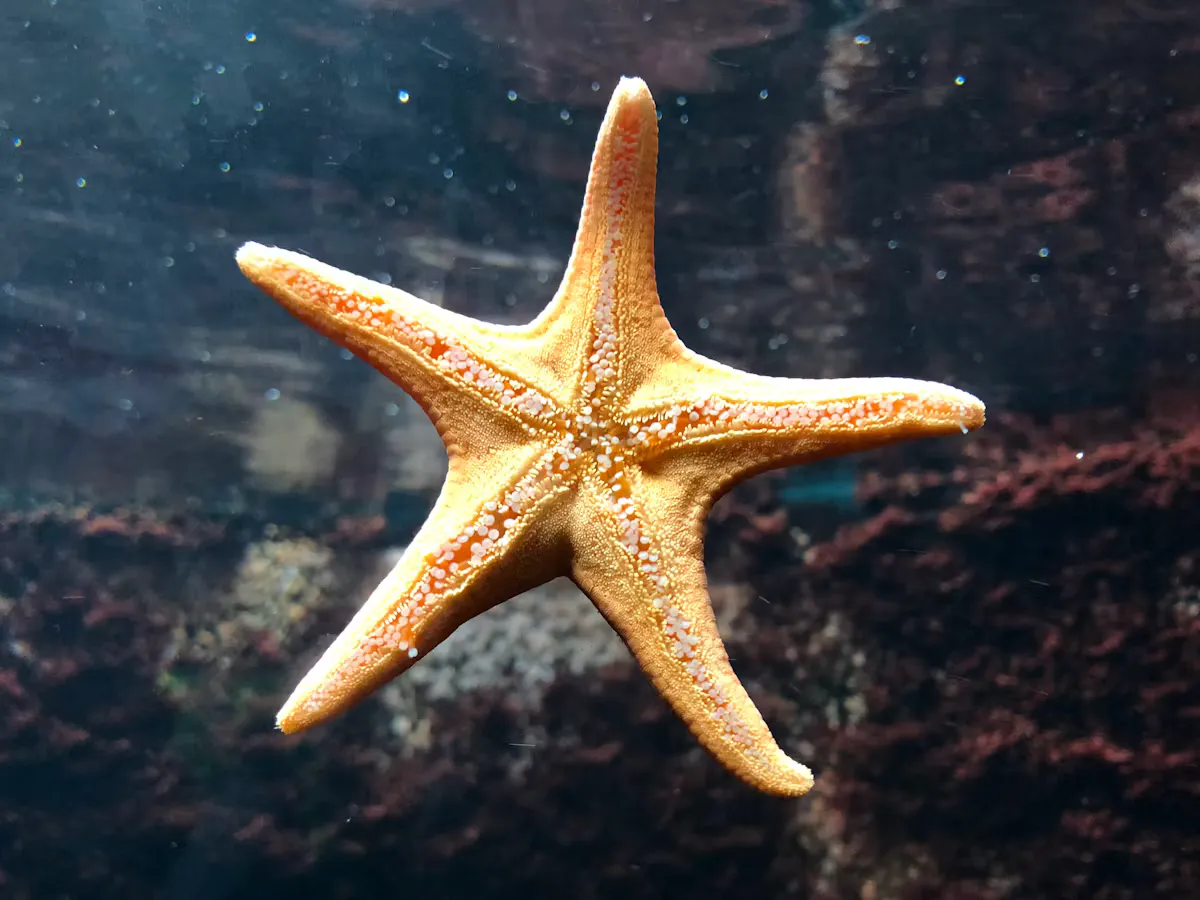
The chapter names 94 example genera in its "Examples" lines. They are not spread evenly. The chart counts them per phylum, and for Chordata per class, so you can see where the memory load really sits.
The lesson from the chart for animal kingdom revision: the syllabus needs only two examples per group, but the mammal, reptile and arthropod lists are where most option sets come from. Learn the two you would write first, then read the rest of those three lists once more, so a name in an option rings a bell.
How are chordates divided into classes?
Phylum Chordata has three subphyla: Urochordata (Tunicata), Cephalochordata and Vertebrata. The first two are the protochordates, and both are exclusively marine. The difference NEET likes: in Urochordata the notochord is present only in the larval tail, while in Cephalochordata it runs from head to tail and persists for life. Vertebrates have a notochord only in the embryo, replaced by a cartilaginous or bony vertebral column in the adult. Hence NCERT's line, which is also Exercise 9: all vertebrates are chordates but all chordates are not vertebrates.
Vertebrata then splits into Agnatha (no jaws) and Gnathostomata (jaws). Gnathostomata splits into Pisces (fins) and Tetrapoda (limbs). That gives seven classes.
| Class | Group | Heart | Body temperature | Fertilisation | Feature to remember | Two NCERT examples |
|---|---|---|---|---|---|---|
| Cyclostomata | Agnatha | Not given in NCERT | Not given in NCERT | Not given in NCERT | Jawless sucking mouth; 6 to 15 pairs of gill slits; ectoparasites on fishes | Petromyzon, Myxine |
| Chondrichthyes | Pisces | 2 chambers | Cold-blooded | Internal | Cartilaginous skeleton; placoid scales; no air bladder; claspers in males | Scoliodon, Pristis |
| Osteichthyes | Pisces | 2 chambers | Cold-blooded | Usually external | Bony skeleton; operculum over four pairs of gills; air bladder | Labeo, Hippocampus |
| Amphibia | Tetrapoda | 3 chambers | Cold-blooded | External | Moist skin without scales; cloaca; tympanum | Rana, Bufo |
| Reptilia | Tetrapoda | Usually 3; 4 in crocodiles | Cold-blooded | Internal | Dry cornified skin, scales or scutes; no external ear opening | Chelone, Naja |
| Aves | Tetrapoda | 4 chambers | Warm-blooded | Internal | Feathers; pneumatic bones; crop and gizzard; air sacs | Columba, Pavo |
| Mammalia | Tetrapoda | 4 chambers | Warm-blooded | Internal | Mammary glands; hair; external ears (pinnae) | Ornithorhynchus, Macropus |
A note on the first row: NCERT does not state the heart, temperature or fertilisation type for cyclostomes, so we leave those cells blank instead of filling them from another book. What it does say is striking enough. Cyclostomes are marine but migrate to fresh water to spawn, die within a few days of spawning, and their larvae return to the ocean after metamorphosis.
How do chordates differ from non-chordates?
NCERT's Table 4.1 sets out five differences. It is short enough to learn word for word, and it is the classic source of "which of the following is not a chordate feature" questions.
| Chordates | Non-chordates |
|---|---|
| Notochord present | Notochord absent |
| Central nervous system dorsal, hollow and single | Central nervous system ventral, solid and double |
| Pharynx perforated by gill slits | Gill slits absent |
| Heart ventral | Heart dorsal (if present) |
| Post-anal tail present | Post-anal tail absent |
Which lines in the chapter trip students up?
These are single sentences in the NCERT animal kingdom chapter, each one easy to skim past and each one the kind of fact an option set is built around. Read them as exceptions to a rule you already know.
- Sponges have internal fertilisation. Most students assume a primitive animal must fertilise externally. NCERT says sponges are hermaphrodite, fertilisation is internal and development is indirect.
- Ctenophores reproduce only sexually, with external fertilisation. Bioluminescence is "well-marked" in them, and the eight rows of ciliated comb plates help in locomotion.
- Cnidarians alternate generations. Obelia is NCERT's example of metagenesis: polyps produce medusae asexually, medusae form polyps sexually.
- Echinoderms switch symmetry. Adults are radial, larvae are bilateral. They also have no excretory system at all.
- Hemichordata is not a chordate subphylum any more. It was once placed under Chordata but is now a separate phylum under non-chordata. Its stomochord is only similar to a notochord.
- Earthworms and leeches are monoecious, Nereis is dioecious, even though all three are annelids.
- In roundworms, females are often longer than males. Sexes are separate (dioecious), and the alimentary canal is complete.
- Limulus, the king crab, is a living fossil. It sits in the arthropod examples with honey bee, silkworm, lac insect, locust and three mosquitoes.
- Cartilaginous fish must keep swimming. Chondrichthyes lack an air bladder, so they swim constantly to avoid sinking. Torpedo has electric organs and Trygon a poison sting.
- Crocodiles have a four-chambered heart, while other reptiles usually have three.
- Ornithorhynchus, the platypus, is an egg-laying mammal. NCERT lists it as the oviparous example; mammals are otherwise viviparous "with few exceptions".
One more trap is in the book itself. In NCERT's chapter summary, the sentence "The body is covered with external skeleton made of chitin" comes right after the line on molluscs. The body text and Table 4.2 are clear that the chitinous exoskeleton belongs to arthropods, while molluscs have a calcareous shell. If an option pairs molluscs with chitin, trust the table, not the summary's sentence order.
Which animals in this chapter are parasites on humans?
NCERT's Exercise 15 asks you to list animals that are parasitic on human beings, and the chapter gives you the material. Platyhelminthes are described as mostly endoparasites found in animals including human beings, with Taenia (tapeworm) and Fasciola (liver fluke) as examples. Aschelminthes include Ascaris (roundworm), Wuchereria (filaria worm) and Ancylostoma (hookworm). Among arthropods, NCERT lists Anopheles, Culex and Aedes as vectors.
These are not textbook curiosities. The World Health Organization estimates that soil-transmitted helminths, which include the roundworm Ascaris lumbricoides and the hookworm Ancylostoma duodenale, infect about 1.5 billion people, or 24% of the world's population (WHO fact sheet, 18 January 2023). For lymphatic filariasis, WHO reports that Wuchereria bancrofti causes 90% of cases and that over 657 million people in 39 countries remain threatened, with Culex, Anopheles and Aedes among the mosquitoes that spread it (WHO fact sheet, 21 November 2024). Linking the phylum to the disease is also a good bridge into Class 12's Human Health and Disease chapter.
How should you revise animal kingdom?
Plan on three sessions across one week. Each step builds on the one before, and none of them needs more than the NCERT chapter and a notebook.
- Read NCERT Chapter 4 once without stopping. It runs from page 37 to page 54 of the Class 11 book. Mark every example genus and every word like "except", "only", "usually" or "mostly".
- Rebuild the six-feature table from memory. Level of organisation, symmetry, germ layers, coelom, segmentation, notochord. Check it against section 4.1 and fix only what you got wrong.
- Write the 11-phylum table by hand. Three to five features and two examples per phylum, exactly the depth the syllabus asks for. Then do the same for the seven vertebrate classes.
- Turn the eleven exceptions above into cards. A set of [NEET flashcards](/blogs/neet-flashcards/) with the group on one side and the odd fact on the other is faster to revise than rereading.
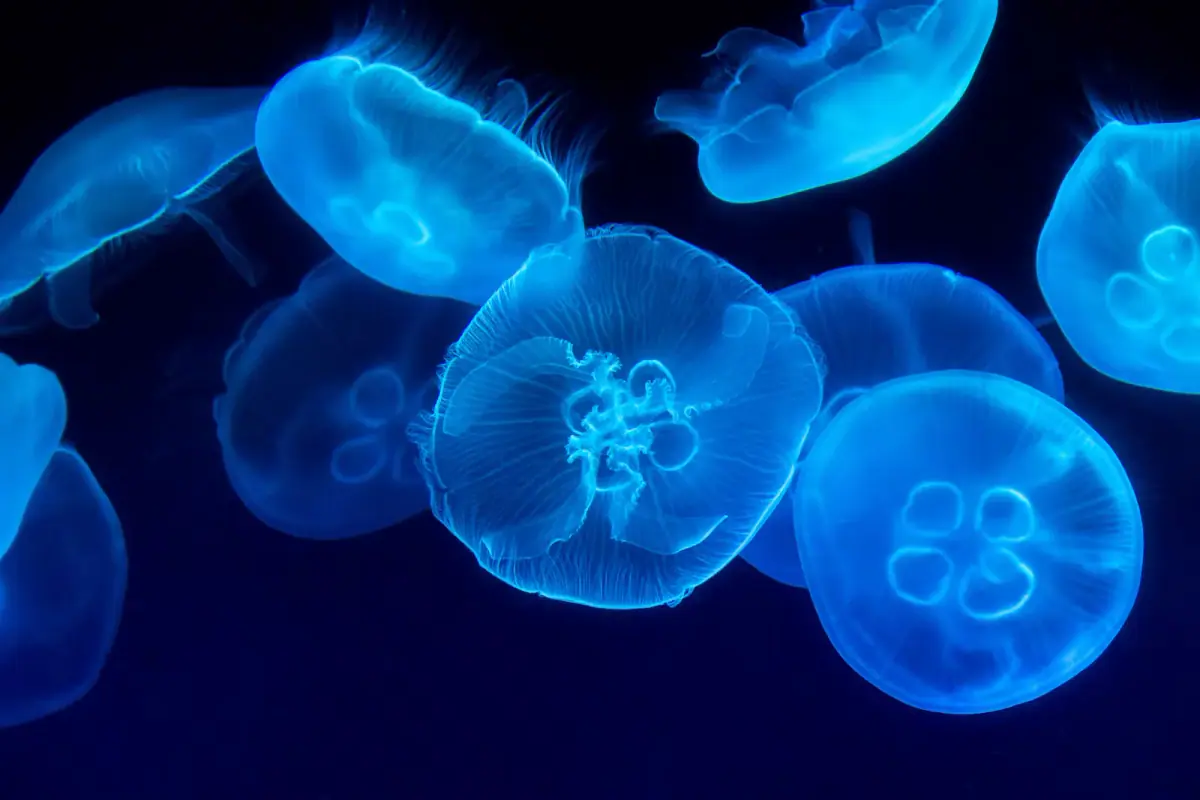
- Look at all 24 figures and name each specimen's phylum or class. You do not need to draw a jellyfish. Our [NEET biology diagrams guide](/blogs/neet-biology-diagrams/) explains why Animal Kingdom figures are for recognition, not drawing.
- Answer the 15 NCERT exercises in writing, then solve timed questions from previous NEET papers. The [previous year question papers guide](/blogs/neet-2027-previous-year-question-papers/) shows where to find the official ones, and the [NEET biology MCQ guide](/blogs/neet-biology-mcq/) covers how to practise them.
If you are in Class 11 now, this chapter fits early in the year, and the NEET 2027 Class 11 study plan shows where. For the wider Biology order, see the NEET 2027 biology preparation strategy, and if you are still learning to read NCERT line by line, the guide to studying NCERT for NEET 2027 shows the method. Our sister site futureMBBS explains what the NCERT book is and why NEET leans on it, its NEET syllabus guide puts all three subjects in one view, and its how to prepare for NEET guide covers the full plan.
Know the phylum table, or only recognise it? Timed questions tell you which. NEETsheet is our NEET UG prep app, with NCERT-aligned questions and full-length mocks that show which chapters keep costing you marks.
Sources
Every syllabus line, name and number above comes from these official documents, opened and read on 22 October 2026.
- National Testing Agency, NEET (UG) Biology syllabus file linked from neet.nta.nic.in, headed "Syllabus for NEET (UG) 2025" (Biology Unit 1, Diversity in Living World, classification of animals bullet): https://cdnbbsr.s3waas.gov.in/s37bc1ec1d9c3426357e69acd5bf320061/uploads/2026/01/20260102588210790.pdf
- National Testing Agency, Information Bulletin NEET (UG) 2026 (pattern: Biology 90 questions and 360 of 720 marks; plus four and minus one marking; syllabus FAQ stating no change for 2026): https://cdnbbsr.s3waas.gov.in/s37bc1ec1d9c3426357e69acd5bf320061/uploads/2026/02/202602231394640855.pdf
- National Testing Agency, NEET (UG) public notices, checked on 22 October 2026 for any NEET (UG) 2027 notice: https://neet.nta.nic.in/public-notices/
- NCERT, Biology, Class 11, Chapter 4 "Animal Kingdom" (Reprint 2026-27; sections 4.1 and 4.2, Tables 4.1 and 4.2, Figures 4.1 to 4.24, Exercises 1 to 15): https://ncert.nic.in/textbook/pdf/kebo104.pdf
- World Health Organization, "Soil-transmitted helminth infections" fact sheet, 18 January 2023: https://www.who.int/news-room/fact-sheets/detail/soil-transmitted-helminth-infections
- World Health Organization, "Lymphatic filariasis" fact sheet, 21 November 2024: https://www.who.int/news-room/fact-sheets/detail/lymphatic-filariasis
Frequently Asked Questions
It is NCERT Class 11 Biology, Chapter 4, titled Animal Kingdom. It has two sections, 4.1 Basis of Classification and 4.2 Classification of Animals, with 24 numbered figures and 15 exercises. In the NEET (UG) Biology syllabus it falls under Unit 1, Diversity in Living World.
The NEET (UG) syllabus sets the depth itself: non-chordates up to phylum level and chordates up to class level, with three to five salient features and at least two examples of each. That means 11 phyla and 7 vertebrate classes, each with a few features and two examples.
NCERT uses six fundamental features: level of organisation, body symmetry, the number of germ layers (diploblastic or triploblastic), the nature of the coelom, segmentation and the presence or absence of a notochord. Applied together, these six features place every phylum in the chapter, from Porifera to Chordata.
Arthropoda is the largest phylum of Animalia, and NCERT says over two-thirds of all named species on earth are arthropods. Mollusca is the second largest. Arthropods have a chitinous exoskeleton, jointed appendages, an open circulatory system and malpighian tubules for excretion.
NCERT publishes the chapter free on its own website as the Class 11 Biology Chapter 4 PDF, file kebo104, marked Reprint 2026-27. It is 18 pages, covering book pages 37 to 54. Use that official file rather than a copy from another site, so the wording you learn matches the book NEET is set from.
If you are working through Class 11 Biology this term, NEETsheet is our NEET UG prep app: NCERT-aligned questions chapter by chapter, timed mocks, and a clear view of where your marks go.