
Microbes in Human Welfare for NEET: Chapter 8 Guide
Microbes in human welfare is a topic of Unit 8, Biology and Human Welfare, in the official NEET (UG) Biology syllabus, and it is taught in one NCERT chapter: Class 12 Biology, Chapter 8. It covers microbes in household food, industrial products, sewage treatment, biogas, biocontrol and biofertilisers. This guide matches each syllabus phrase to its NCERT section, lists every microbe and product pair the chapter names, walks through the two processes students mix up, and ends with a revision plan you can start this week.
What is microbes in human welfare in the NEET syllabus?
Microbes in human welfare is the second of two bullets in Unit 8 of the NEET (UG) Biology syllabus linked from the official NEET site. That file is headed "Syllabus for NEET (UG) 2025", and the NEET (UG) 2026 Information Bulletin answers its own FAQ on the point plainly: there is no change in the syllabus for 2026 with respect to the previous year. As of 20 October 2026, the NEET (UG) public notices carry nothing about the 2027 cycle, so this is the wording to study from until NTA publishes a new one.
The bullet reads, in full: microbes in human welfare, in household food processing, industrial production, sewage treatment, energy generation and as biocontrol agents and biofertilizers. The first bullet of the same unit is Health and Disease, which NCERT teaches separately in Chapter 7.
Here is how each phrase maps onto the chapter.
| Syllabus phrase | NCERT Class 12 Biology section | What it covers |
|---|---|---|
| Household food processing | 8.1 Microbes in Household Products | Curd, idli and dosa batter, bread, toddy, cheese |
| Industrial production | 8.2 Microbes in Industrial Products | Fermentors, beverages, antibiotics, acids, enzymes, bioactive molecules |
| Sewage treatment | 8.3 Microbes in Sewage Treatment | Primary and secondary treatment, flocs, BOD, activated sludge |
| Energy generation | 8.4 Microbes in Production of Biogas | Methanogens, rumen bacteria, gobar gas plant |
| Biocontrol agents | 8.5 Microbes as Biocontrol Agents | Ladybird, dragonflies, Bt, Trichoderma, baculoviruses, IPM |
| Biofertilizers | 8.6 Microbes as Biofertilisers | Rhizobium, Azospirillum, Azotobacter, mycorrhiza, cyanobacteria |
The chapter itself is short: the NCERT Chapter 8 PDF (Reprint 2026-27) is 12 pages long, with 8 numbered figures and 15 exercise questions. The figure count matches what our NEET biology diagrams guide lists for this chapter.
Students sometimes ask whether this chapter was dropped. It was not. If you are checking which topics really did go, the NEET 2027 deleted syllabus guide lists them, and Unit 8 still carries microbes in human welfare word for word.
How much is microbes in human welfare worth in NEET?
Nobody official publishes chapter-wise weightage. The NEET (UG) 2026 Information Bulletin fixes the paper by subject only: Physics 45 questions, Chemistry 45, Biology (Botany and Zoology) 90, for 180 questions in 180 minutes and 720 marks in total. Any per-chapter figure you see online comes from someone counting past papers, not from NTA.
What you can say with certainty is this. Biology carries 360 marks, exactly half the paper, and Biology and Human Welfare is one of only ten Biology units, with just two bullets. A wrong answer costs you one mark, and microbes in human welfare is a chapter of exact names: a question that swaps Acetobacter aceti for Aspergillus niger punishes the student who half remembered. The negative marking guide shows how that arithmetic plays out.
The upside is effort. Twelve pages, no derivations, no graphs to interpret. It is one of the cheapest chapters in the Biology section to get fully right.
Which microbe makes which product?
This is the heart of microbes in human welfare, and the table below is the one to copy from memory. Every row is from NCERT Chapter 8.
| Microbe | Type (as NCERT names it) | Product or job | NCERT section |
|---|---|---|---|
| Lactobacillus (lactic acid bacteria, LAB) | Bacterium | Milk to curd; raises vitamin B12; lactic acid | 8.1, 8.2.3 |
| Saccharomyces cerevisiae | Yeast (baker's and brewer's yeast) | Bread dough, beverages, commercial ethanol | 8.1, 8.2.1, 8.2.3 |
| Propionibacterium sharmanii | Bacterium | Large holes in Swiss cheese (CO2) | 8.1 |
| A specific fungus | Fungus | Ripening of Roquefort cheese | 8.1 |
| Penicillium notatum | Mould | Penicillin, the first antibiotic | 8.2.2 |
| Aspergillus niger | Fungus | Citric acid | 8.2.3 |
| Acetobacter aceti | Bacterium | Acetic acid | 8.2.3 |
| Clostridium butylicum | Bacterium | Butyric acid | 8.2.3 |
| Streptococcus | Bacterium | Streptokinase, the clot buster | 8.2.3 |
| Trichoderma polysporum | Fungus | Cyclosporin A, an immunosuppressant | 8.2.3 |
| Monascus purpureus | Yeast | Statins, which lower blood cholesterol | 8.2.3 |
| Methanobacterium | Bacterium (methanogen) | Methane in biogas | 8.4 |
| Bacillus thuringiensis (Bt) | Bacterium | Kills butterfly caterpillars | 8.5 |
| Trichoderma species | Fungus | Biocontrol of plant pathogens | 8.5 |
| Nucleopolyhedrovirus | Baculovirus | Narrow spectrum insecticide | 8.5 |
| Rhizobium | Bacterium (symbiotic) | Fixes nitrogen in legume root nodules | 8.6 |
| Azospirillum, Azotobacter | Bacteria (free living) | Fix nitrogen in the soil | 8.6 |
| Glomus | Fungus (mycorrhiza) | Absorbs phosphorus for the plant | 8.6 |
| Anabaena, Nostoc, Oscillatoria | Cyanobacteria | Fix nitrogen; biofertiliser in paddy fields | 8.6 |
Three of these trip students every year. Trichoderma appears twice: Trichoderma polysporum gives cyclosporin A in industry, while Trichoderma species in general are biocontrol agents in the root ecosystem. Saccharomyces cerevisiae appears three times under two nicknames. And NCERT calls Monascus purpureus a yeast, so do not write "fungus" in a statement question and assume it is wrong, or right, without reading which word NCERT used.
The enzymes need their own short list. Lipases go into detergents to remove oily stains. Pectinases and proteases clarify bottled fruit juice. Streptokinase, from Streptococcus and modified by genetic engineering, removes clots in patients who have had a myocardial infarction.
What happens in household and industrial uses?
The first two sections of microbes in human welfare are the most familiar, because you eat their products. At home, lactic acid bacteria turn milk into curd: they make acids that coagulate and partly digest the milk proteins, and a spoonful of old curd works as the starter because it carries millions of them. Idli and dosa batter is fermented by bacteria, and it puffs up because of the CO2 they make. Bread dough uses baker's yeast. NCERT also names toddy, made by fermenting palm sap, and fermented fish, soyabean and bamboo shoots.
In industry, microbes are grown in very large vessels called fermentors. For drinks, the same yeast ferments malted cereals and fruit juices into ethanol. The distinction NEET likes: wine and beer are made without distillation, while whisky, brandy and rum are distilled from the fermented broth.
The penicillin story, and why it still matters
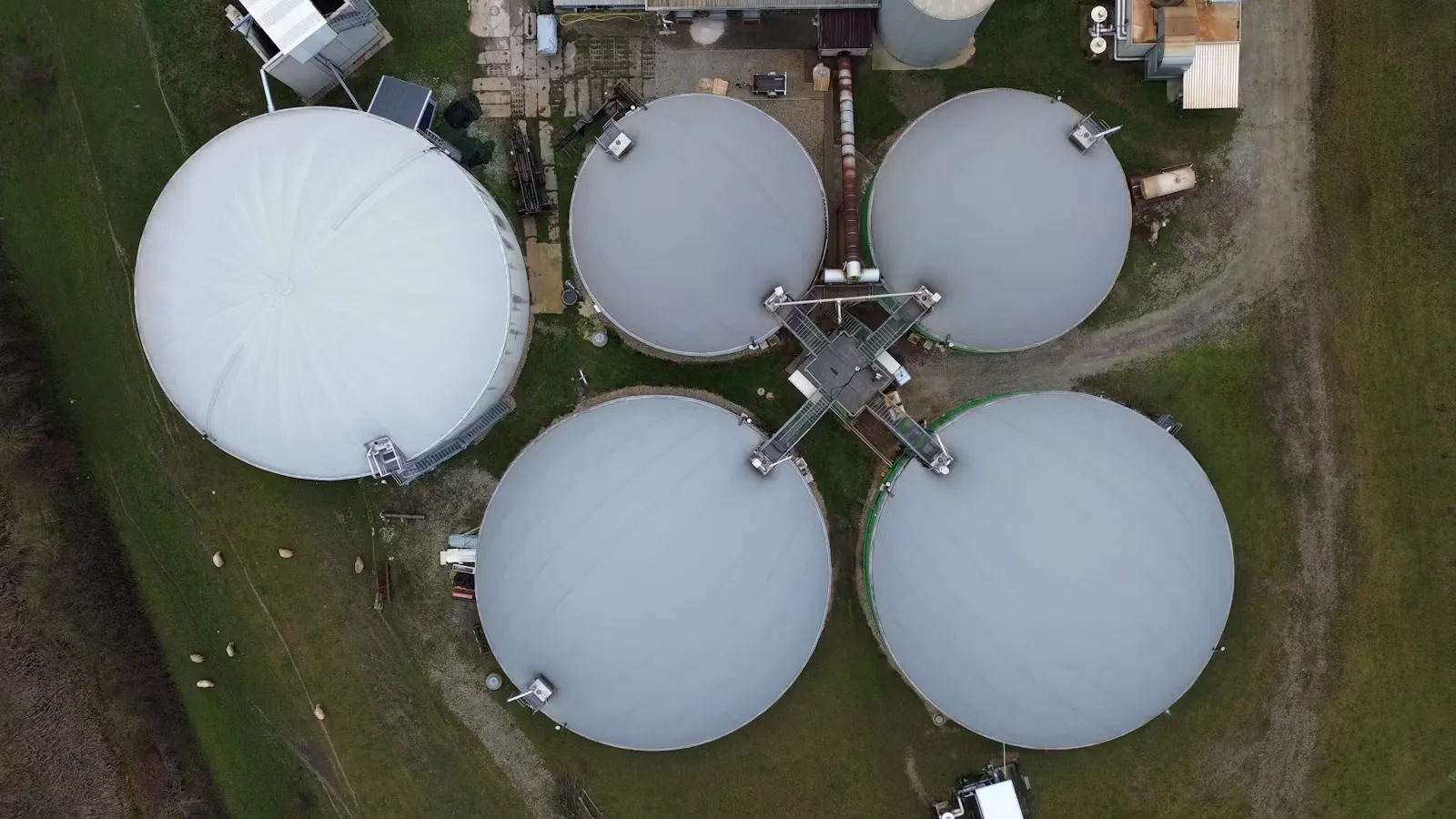
Antibiotics are the best-known part of microbes in human welfare. Penicillin was the first antibiotic, and it was found by chance. Alexander Fleming, working on Staphylococci, saw that the bacteria could not grow around a mould in an unwashed culture plate. He named the chemical after the mould, Penicillium notatum. Ernest Chain and Howard Florey later established its full potential, and the three shared the Nobel Prize in 1945. NCERT credits antibiotics with improving treatment of plague, whooping cough, diphtheria and leprosy.
The flip side is resistance. The World Health Organization's antimicrobial resistance fact sheet (16 July 2026) estimates that bacterial antimicrobial resistance was associated with more than 4.7 million deaths worldwide in 2021, and that about 1 in 6 laboratory-confirmed bacterial infections worldwide were resistant to antibiotics in 2023. That is not in the NEET syllabus, but it explains why a doctor treats antibiotics with care, and it makes the NCERT definition stick: antibiotics are chemicals made by some microbes that kill or slow the growth of other, disease-causing microbes.
How does sewage treatment work, step by step?
Sewage treatment is the longest process in microbes in human welfare, and the one NEET most often turns into a sequence question. Sewage is municipal waste water. It is full of organic matter and microbes, many of them pathogenic, so it cannot go straight into rivers. Sewage treatment plants (STPs) clean it in two stages, using the heterotrophic microbes already present in the sewage.
- Remove floating debris. Sequential filtration takes out the large floating material.
- Settle out the grit. Soil and small pebbles are removed by sedimentation. The settled solids are the primary sludge; the liquid above them is the primary effluent. This ends primary treatment, which is purely physical.
- Aerate the effluent. In secondary (biological) treatment the effluent goes into large aeration tanks, where it is stirred and air is pumped in. Aerobic microbes grow into flocs, masses of bacteria tied up with fungal filaments in a mesh.
- Let the flocs eat the organic matter. As they grow, the flocs consume most of the organic matter, which sharply reduces the BOD (biochemical oxygen demand) of the effluent.
- Settle the flocs. Once BOD is low, the effluent moves to a settling tank. The sediment is called activated sludge. A small part goes back to the aeration tank as inoculum.
- Digest the rest anaerobically. Most of the sludge is pumped into anaerobic sludge digesters, where anaerobic bacteria digest the bacteria and fungi in it and give off methane, hydrogen sulphide and CO2, which together form biogas.
- Release the effluent. The effluent from secondary treatment is generally released into rivers and streams.
BOD is the amount of oxygen that would be consumed if all the organic matter in one litre of water were oxidised by bacteria. The greater the BOD, the more polluting the water. NCERT adds that the Ministry of Environment and Forests started the Ganga Action Plan and the Yamuna Action Plan to build more STPs, because untreated sewage is still often released into rivers.
Reading the BOD exercise
NCERT's Exercise 11 gives three unlabelled samples, A, B and C, with BOD values of 20 mg/L, 8 mg/L and 400 mg/L, and asks which is river water, untreated sewage and secondary effluent, assuming the river is relatively clean.
Work it from the definition. Higher BOD means more organic matter, so C at 400 mg/L is untreated sewage and the most polluted. Secondary treatment lowers BOD a lot but not to zero, and the question tells you the river is relatively clean, so the lowest value, B at 8 mg/L, is river water and A at 20 mg/L is the secondary effluent. NEET rarely asks this exact sum, but it often asks you to rank samples by BOD, and the logic is the same.
Why do methanogens make biogas?
Energy generation in microbes in human welfare means one thing: biogas. Biogas is a mixture of gases, mostly methane, produced by microbes and usable as fuel. In dough, cheese and drinks the main gas is CO2. Certain bacteria that grow anaerobically on cellulose, though, make a lot of methane along with CO2 and H2. NCERT calls them methanogens, and its example is Methanobacterium.
Methanogens live in two places the chapter names: the anaerobic sludge of sewage plants, and the rumen of cattle, where they help break down cellulose. That is why cattle dung, gobar, is rich in them, and why biogas is also called gobar gas.
A biogas plant, as NCERT describes it, is a concrete tank 10 to 15 feet deep, fed with bio-waste and a slurry of dung. A floating cover rises as gas builds up, an outlet pipe takes the gas to nearby houses for cooking and lighting, and the spent slurry comes out through another outlet and can be used as fertiliser. NCERT credits the Indian Agricultural Research Institute (IARI) and the Khadi and Village Industries Commission (KVIC) for developing the technology in India.
Biocontrol agents and biofertilisers, side by side
Biocontrol is the use of biological methods to control plant diseases and pests. Biofertilisers are organisms that enrich the nutrient quality of the soil. Both exist to cut the use of farm chemicals, which is why NCERT ends microbes in human welfare with them next to each other.
| Biocontrol agents (8.5) | Biofertilisers (8.6) | |
|---|---|---|
| Job | Control pests and plant diseases | Enrich soil nutrients |
| Insect examples | Ladybird (eats aphids), dragonflies (eat mosquitoes) | None |
| Bacteria | Bacillus thuringiensis | Rhizobium, Azospirillum, Azotobacter |
| Fungi | Trichoderma | Glomus (mycorrhiza) |
| Others | Baculoviruses (Nucleopolyhedrovirus) | Cyanobacteria: Anabaena, Nostoc, Oscillatoria |
How Bt works. Bt is sold as dried spores in sachets, mixed with water and sprayed on plants such as brassicas and fruit trees. Insect larvae eat it, the toxin is released in their gut, and the caterpillars die while other insects are left unharmed. Its toxin genes have since been put into plants such as Bt-cotton, which Chapter 10 covers.
Why baculoviruses are prized. They are species specific and narrow spectrum, with no negative impact shown on plants, mammals, birds, fish or non-target insects. NCERT links that to integrated pest management (IPM), where beneficial insects are kept alive on purpose.
How Glomus helps. The fungus absorbs phosphorus from the soil and passes it to the plant. Plants with mycorrhiza also show resistance to root-borne pathogens, tolerance to salinity and drought, and better overall growth.
Seven mistakes that cost marks in microbes in human welfare
- Mixing up the three acids. Citric acid is Aspergillus niger (a fungus), acetic acid is Acetobacter aceti (a bacterium), butyric acid is Clostridium butylicum (a bacterium).
- Giving the cheese holes to the wrong organism. Swiss cheese holes come from CO2 made by Propionibacterium sharmanii. Roquefort is ripened by a fungus.
- Treating Trichoderma as one fact. Trichoderma polysporum makes cyclosporin A; Trichoderma species are biocontrol agents.
- Calling primary treatment biological. It is physical. Microbes only do the work in secondary treatment.
- Writing CO2 as the main gas of biogas. It is methane. CO2 is the main gas in dough, cheese and drinks.
- Distilling the wrong drinks. Wine and beer are not distilled; whisky, brandy and rum are.
- Putting Rhizobium in the soil on its own. Rhizobium is symbiotic, in legume root nodules. The free-living nitrogen fixers NCERT names are Azospirillum and Azotobacter.
How should you revise microbes in human welfare?
Plan on two short sessions rather than one long one. Each step uses the one before.
- Read NCERT Chapter 8 once without stopping. It is twelve pages. Underline every organism name and the product next to it.
- Rebuild the microbe and product table from memory. Check it against the book and redo only the rows you missed. A set of [NEET flashcards](/blogs/neet-flashcards/) with the organism on one side and the product on the other works well here.
- Write the seven sewage steps in order. Then say which ones are primary and which are secondary, and where biogas is made.
- Draw the biogas plant (Figure 8.8) and label it. Tank, slurry, floating cover, gas outlet, spent slurry outlet.
- Answer all 15 NCERT exercise questions in writing. Exercise 6 (two fungi for antibiotics), Exercise 11 (BOD) and Exercise 12 (cyclosporin A and statins) are the most NEET-like.
- Solve timed MCQs on the chapter. Use previous NEET papers first. The [NEET biology MCQ guide](/blogs/neet-biology-mcq/) and the [previous year question papers guide](/blogs/neet-2027-previous-year-question-papers/) show where to find official papers.
If you are new to reading NCERT this closely, the guide to studying NCERT for NEET 2027 shows the method, and futureMBBS explains what the NCERT book is and why NEET leans on it. For where this chapter sits in your year, the NEET 2027 biology preparation strategy lays out the unit order, futureMBBS's NEET syllabus guide puts all three subjects in one view, and its how to prepare for NEET guide covers the wider plan.
Know the table, or only recognise it? Timed questions tell you which. NEETsheet is our NEET UG prep app, with NCERT-aligned questions and full-length mocks that show which chapters keep costing you marks.
Sources
Every syllabus line, name and number above comes from these official documents, opened and read on 20 October 2026.
- National Testing Agency, NEET (UG) Biology syllabus file linked from neet.nta.nic.in, headed "Syllabus for NEET (UG) 2025" (Biology Unit 8, Biology and Human Welfare, microbes in human welfare bullet): https://cdnbbsr.s3waas.gov.in/s37bc1ec1d9c3426357e69acd5bf320061/uploads/2026/01/20260102588210790.pdf
- National Testing Agency, Information Bulletin NEET (UG) 2026 (pattern: Biology 90 questions and 360 of 720 marks; plus four and minus one marking; syllabus FAQ stating no change for 2026): https://cdnbbsr.s3waas.gov.in/s37bc1ec1d9c3426357e69acd5bf320061/uploads/2026/02/202602231394640855.pdf
- National Testing Agency, NEET (UG) public notices, checked on 20 October 2026 for any NEET (UG) 2027 notice: https://neet.nta.nic.in/public-notices/
- NCERT, Biology, Class 12, Chapter 8 "Microbes in Human Welfare" (Reprint 2026-27): https://ncert.nic.in/textbook/pdf/lebo108.pdf
- World Health Organization, "Antimicrobial resistance" fact sheet, 16 July 2026: https://www.who.int/news-room/fact-sheets/detail/antimicrobial-resistance
Frequently Asked Questions
NCERT Class 12 Biology, Chapter 8, titled Microbes in Human Welfare. Its six sections cover household products, industrial products, sewage treatment, biogas, biocontrol agents and biofertilisers. In the NEET (UG) Biology syllabus it sits under Unit 8, Biology and Human Welfare, next to Health and Disease.
No. Unit 8 of the NEET (UG) Biology syllabus still lists microbes in human welfare in household food processing, industrial production, sewage treatment, energy generation and as biocontrol agents and biofertilizers. The NEET (UG) 2026 Information Bulletin says the 2026 syllabus did not change from the previous year.
Aspergillus niger, a fungus. NCERT lists it with three other acid producers: Acetobacter aceti for acetic acid, Clostridium butylicum for butyric acid and Lactobacillus for lactic acid. The last three are bacteria, so a question that calls the citric acid producer a bacterium is wrong.
BOD, biochemical oxygen demand, is the amount of oxygen that would be consumed if all the organic matter in one litre of water were oxidised by bacteria. It is an indirect measure of organic matter. The higher the BOD, the more polluting the water, and secondary treatment runs until the BOD is significantly reduced.
Because cattle dung, called gobar, is rich in methanogens such as Methanobacterium. These bacteria live in the rumen of cattle, where they break down cellulose, and they leave the animal in its dung. Fed into a biogas plant as slurry, they produce a gas that is mostly methane, used for cooking and lighting.
If you are revising Class 12 Biology this term, NEETsheet is our NEET UG prep app: NCERT-aligned questions chapter by chapter, timed mocks, and a clear view of where your marks go.