
NEET 2027 Biology Preparation Strategy: The NCERT-First Plan
A strong NEET 2027 Biology preparation strategy starts from one simple fact: Biology alone is worth 360 of the 720 marks on the paper — a full 50% — and it is the single most scoring, most NCERT-bound subject in the exam. Get Biology right and you build a rank cushion that Physics and Chemistry rarely give you. This guide lays out an NCERT-first plan for Class 11, Class 12 and dropper aspirants: which units carry the most weight, how to sequence your revision, and how to convert reading into recall through timed, on-screen practice — the habit that matters even more now that NEET is reportedly moving to a computer-based format from 2027.
Key Takeaways
- Biology carries 360 marks (90 questions) in NEET — Botany and Zoology contribute 45 questions each — so it deserves the largest share of your daily study time.
- NEET Biology is overwhelmingly NCERT-based; coaching analyses put roughly 85–90% of questions within the NCERT textbook (treat as indicative, not official).
- A handful of units — Genetics & Evolution, Ecology, Human Physiology, Reproduction, Cell Biology and Plant Physiology — account for the majority of Biology questions in a typical year.
- The NEET 2027 syllabus is expected to stay the same as 2026 (the reduced NCERT curriculum); no change had been notified as of mid-2026.
- With NEET 2027 reportedly shifting to computer-based testing, timed on-screen MCQ practice should be built into your routine from day one.
This is a subject-strategy deep dive for Biology specifically — not a full dropper roadmap or an exam-format explainer. For the broader picture, see futureMBBS's NEET syllabus overview, the NEET exam pattern guide and how to prepare for NEET. Chapter-weightage percentages below are drawn from coaching analyses of previous years' papers and are indicative — always confirm the official syllabus on the NTA/NMC notification for 2027.
A complete NEET 2027 Biology preparation strategy does not stand alone — Physics and Chemistry still make up half the paper. This guide is one of four companion strategies in our NEET 2027 subject series: see the Physics strategy, the Chemistry strategy and the dropper roadmap for the rest of the plan.
Why is Biology the backbone of a NEET 2027 Biology preparation strategy?
Because of simple arithmetic. The NEET paper has 180 questions for 720 marks, split across Physics (45 questions), Chemistry (45 questions) and Biology (90 questions). Each correct answer earns +4 and each wrong answer costs −1, with all questions compulsory since the Section A/B optional format was removed in 2026.
That means Biology is worth exactly as much as Physics and Chemistry combined. It is also the most predictable of the three: where Physics rewards problem-solving speed and Chemistry mixes conceptual and factual recall, Biology rewards disciplined, repeated reading of a fixed text. For most successful candidates, Biology is the section where a 340+ score is realistic — and that is what turns a good rank into a great one.
Physics carries 180 marks from 45 questions, Chemistry 180 marks from 45 questions, and Biology 360 marks from 90 questions, out of a total of 720 marks.NEET marks by subject (out of 720)180180360Physics (45 Q)Chemistry (45 Q)Biology (90 Q)180 questions total, 720 marks. +4 correct, −1 wrong. All questions compulsory.
What does the NEET 2027 Biology syllabus cover?
The Biology syllabus is split evenly between Botany and Zoology — 45 questions and 180 marks each — drawn from the Class 11 and Class 12 NCERT textbooks. As of mid-2026, the NTA had not announced any change to the NEET syllabus for 2027, so you should plan on the same reduced NCERT curriculum used for NEET 2026. Do confirm this on the official NTA notification once it is released for 2027.
The units you must cover include Diversity in the Living World, Structural Organisation, Cell Structure and Function, Plant Physiology, Human Physiology, Reproduction, Genetics and Evolution, Biology in Human Welfare, Biotechnology, and Ecology. The trap most students fall into is treating every unit as equally important. It is not — some units reappear year after year with far more questions than others.
Which Biology chapters carry the highest weightage?
Based on coaching analyses of previous years' NEET papers, a small cluster of units dominates the Biology section. The figures below are indicative (they vary year to year and between analysts), but the order is remarkably stable and is the more useful signal.
Approximate share of Biology questions by unit: Genetics and Evolution (~18%), Ecology (~15%), Human Physiology (~12%), Reproduction (~12%), Cell Biology (~10%), and Plant Physiology (~10%). Together, these six units account for approximately 77% of Biology questions.
Indicative Biology unit weightage (% of Biology questions):
- Genetics & Evolution — ~18%
- Ecology — ~15%
- Human Physiology — ~12%
- Reproduction — ~12%
- Cell Biology — ~10%
- Plant Physiology — ~10%
These percentages are indicative and based on coaching analyses of previous years' NEET question papers (PYQs). Together, these six units contribute approximately 77% of Biology questions.
If you are short on time, this is your priority ladder:
- Genetics & Evolution — Molecular Basis of Inheritance and Principles of Inheritance and Variation are perennial high-scorers.
- Ecology — high-yield, concept-light and among the easiest marks to lock in with NCERT lines.
- Human Physiology — dense but heavily tested; diagrams and cycles reward active recall.
- Reproduction — plant and human reproduction together deliver a reliable block of questions.
- Cell Biology & Cell Division — foundational and factual; low effort, steady returns.
- Plant Physiology — process-heavy; use flowcharts to fix the sequences.
Master these six and you have covered the large majority of Biology questions. The remaining units still matter — never skip them entirely — but they get your second pass, not your first.
Why is NCERT the non-negotiable core?
Because NEET Biology is, more than any other section, a test of how well you know one book. Coaching analyses repeatedly estimate that around 85–90% of Biology questions can be traced directly to statements, diagrams, tables or example boxes in the NCERT textbook (treat this as an indicative pattern, not an official figure). Question-setters lift phrasing from NCERT almost verbatim, and the "assertion–reason" and "match-the-column" styles reward students who can recall exact lines.
Your practical rule: read NCERT line by line, including the small print. Boxed examples, figure captions, summary tables and the "did you know" margins are all fair game. A reference book has its place for practice questions, but it should supplement — never replace — the textbook. If a coaching module and NCERT disagree on a fact, NCERT wins for exam purposes. This is exactly why NCERT sits at the centre of every serious NEET 2027 Biology preparation strategy.
Repetition alone is not what makes NCERT stick — how you revisit it matters more. A 2026 systematic review and meta-analysis by Maye and Hurley in The Clinical Teacher, pooling 13 studies and 21,415 learners in medical education, found spaced repetition produced a statistically significant learning advantage over single-pass study (standardised mean difference 0.78, 95% CI 0.56–0.99) (PubMed, 2026). In practice: re-read a Biology unit at increasing intervals — not just once before the exam — rather than assuming one careful read is enough.
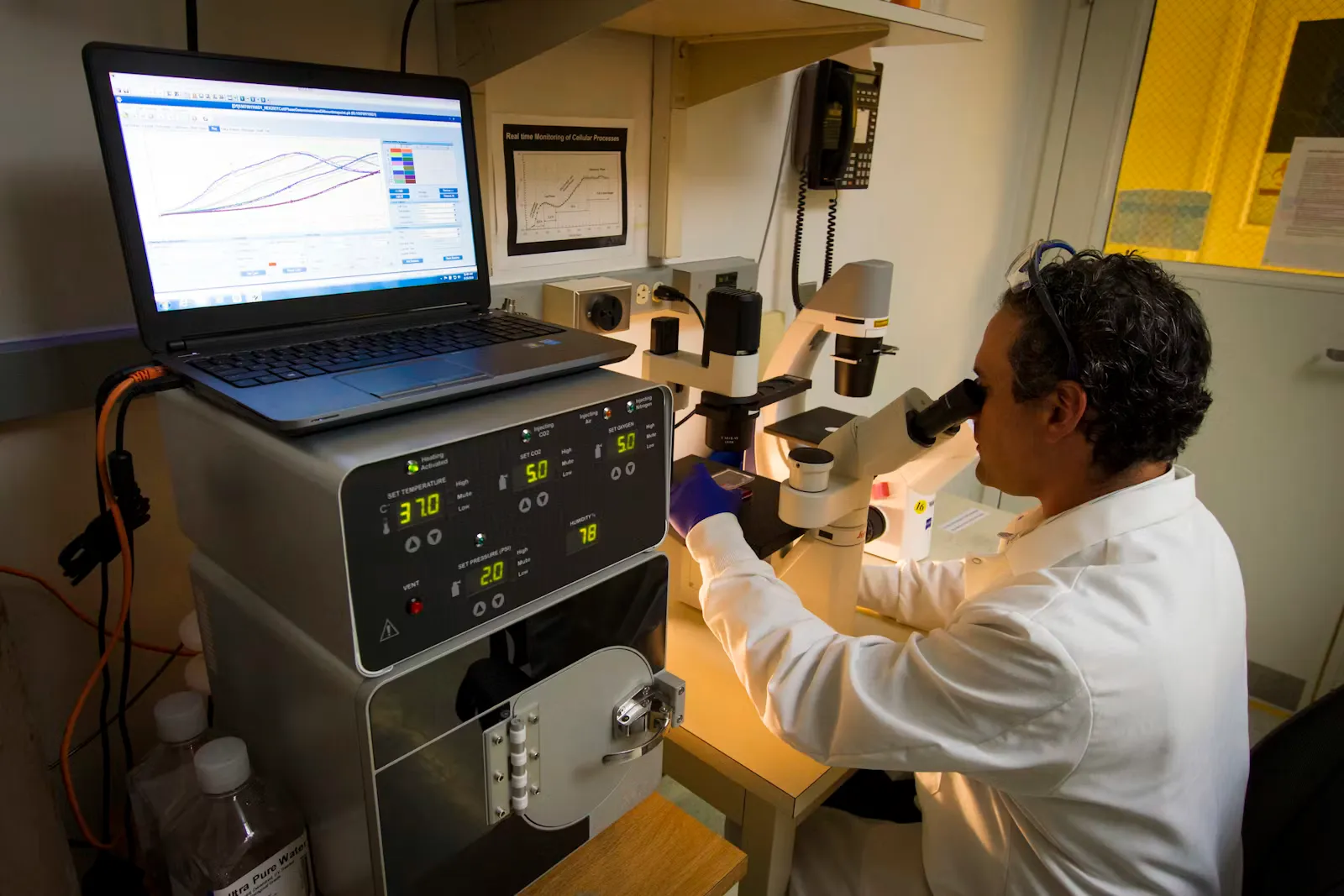
An NCERT-first read followed by timed on-screen MCQs is the core loop of an effective NEET 2027 Biology preparation strategy.
How should you sequence Biology across the year?
Sequencing is the part of a NEET 2027 Biology preparation strategy most students skip, going straight from "read everything" to "take a mock" with no structure in between. A month-wise rhythm keeps you from the two classic failure modes: finishing the syllabus too late to revise, or revising endlessly without ever testing yourself. Here is an indicative structure you can adapt to your class and start date.
- Foundation phase — complete first-pass NCERT reading of all units, high-weightage units first. Make one-page unit summaries as you go.
- Consolidation phase — second read of every unit, now paired with chapter-wise MCQs. Start logging every mistake in an error notebook.
- Testing phase — full-length, timed practice on screen; alternate subject-wise tests with full mock papers. Review each test the same day.
- Peak & taper — revise only from your summaries and error notebook, keep taking mocks, and protect sleep in the final weeks.
Whatever your timeline, the principle is fixed: reading is not revision, and revision is not testing. You only truly know a chapter once you can answer its questions under time pressure without the book open.
Practise Biology the way NEET 2027 will test it. NEETsheet gives you chapter-wise NCERT-aligned MCQs and full-length mock tests you attempt on screen — the exact skill you will need if NEET moves to computer-based testing in 2027. Build the habit now, one unit at a time. Start practising on NEETsheet →
How much daily time should Biology get?
Time allocation is the most neglected variable in any NEET 2027 Biology preparation strategy. Give Biology the largest single share of your Biology-Physics-Chemistry rotation, but not to the point of neglecting the other two. A workable split for most aspirants is roughly 40% Biology, 30% Chemistry, 30% Physics on a typical study day, adjusted toward whatever is weakest for you. The key is consistency: a daily hour of Biology recall beats a weekend cram, because Biology is a memory subject and memory decays without spacing.
Within your Biology block, protect time for active recall — closing the book and writing what you remember, then checking against NCERT — rather than passive re-reading, which feels productive but builds little retention. End every session with a short set of timed MCQs on that day's chapter.
How does the reported 2027 CBT switch change your Biology prep?
NEET 2027 is reported to move to a computer-based test (CBT) format, following statements attributed to the Education Ministry in 2026, with the exam expected to run in multiple shifts. Operational details — shift structure, any normalisation — had not been fully notified as of mid-2026, so keep this hedged and watch for the official NTA notification.
No NEET 2027 Biology preparation strategy is complete without planning for this shift. What does not change is the syllabus or the Biology content. What does change is the medium: you will read passages and mark answers on a screen, flag questions for review, and manage time against an on-screen clock rather than an OMR sheet. That is a learnable skill, and the students who practise it early will not lose easy Biology marks to an unfamiliar interface. This is precisely why on-screen MCQ practice — not just paper mock tests — belongs in your routine from the start. For the format details themselves, see futureMBBS's NEET exam pattern guide; this post stays focused on how to study Biology, not on the mechanics of the switch.
What if your target rank feels out of reach?
Be realistic and keep a backup in view. NEET UG 2026's result was declared on 16 July 2026, with roughly 11.21 lakh candidates qualifying out of about 20 lakh who appeared — a reminder of how competitive seats are. A disciplined Biology strategy meaningfully improves your odds, but if your projected score points away from a government MBBS seat, it is worth exploring recognised alternatives early rather than losing a year by default. futureMBBS's guide to MBBS abroad walks through the options for students weighing choices beyond their NEET rank.
For now, though, the highest-leverage thing you can do is simple and entirely in your control: open NCERT Biology, start with Genetics and Ecology, and turn every chapter you read into MCQs you can answer under time. That single habit, repeated, is the core of any working NEET 2027 Biology preparation strategy.
Sources
The facts behind this NEET 2027 Biology preparation strategy are drawn from the following sources.
- Maye, J.A. & Hurley, F. — "The Effectiveness of Spaced Repetition in Medical Education: A Systematic Review and Meta-Analysis," The Clinical Teacher 23(2) (2026): https://pubmed.ncbi.nlm.nih.gov/41601436/
- National Testing Agency (NTA) — official NEET (UG) portal (syllabus and pattern notifications): https://neet.nta.nic.in/
- National Medical Commission (Government of India) — "NEET-UG" official information: https://www.nmc.org.in/neet/neet-ug
Frequently Asked Questions
Any NEET 2027 Biology preparation strategy starts with the marks split: Biology carries 360 marks — 90 questions of 4 marks each, split as 45 questions in Botany and 45 in Zoology. That is 50% of the 720-mark paper, the same as Physics and Chemistry combined. The pattern is expected to continue into 2027 unless the NTA notifies a change.
NCERT is the essential core — coaching analyses indicate roughly 85–90% of NEET Biology questions trace back to the NCERT textbook, including its diagrams, tables and boxed examples. Read it line by line and use reference material only for extra practice questions, not as a replacement for the textbook.
Indicative coaching analyses of past papers consistently rank Genetics & Evolution, Ecology, Human Physiology, Reproduction, Cell Biology and Plant Physiology as the highest-weightage units, together covering the majority of Biology questions. Prioritise these first, then complete the remaining units.
As of mid-2026, the NTA had not announced any change; the NEET 2027 syllabus is expected to remain the same reduced NCERT curriculum used in 2026. Confirm this on the official NTA notification for NEET 2027 when it is released.
The Biology content is unchanged, but the medium is reportedly moving on screen. Build timed, on-screen MCQ practice into your routine from the start so the interface, review flags and on-screen clock feel routine on exam day. Apps like NEETsheet let you practise NCERT-aligned MCQs and full mocks the way NEET 2027 is expected to be delivered.
A well-balanced NEET 2027 Biology preparation strategy gives Biology the largest single share of your daily rotation — around 40% of your Physics-Chemistry-Biology study time is a reasonable starting point — and adjusts toward your weaker areas. Consistency matters more than long one-off sessions, because Biology rewards spaced active recall.