Biotechnology Principles and Processes: NEET Chapter Guide
Biotechnology principles and processes is NCERT Class 12 Biology Chapter 9, and it is the first bullet of Biology Unit 9 in the NEET (UG) syllabus. In fourteen pages it explains how scientists cut DNA, paste it into a vector, push it into a host cell, copy it with PCR and scale the product up in a bioreactor. This guide sorts the chapter into the tables you revise from, puts the steps in order, and flags the lines that NEET options are usually built on.
Is biotechnology principles and processes in the NEET syllabus?
Yes. Biotechnology principles and processes is the first of two bullets in Unit 9, Biotechnology and Its Applications, of the NEET (UG) Biology syllabus linked from the official NEET site. The bullet reads "Principles and process of Biotechnology: Genetic engineering (Recombinant DNA technology)". The second bullet, on insulin, vaccines, gene therapy, Bt crops and biosafety, belongs to the next NCERT chapter.
That single line is short on purpose, but biotechnology principles and processes is not a short topic. The syllabus does not list PCR, gel electrophoresis or bioreactors by name, but all of them sit inside the NCERT chapter that teaches recombinant DNA technology, so treat the chapter as the real scope. None of the sections in biotechnology principles and processes are marked "elementary idea", so every one is fair game.
The syllabus file is headed "Syllabus for NEET (UG) 2025". The NEET (UG) 2026 Information Bulletin answers its own FAQ on this: there is no change in the syllabus of NEET (UG) 2026 with respect to the previous year. As of 24 October 2026, the NEET (UG) public notices carry nothing about the 2027 cycle, so this is the wording to study until a new one appears. Our NEET 2027 deleted syllabus guide lists what was actually dropped.
What does Chapter 9 cover, section by section?
The chapter has three numbered sections, and the third one is really a sequence of six steps. Here is where each part of biotechnology principles and processes sits in the NCERT Class 12 Biology book.
| NCERT section | What it covers | Figures |
|---|---|---|
| 9.1 Principles of Biotechnology | Genetic engineering and bioprocess engineering, origin of replication, the first recombinant DNA, three basic steps | None |
| 9.2.1 Restriction Enzymes | Naming, recognition sequence, palindromes, sticky ends, gel electrophoresis | 9.1, 9.2, 9.3 |
| 9.2.2 Cloning Vectors | Ori, selectable marker, cloning sites, pBR322, insertional inactivation, Ti plasmid and retroviruses | 9.4 |
| 9.2.3 Competent Host | Calcium treatment, heat shock, micro-injection, biolistics, disarmed pathogens | None |
| 9.3.1 to 9.3.2 | Isolating DNA, cutting it, joining it with ligase | 9.5 |
| 9.3.3 PCR | Primers, Taq polymerase, three steps per cycle | 9.6 |
| 9.3.4 to 9.3.6 | Transformation, gene expression, bioreactors, downstream processing | 9.7 |
The NCERT chapter on biotechnology principles and processes opens with a one-page profile of Herbert Boyer, which is worth reading once because it sets up the 1972 experiment the whole chapter returns to.
What are the two core techniques and the three basic steps?
NCERT defines biotechnology as the use of live organisms or enzymes from organisms to produce products and processes useful to humans. Making curd, bread or wine fits that broad definition, but today the word is used mostly for processes that use genetically modified organisms at a larger scale. The book also quotes the European Federation of Biotechnology's definition: "The integration of natural science and organisms, cells, parts thereof, and molecular analogues for products and services".
In biotechnology principles and processes, two core techniques made modern biotechnology possible:
- Genetic engineering: altering the chemistry of genetic material (DNA and RNA), introducing it into a host organism and so changing the host's phenotype.
- Bioprocess engineering: keeping a sterile, contamination-free environment so that only the desired microbe or eukaryotic cell grows in large quantities, for products like antibiotics, vaccines and enzymes.
Why not just use traditional breeding? Because hybridisation often carries undesirable genes along with the desired ones. Genetic engineering lets you move only one gene, or one set of genes. And a piece of alien DNA survives in a new host only if it is linked to an origin of replication, the sequence that starts replication.
The first recombinant DNA came from Stanley Cohen and Herbert Boyer in 1972. They cut an antibiotic resistance gene out of a plasmid, linked it to a native plasmid of Salmonella typhimurium using DNA ligase, and moved it into Escherichia coli, where it was copied. NCERT then sums up genetic modification in three basic steps, the spine of biotechnology principles and processes:
- Identify the DNA with the desirable genes.
- Introduce the identified DNA into the host.
- Maintain the introduced DNA in the host and transfer it to the host's progeny.
Which tools does recombinant DNA technology need?
NCERT lists five key tools in one sentence: restriction enzymes, polymerase enzymes, ligases, vectors and the host organism. Biotechnology principles and processes questions often test which tool does which job, so keep them in one table.
| Tool | Job in the chapter | Example NCERT gives |
|---|---|---|
| Restriction endonuclease | Cuts DNA at a specific recognition sequence | EcoRI, Hind II, BamH I |
| DNA ligase | Joins the cut ends of DNA | Links the gene of interest to the vector |
| DNA polymerase | Copies DNA in the host, and in PCR | Thermostable Taq polymerase from Thermus aquaticus |
| Vector | Carries the alien DNA into the host and lets it replicate | Plasmid pBR322, Ti plasmid, disarmed retroviruses |
| Host | Takes up the recombinant DNA and multiplies it | E. coli made competent with calcium |
What do the numbers on restriction enzymes mean?
In 1963 two enzymes that restricted the growth of bacteriophage in E. coli were isolated: one added methyl groups to DNA, the other cut it. The cutting one is the restriction endonuclease. The first restriction endonuclease whose action depended on a specific sequence, Hind II, was isolated and characterised five years later. It always cuts at a particular point by recognising a sequence of six base pairs.
Today NCERT counts more than 900 restriction enzymes isolated from over 230 bacterial strains. The naming rule is a favourite question in biotechnology principles and processes. In EcoRI, "E" comes from the genus Escherichia, "co" from the species coli, "R" from the strain RY 13, and the Roman numeral "I" gives the order in which enzymes were isolated from that strain.
Restriction enzymes are nucleases. Exonucleases remove nucleotides from the ends of DNA. Endonucleases cut at specific positions inside it. Each restriction endonuclease recognises a palindromic sequence, one that reads the same on both strands when you read both in the same direction, for example 5' GAATTC 3' paired with 3' CTTAAG 5'. It cuts a little away from the centre of the palindrome, between the same two bases on both strands, which leaves single-stranded overhangs called sticky ends. Cut the vector and the source DNA with the same enzyme and their sticky ends match, so ligase can join them.
How does gel electrophoresis separate DNA?
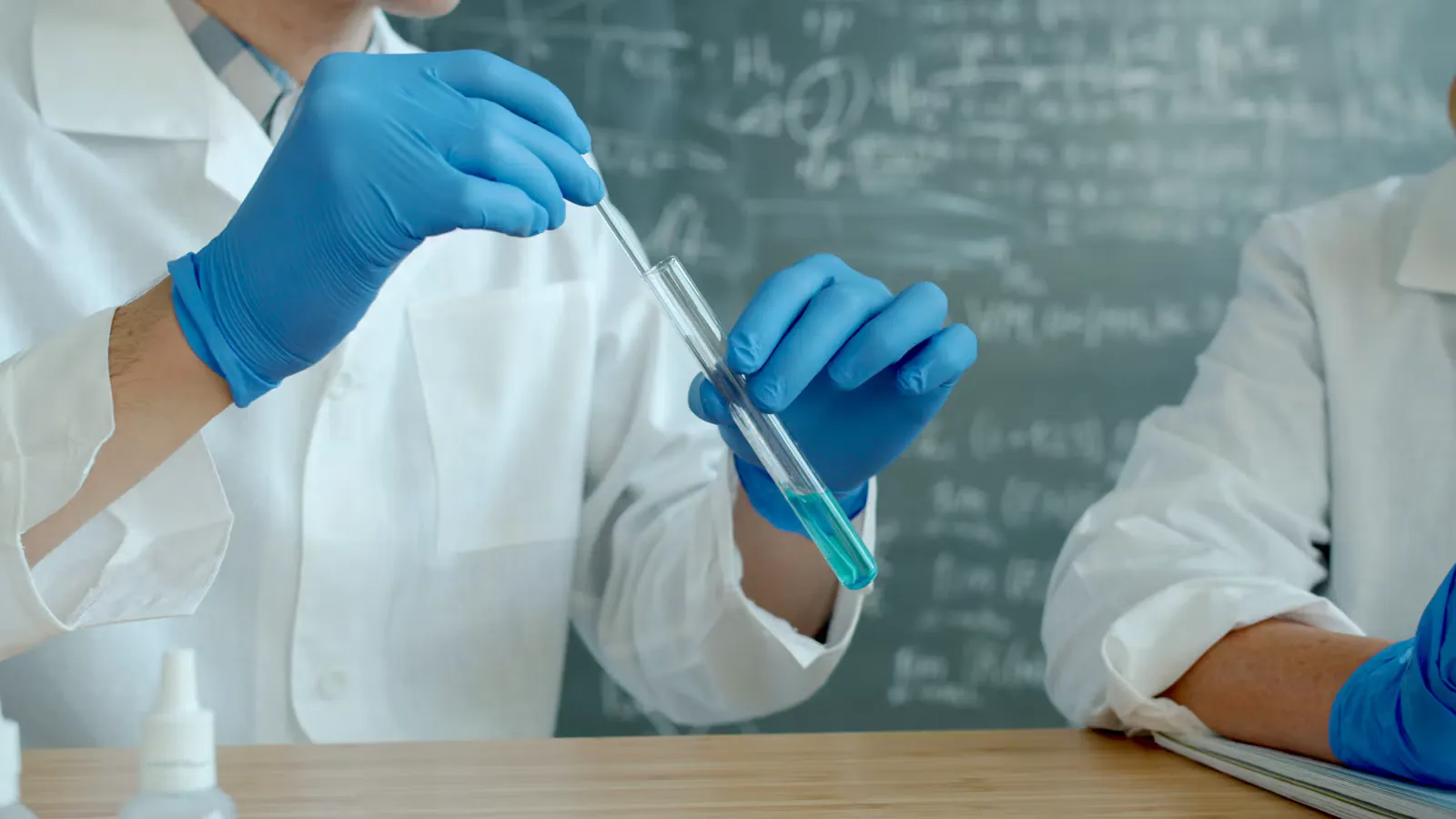
DNA fragments are negatively charged, so in an electric field they move towards the anode, the positive electrode. The matrix NCERT names is agarose, a natural polymer extracted from seaweed, and it separates fragments by size through a sieving effect. The smaller the fragment, the farther it moves.
Here is the visual part of biotechnology principles and processes. You cannot see pure DNA in visible light. The gel is stained with ethidium bromide and exposed to UV light, which shows bright orange bands. The bands are cut out of the gel and the DNA is extracted from them, a step called elution. Figure 9.3 asks you to work out at which end the sample was loaded, and that question turns up in many forms.
What makes a good cloning vector?
In biotechnology principles and processes, a vector is the DNA that carries your gene into the host. Plasmids and bacteriophages both replicate inside bacteria independently of the chromosome. Some plasmids have only one or two copies per cell, others 15 to 100, and bacteriophages have very high copy numbers. NCERT lists four features a cloning vector needs:
| Feature | What it does | The line to remember |
|---|---|---|
| Origin of replication (ori) | Starts replication and controls copy number | For many copies, clone into a vector whose ori supports a high copy number |
| Selectable marker | Separates transformants from non-transformants | Resistance genes for ampicillin, chloramphenicol, tetracycline or kanamycin work for E. coli |
| Cloning sites | Places where the alien DNA is ligated | Very few, preferably single, recognition sites for the commonly used enzymes |
| Vectors for plants and animals | Deliver genes into eukaryotic cells | Ti plasmid of Agrobacterium tumifaciens, disarmed retroviruses |
In pBR322 (Figure 9.4), foreign DNA can be ligated at the BamH I site inside the tetracycline resistance gene. Recombinant plasmids then lose tetracycline resistance but keep ampicillin resistance. So recombinants grow on ampicillin but not on tetracycline, while non-recombinants grow on both. NCERT calls this "inactivated due to insertion", and it notes that plating on two antibiotics is cumbersome.
The alternative is a colour test. The insert goes into the coding sequence of β-galactosidase, which inactivates that gene: insertional inactivation. With a chromogenic substrate, colonies whose plasmid has no insert turn blue. Colonies with an insert stay colourless, and those are the recombinants.
How is a host cell made ready to take up DNA?
The host is the last tool in biotechnology principles and processes. DNA is hydrophilic and cannot pass through cell membranes on its own. So bacterial cells are first made competent by treating them with a specific concentration of a divalent cation such as calcium. The cells are incubated with the recombinant DNA on ice, given a brief heat shock at 42 °C, and put back on ice.
NCERT gives three other methods. Micro-injection puts recombinant DNA straight into the nucleus of an animal cell. Biolistics, or the gene gun, bombards plant cells with high-velocity micro-particles of gold or tungsten coated with DNA. And disarmed pathogen vectors transfer the recombinant DNA when they infect the cell.
What are the steps of recombinant DNA technology?
Section 9.3 is where biotechnology principles and processes turns into a sequence. NCERT lists the steps in this order:
- Isolate the DNA. Break the cells open with lysozyme for bacteria, cellulase for plant cells or chitinase for fungi. Remove RNA with ribonuclease and proteins with protease. Chilled ethanol makes the purified DNA precipitate as fine threads that can be removed by spooling (Figure 9.5).
- Cut the DNA. Incubate it with the restriction enzyme under that enzyme's optimal conditions, and check progress with agarose gel electrophoresis. Cut the vector DNA the same way.
- Isolate the desired fragment. Separate the fragments on the gel and elute the one you need.
- Ligate it into the vector. Mix the gene of interest with the cut vector and add ligase to make the recombinant DNA.
- Transfer it into the host. Competent cells take up the DNA, and a selectable marker such as ampicillin resistance shows which cells were transformed.
- Culture the host at large scale. Grow the cells so the foreign gene is expressed and the recombinant protein is made.
- Extract the product. Separate, purify and formulate it, which is downstream processing.
How does PCR copy a gene?
PCR, the polymerase chain reaction, makes many copies of a gene of interest in vitro. It uses two sets of primers (short, chemically synthesised oligonucleotides complementary to the DNA regions on either side) and DNA polymerase. Each cycle has three steps in Figure 9.6: denaturation, primer annealing and extension of primers.
The trick, and the most tested PCR line in biotechnology principles and processes, is the enzyme. Taq polymerase, isolated from the bacterium Thermus aquaticus, stays active through the high temperature used to separate the two DNA strands, so the cycle can be repeated again and again. NCERT says the segment can be amplified approximately a billion times. The PCR fact sheet from the National Human Genome Research Institute gives the same order of size: the cycle is repeated as many as 30 or 40 times, giving more than one billion copies, and the whole run can be done in a few hours.
Why a billion? Because each cycle can at best double the number of copies. The chart shows that ideal doubling.
What happens in a bioreactor?
Small cultures cannot give useful quantities of a product, so large volumes of 100 to 1000 litres are processed in bioreactors. NCERT describes them as vessels in which raw materials are biologically converted into specific products using microbial, plant, animal or human cells, under optimum temperature, pH, substrate, salts, vitamins and oxygen.
The most common type is the stirred-tank bioreactor (Figure 9.7): cylindrical or with a curved base for mixing, with an agitator system, an oxygen delivery system, a foam control system, temperature and pH control, and sampling ports. In the sparged version, sterile air bubbles are bubbled through the culture. A continuous culture system drains used medium from one side and adds fresh medium from the other, which keeps the cells in their log, or exponential, phase and gives more biomass.
Then comes the final step of biotechnology principles and processes, downstream processing: separation and purification of the product, formulation with suitable preservatives, clinical trials in the case of drugs, and strict quality control testing. NCERT notes that downstream processing and quality control vary from product to product.
Which lines in Chapter 9 trap NEET students?
These are the places in biotechnology principles and processes where one changed word turns a true statement into a false option.
- Direction in the gel. DNA moves towards the anode, because it is negatively charged. Not towards the cathode.
- Size in the gel. Smaller fragments move farther. The big ones stay close to the well.
- Blue means no insert. In the β-galactosidase test, blue colonies carry a plasmid without an insert. Colourless colonies are the recombinants.
- The antibiotic logic in pBR322. An insert at BamH I knocks out tetracycline resistance. Recombinants grow on ampicillin, not on tetracycline.
- Hind II versus Hind III. Hind II is the first sequence-specific restriction endonuclease in the text, with a six base pair site. Hind III appears in the pBR322 figure as one of its restriction sites. Do not swap them.
- The "R" in EcoRI. It comes from the strain RY 13, not from "restriction".
- Where the cut falls. A little away from the centre of the palindrome, but between the same two bases on both strands. That is what creates sticky ends.
- Which enzyme opens which cell. Lysozyme for bacteria, cellulase for plant cells, chitinase for fungi. Exercise 11(c) asks you to explain chitinase.
- Why Taq. It is thermostable and stays active during the high temperature denaturation step. An ordinary polymerase would not survive repeated cycles.
- What competence needs. A divalent cation such as calcium, then ice, a heat shock at 42 °C and ice again.
Each one is a five mark swing: the four you miss plus the one you lose for a wrong answer. Our guide to NEET negative marking explains when to leave a question blank.
How should you revise biotechnology principles and processes?
Plan two focused sessions for your first pass through biotechnology principles and processes and short repeats after that. The chapter is too dense in names to cram in one evening, and too short to spread over a week.
- Read the Unit 9 syllabus line first. It takes a minute and tells you this chapter is about genetic engineering, while the applications belong to Chapter 10.
- Read sections 9.1 and 9.2 in one sitting. Then redraw Figures 9.1, 9.2 and 9.4 from memory. Our [NEET Biology diagrams guide](/blogs/neet-biology-diagrams/) shows which figures to draw and which only to recognise.
- Fill the tools and vector tables yourself. Tool, job, example. Feature, job, the line to remember. If you can fill them blank, you own section 9.2.
- Read section 9.3 in the second sitting. Write the seven steps as a numbered list from memory, then label the three steps of a PCR cycle on Figure 9.6.
- Turn the numbers and the ten traps into flashcards. 900 enzymes, 230 strains, six base pairs, 15 to 100 copies, 42 °C, 100 to 1000 litres. Our [NEET flashcards method](/blogs/neet-flashcards/) covers the spacing.
- Do the 12 NCERT exercises, then timed MCQs. Start with Exercises 10 to 12, which ask for short definitions, then move to [NEET Biology MCQs](/blogs/neet-biology-mcq/), the [NCERT Exemplar](/blogs/ncert-exemplar-for-neet-2027/) and the [previous year question papers](/blogs/neet-2027-previous-year-question-papers/).
Biotechnology principles and processes leans on two earlier chapters. The DNA structure, replication and gene expression you need here come from the genetics chapters for NEET, and the microbes that make curd, antibiotics and enzymes appear in microbes in human welfare. The NEET 2027 Biology preparation strategy shows where Unit 9 fits among the other units.
On futureMBBS, the guide to what an NCERT book is and why NEET depends on it explains why the textbook wording matters so much, the NEET syllabus overview gives the full three-subject picture, and the NEET 2027 chapter-wise weightage guide helps you decide where biotechnology sits in your revision order.
Want to know whether biotechnology principles and processes is actually costing you marks? NEETsheet's chapter-wise question sets and timed mocks show which lines you keep getting wrong, so your next revision goes there first. Start at neetsheet.in.
Sources
Every syllabus line, number and process step above comes from these official documents, opened and read on 24 October 2026.
- National Testing Agency, NEET (UG) Biology syllabus file linked from neet.nta.nic.in, headed "Syllabus for NEET (UG) 2025" (Biology Unit 9, Biotechnology and Its Applications, first bullet): https://cdnbbsr.s3waas.gov.in/s37bc1ec1d9c3426357e69acd5bf320061/uploads/2026/01/20260102588210790.pdf
- National Testing Agency, Information Bulletin NEET (UG) 2026 (pattern: Biology 90 questions and 360 of 720 marks; plus four and minus one marking; syllabus FAQ stating no change for 2026): https://cdnbbsr.s3waas.gov.in/s37bc1ec1d9c3426357e69acd5bf320061/uploads/2026/02/202602231394640855.pdf
- National Testing Agency, NEET (UG) public notices, checked on 24 October 2026 for any NEET (UG) 2027 notice: https://neet.nta.nic.in/public-notices/
- NCERT, Biology, Class 12, Chapter 9 "Biotechnology : Principles and Processes" (Reprint 2026-27; sections 9.1 to 9.3.6, Figures 9.1 to 9.7, Summary, Exercises 1 to 12): https://ncert.nic.in/textbook/pdf/lebo109.pdf
- National Human Genome Research Institute, "Polymerase Chain Reaction (PCR) Fact Sheet", last updated 17 August 2020: https://www.genome.gov/about-genomics/fact-sheets/Polymerase-Chain-Reaction-Fact-Sheet
Frequently Asked Questions
No. It is the first bullet of Biology Unit 9, Biotechnology and Its Applications, in the NEET (UG) syllabus file linked from the official NEET site, worded as genetic engineering or recombinant DNA technology. The 2026 bulletin says there was no change in the syllabus, and no 2027 syllabus had been published by 24 October 2026.
It is Chapter 9, on pages 163 to 176 of the current Class 12 Biology book, right after Microbes in Human Welfare and before Biotechnology and its Applications. It has three sections, on principles, tools and processes of recombinant DNA technology, plus 7 numbered figures and 12 exercises.
NCERT publishes the chapter free on its own textbook site as the file lebo109.pdf, marked Reprint 2026-27. Download it from ncert.nic.in rather than from a third-party upload, so the page numbers, figures and wording match the official book you are revising from.
Both are nucleases, enzymes that cut nucleic acids. An exonuclease removes nucleotides from the ends of a DNA molecule. An endonuclease cuts at specific positions within the DNA. Restriction enzymes are endonucleases: each one recognises a specific palindromic sequence and cuts both strands there.
Because DNA fragments are negatively charged, so in an electric field they are pulled towards the positive electrode, the anode. The agarose gel acts like a sieve, so smaller fragments move farther than larger ones. The bands become visible only after staining with ethidium bromide and exposure to UV light.
If you are working through Class 12 Biology chapter by chapter, NEETsheet is our NEET UG prep app: NCERT-aligned question sets, full-length mocks on a timer, and a view of which chapters keep costing you marks.