
Neural Control and Coordination for NEET: Chapter 18 Guide
Neural control and coordination is Chapter 18 of NCERT Class 11 Biology, and for NEET it is a named topic of Unit 5, Human Physiology. It is the way neurons detect, receive and transmit stimuli so that the organs of the body work together. The chapter is only nine pages long, so every line can turn into an option. This guide maps neural control and coordination to the NMC syllabus, line by line, and lists the traps that cost marks.
What is neural control and coordination?
Neural control and coordination is the work of the neural system: an organised network of point-to-point connections that lets two or more organs interact quickly and complement each other. NCERT pairs it with the endocrine system, which coordinates through hormones. For NEET, the chapter means neurons, the divisions of the neural system, the nerve impulse, the synapse and the brain.
NCERT opens the Chapter 18 PDF with exercise. When you run, your muscles need more energy, so breathing gets faster, the heart beats faster and blood flow rises. When you stop, all of it settles back. Something has to link those organs, and that link is neural control and coordination working alongside the hormones of the next chapter.
The neural system of every animal is built from neurons, cells that can detect, receive and transmit stimuli. In Hydra it is a simple network of neurons. Insects have a brain plus ganglia. Vertebrates, humans included, have the most developed system, and that is the one NEET asks about.
Is neural control and coordination important for NEET?
Yes. Neural control and coordination is a named bullet of Unit 5, Human Physiology, in the NMC syllabus for NEET (UG) 2026. NTA does not publish chapter-wise question counts, so nobody can honestly promise a number of questions. What is certain is that Biology carries 90 of the 180 questions and 360 of the 720 marks, exactly 50 percent of the paper, and this chapter is short enough to master in two days.
The NMC syllabus for NEET (UG) 2026, sent to medical colleges on 22 December 2025, lists exactly three things under this topic: neuron and nerves; the nervous system in humans, meaning the central, peripheral and visceral nervous systems; and the generation and conduction of nerve impulse. That is the whole line.
Two practical points follow from it.
First, the syllabus says "nervous system" while NCERT says "neural system". They mean the same thing, and NTA can use either word in a question. Do not let the wording throw you.
Second, the reflex arc, the eye and the ear are not part of the current NCERT chapter, and the syllabus line does not name them. The 2026-27 reprint ends with the hindbrain and the summary. If an old guide or an old question bank spends pages on the structure of the eye under this chapter, it is working from an older book. Check what changed across the whole syllabus in our NEET 2027 deleted syllabus guide.
How does the syllabus line map to NCERT?
Every phrase of the neural control and coordination syllabus has a home in the chapter. Use this table as your checklist.
| NMC syllabus phrase | Where NCERT teaches it | What to be able to write |
|---|---|---|
| Neuron and nerves | 18.3 | Cell body, dendrites, axon; three neuron types; myelinated and non-myelinated fibres |
| Central nervous system | 18.2 and 18.4 | Brain and spinal cord; meninges; forebrain, midbrain, hindbrain |
| Peripheral nervous system | 18.2 | Afferent and efferent fibres; somatic and autonomic; sympathetic and parasympathetic |
| Visceral nervous system | 18.2, one paragraph | Nerves, fibres, ganglia and plexuses linking the CNS and the viscera, in both directions |
| Generation and conduction of nerve impulse | 18.3.1 and 18.3.2 | Resting potential, action potential, conduction from site A to site B, synapses |
How is the human neural system divided?
The human neural system has two parts. The central neural system (CNS) is the brain and the spinal cord, the site of information processing and control. The peripheral neural system (PNS) is every nerve of the body linked to the CNS. The PNS splits again into somatic and autonomic systems.
Here is the full division, in the order NCERT builds it:
- CNS: brain and spinal cord.
- PNS: all the nerves associated with the CNS. Its fibres are of two types. Afferent fibres carry impulses from tissues and organs to the CNS. Efferent fibres carry regulatory impulses from the CNS out to the tissues and organs.
- Somatic neural system: relays impulses from the CNS to the skeletal muscles.
- Autonomic neural system: carries impulses from the CNS to the involuntary organs and smooth muscles. It has two branches, the sympathetic and the parasympathetic neural system.
- Visceral nervous system: the part of the PNS made of the whole complex of nerves, fibres, ganglia and plexuses through which impulses travel from the CNS to the viscera and from the viscera back to the CNS.
The visceral line is the one students skip, because NCERT gives it a single paragraph. But the syllabus names it on its own, so it is fair game. Remember the two directions: CNS to viscera, and viscera to CNS.
You have already met the autonomic system at work in another chapter. The sympathetic and parasympathetic control of heart rate is covered in our body fluids and circulation guide, and the two chapters make a good pair for revision.
What is the structure of a neuron?
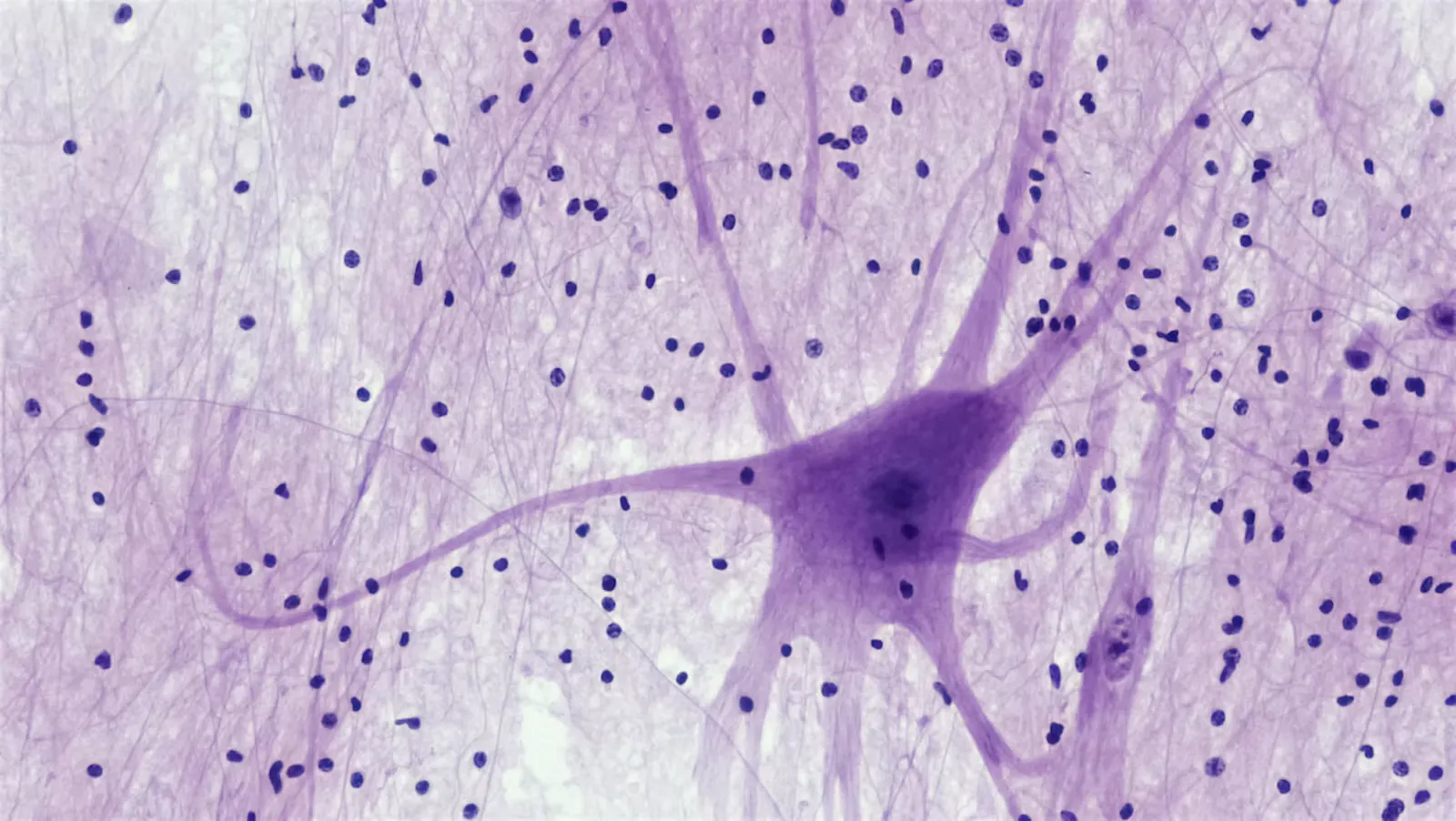
A neuron is a microscopic structure with three major parts: the cell body, the dendrites and the axon. The cell body holds the cytoplasm, the usual organelles and granular bodies called Nissl's granules. Dendrites are short branching fibres that carry impulses towards the cell body. The axon is a long fibre that carries impulses away from it.
The details NEET likes to test:
- Nissl's granules sit in the cell body and also in the dendrites. They are not in the axon.
- The axon ends in branches, and each branch ends as a bulb-like synaptic knob with synaptic vesicles full of neurotransmitters.
- The axon carries the impulse away from the cell body to a synapse or to a neuro-muscular junction.
NCERT classifies neurons by the number of axons and dendrites:
| Type | Axon and dendrites | Where NCERT places it |
|---|---|---|
| Multipolar | One axon, two or more dendrites | Cerebral cortex |
| Bipolar | One axon, one dendrite | Retina of the eye |
| Unipolar | Cell body with one axon only | Usually in the embryonic stage |
Axons come in two kinds as well. In a myelinated fibre, Schwann cells wrap the axon in a myelin sheath, and the gaps between neighbouring sheaths are the nodes of Ranvier. Myelinated fibres are found in spinal and cranial nerves. In a non-myelinated fibre, a Schwann cell encloses the axon but forms no myelin sheath. These fibres are common in the autonomous and the somatic neural systems.
How is a nerve impulse generated and conducted?
A nerve impulse is an action potential: the electrical potential difference across the membrane at a site where the polarity has reversed. At rest, the outside of the axon is positive and the inside negative. A stimulus opens the membrane to Na+, the polarity flips, and that flip is passed along the axon, site by site.
Neurons are excitable because their membranes are polarised. Follow the sequence in the same order NCERT does:
- At rest, the axonal membrane is more permeable to K+ and nearly impermeable to Na+. It is also impermeable to the negatively charged proteins inside the axoplasm.
- So the gradients form. Inside the axon: high K+, negatively charged proteins and low Na+. Outside: low K+ and high Na+.
- The pump holds them. The sodium-potassium pump moves 3 Na+ out for 2 K+ in, by active transport.
- The membrane is polarised. The outer surface is positive and the inner surface negative. This potential difference is the resting potential.
- A stimulus at site A makes the membrane there freely permeable to Na+. Na+ rushes in, the outside turns negative and the inside positive. The site is depolarised, and the potential difference there is the action potential, the nerve impulse.
- Current flows. On the inner surface it flows from site A to site B. On the outer surface it flows from site B to site A, completing the circuit.
- Site B reverses, so an action potential is generated at B. The sequence repeats along the axon, and the impulse is conducted.
- Recovery. The rise in Na+ permeability is very short-lived. It is quickly followed by a rise in K+ permeability, K+ diffuses out, and within a fraction of a second the resting potential is restored and the fibre can respond again.
One honest note: this chapter gives no millivolt value for the resting or the action potential. NEET questions on neural control and coordination are built from the textbook, so put your effort into the direction of each ion, the charge on each surface and the direction of current flow. Those are what the options swap around.
How is an impulse transmitted across a synapse?
A synapse is a junction between a pre-synaptic and a post-synaptic neuron, which may or may not be separated by a gap called the synaptic cleft. There are two types. At an electrical synapse, current flows straight from one neuron into the next. At a chemical synapse, neurotransmitters carry the signal across a fluid-filled cleft.
| Feature | Electrical synapse | Chemical synapse |
|---|---|---|
| Gap between membranes | Membranes in very close proximity | Fluid-filled synaptic cleft |
| How the signal crosses | Current flows directly from one neuron to the other | Neurotransmitters released into the cleft |
| Speed | Always faster | Slower |
| How common | Rare in our system | The usual type |
At a chemical synapse, the steps run like this. An action potential reaches the axon terminal. It moves the synaptic vesicles towards the membrane, where they fuse with it and release their neurotransmitters into the cleft. The neurotransmitters bind to specific receptors on the post-synaptic membrane. That binding opens ion channels, ions enter, and a new potential develops in the post-synaptic neuron. NCERT's last line is the one people miss: the new potential may be excitatory or inhibitory.
What are the parts of the human brain?
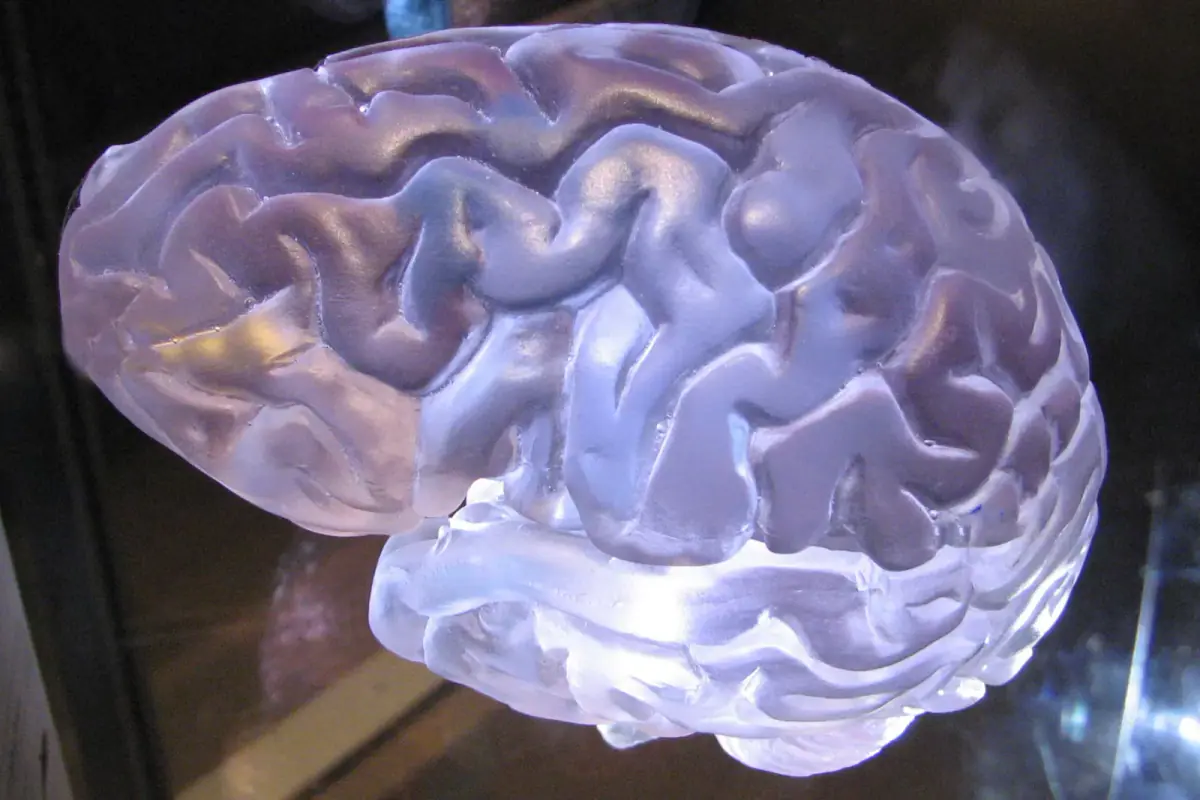
The human brain has three major parts: the forebrain, the midbrain and the hindbrain. The forebrain is the cerebrum, thalamus and hypothalamus. The midbrain carries the cerebral aqueduct and the corpora quadrigemina. The hindbrain is the pons, cerebellum and medulla. The brain stem is the midbrain, pons and medulla together.
NCERT calls the brain the "command and control system". It controls voluntary movement, balance, the vital involuntary organs, thermoregulation, hunger and thirst, circadian rhythms, several endocrine glands and behaviour. The US National Institute of Neurological Disorders and Stroke describes it as a three-pound organ, and adds that the hypothalamus is about the size of a pearl, which helps the scale stick.
The brain sits inside the skull, wrapped in the cranial meninges. From outside in: the dura mater, the very thin arachnoid, and the pia mater, which touches the brain tissue.
| Region | Part | What NCERT says about it |
|---|---|---|
| Forebrain | Cerebrum | Major part of the brain; split into left and right hemispheres joined by the corpus callosum |
| Forebrain | Cerebral cortex | Outer layer, folded, called grey matter because neuron cell bodies are packed there; has motor, sensory and association areas |
| Forebrain | White matter | Inner part of the hemisphere; myelinated fibre tracts give the opaque white look |
| Forebrain | Thalamus | Major coordinating centre for sensory and motor signalling |
| Forebrain | Hypothalamus | At the base of the thalamus; controls body temperature, eating and drinking; secretes hypothalamic hormones |
| Forebrain | Limbic system | Inner parts of the hemispheres with amygdala and hippocampus; with the hypothalamus, regulates sexual behaviour, emotions and motivation |
| Midbrain | Cerebral aqueduct, corpora quadrigemina | Between the thalamus or hypothalamus and the pons; four round swellings on the dorsal side |
| Hindbrain | Pons | Fibre tracts that interconnect regions of the brain |
| Hindbrain | Cerebellum | Very convoluted surface, giving space for many more neurons |
| Hindbrain | Medulla oblongata | Joins the spinal cord; centres for respiration, cardiovascular reflexes and gastric secretions |
Two summary lines in the NCERT chapter add facts that the main text does not spell out, and both show up in options. The midbrain receives and integrates visual, tactile and auditory inputs. The cerebellum integrates information from the semicircular canals of the ear and the auditory system.
The four figures of this chapter (neuron, impulse conduction, synapse, sagittal section of the brain) are the ones to be able to label without looking. Our NEET Biology diagrams guide lists them with every other chapter's figures.
Ten traps in neural control and coordination questions
These are the swaps that turn a known fact from neural control and coordination into a wrong option:
- Pump ratio reversed. It is 3 Na+ out and 2 K+ in, never 3 K+ in.
- Resting permeability. At rest the membrane is more permeable to K+, not Na+.
- Charge at rest. Outside positive, inside negative. During the action potential it is the reverse.
- Current direction. Inner surface: A to B. Outer surface: B to A.
- Nissl's granules. In the cell body and the dendrites, not the axon.
- Bipolar location. Retina, not cerebral cortex. Multipolar is the cortex.
- Myelinated fibres. In spinal and cranial nerves. Non-myelinated fibres are common in the autonomous and somatic systems.
- Fast synapse. Electrical synapses are faster but rare. Do not mark "electrical synapses are common in humans".
- Brain stem. Midbrain, pons and medulla. The cerebellum is hindbrain but not brain stem.
- Grey and white. Cortex is grey (cell bodies). The inner tracts are white (myelin).
How should you revise neural control and coordination?
Two focused days are enough for neural control and coordination if you work from the book and test yourself straight away. Spend the first day on the neuron and the impulse, the second on the synapse and the brain, and close each day with timed questions.
- Day 1, morning: read 18.1 to 18.3 in the NCERT PDF. Draw the neuron and label cell body, dendrites, axon, Schwann cell, node of Ranvier and synaptic knob.
- Day 1, afternoon: write the eight impulse steps above from memory, then check them against 18.3.1.
- Day 1, evening: 30 timed MCQs on the neuron and the impulse. Mark every wrong answer with the trap number it fell into.
- Day 2, morning: read 18.3.2 and 18.4. Draw the sagittal section of the brain and fill in the table above without looking.
- Day 2, afternoon: answer the ten NCERT exercises at the end of the chapter in two or three lines each. They cover the comparisons NTA likes, such as thalamus versus hypothalamus and cerebrum versus cerebellum.
- Day 2, evening: a mixed set of 30 questions, then one week later a 15-question recall test.
Negative marking matters here, because one swapped word makes an option wrong. Our guide to NEET negative marking shows how to decide when to skip. For practice sets, start with our NEET Biology MCQ guide, and to see where Human Physiology fits in the whole subject, read our NEET Biology syllabus guide and the NEET 2027 Biology preparation strategy.
For the wider picture, futureMBBS has a NEET 2027 Biology syllabus explainer, a NEET 2027 chapter-wise weightage guide that shows where Human Physiology stands, and a short read on what an NCERT book is if you are deciding how far beyond the textbook to go. And if this chapter has you thinking about the brain as a career, their guide on how to become a neurologist and our own neurosurgeon career guide show the long road after MBBS.
If neural control and coordination is where Biology marks keep slipping, NEETsheet's chapter-wise practice and timed mocks show whether the gap is the pump ratio, the neuron types or the brain table, so your next hour goes to the right place. Start at neetsheet.in.
Sources
All links were checked on 15 November 2026.
- National Medical Commission (UGMEB), Syllabus for NEET (UG) 2026, letter and public notice of 22 December 2025 (Biology Unit 5, Human Physiology: neural control and coordination, neuron and nerves, nervous system in humans: central, peripheral and visceral nervous system, generation and conduction of nerve impulse): https://cdnbbsr.s3waas.gov.in/s37bc1ec1d9c3426357e69acd5bf320061/uploads/2026/01/202601081066816297.pdf
- National Testing Agency, Information Bulletin NEET (UG) 2026 (pattern: Physics 45 questions and 180 marks, Chemistry 45 and 180, Biology 90 and 360, total 180 and 720; plus four, minus one and zero marking): https://cdnbbsr.s3waas.gov.in/s37bc1ec1d9c3426357e69acd5bf320061/uploads/2026/02/202602231394640855.pdf
- NCERT, Biology Class 11, Chapter 18 Neural Control and Coordination, reprint 2026-27 (sections 18.1 to 18.4, Figures 18.1 to 18.4, Summary and Exercises, pages 230 to 238): https://ncert.nic.in/textbook/pdf/kebo118.pdf
- National Institute of Neurological Disorders and Stroke (NIH), Brain Basics: Know Your Brain, last reviewed 25 February 2025 (three-pound organ, hypothalamus about the size of a pearl, corpus callosum joining the hemispheres): https://www.ninds.nih.gov/health-information/public-education/brain-basics/brain-basics-know-your-brain
Frequently Asked Questions
Yes. Neural control and coordination is a named topic of Unit 5, Human Physiology, in the NMC syllabus for NEET (UG) 2026, covering neuron and nerves, the central, peripheral and visceral nervous systems, and the generation and conduction of nerve impulse. NTA does not publish chapter-wise question counts, but Biology carries 90 of the 180 questions.
Neural control and coordination is Chapter 18 of NCERT Class 11 Biology. It explains how the neural system links organs through point-to-point connections, and covers the human neural system, the neuron, the generation and conduction of the nerve impulse, synapses and the three parts of the brain: forebrain, midbrain and hindbrain.
Resting potential is the potential difference across a resting neuron's membrane, with the outer surface positive and the inner surface negative. Action potential is the potential difference at a site where a stimulus has made the membrane permeable to Na+, reversing the polarity. The action potential is the nerve impulse.
The three parts are the forebrain, the midbrain and the hindbrain. The forebrain is the cerebrum, thalamus and hypothalamus. The midbrain has the cerebral aqueduct and the corpora quadrigemina. The hindbrain is the pons, cerebellum and medulla oblongata. The midbrain, pons and medulla together form the brain stem.
NTA does not publish chapter-wise question counts, so there is no official number for neural control and coordination. What is official is the weight of the subject: Biology carries 90 of the 180 questions and 360 of the 720 marks in the NEET (UG) 2026 pattern, and Human Physiology is one of its ten units.