
Sexual Reproduction in Flowering Plants: NEET Chapter Guide
Sexual reproduction in flowering plants is Chapter 1 of the NCERT Class 12 Biology book, and it is the process by which an angiosperm forms male and female gametes inside the flower, brings them together through pollination and double fertilisation, and ends up with seeds inside a fruit. For NEET, the chapter is one bullet of Unit 6, Reproduction, and it is dense with names, numbers and ploidy. This guide follows the chapter from anther to seed and marks where questions catch people out.
What is sexual reproduction in flowering plants?
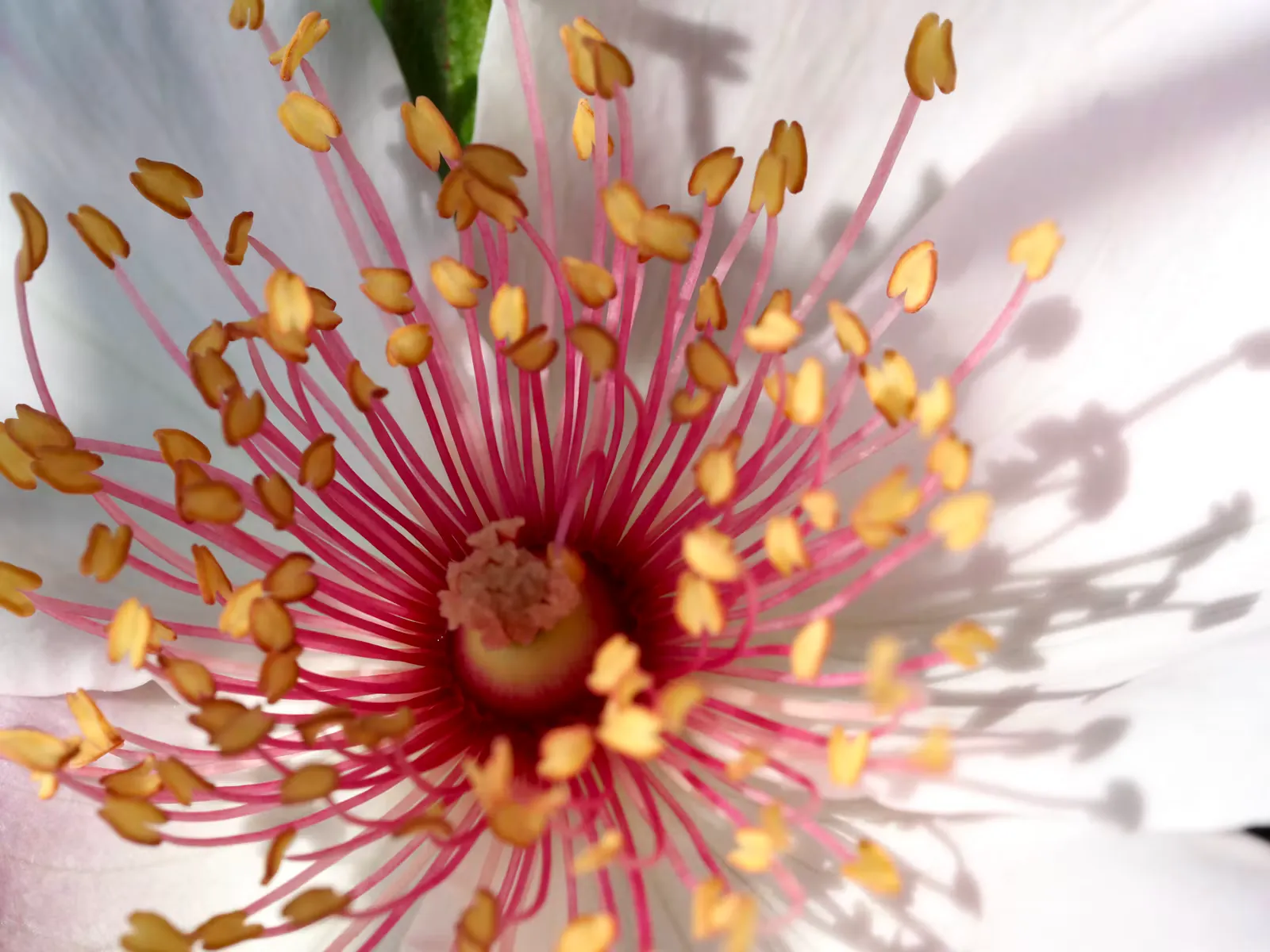
Sexual reproduction in flowering plants is the formation of seeds through the fusion of male and female gametes. The androecium (stamens) makes pollen grains, the male gametophytes. The gynoecium (pistils) holds ovules, each with an embryo sac, the female gametophyte. Pollination brings pollen to the stigma, and double fertilisation inside the embryo sac starts the seed.
NCERT opens the chapter with a line worth keeping: all flowering plants show sexual reproduction, and the huge variety of flowers is there as an aid to it. The NCERT chapter on sexual reproduction in flowering plants runs from page 3 to page 25 of the current Class 12 book (reprint 2026-27), with five sections, 15 numbered figures and 18 exercises. The five sections are the flower, pre-fertilisation structures and events, double fertilisation, post-fertilisation structures and events, and apomixis with polyembryony.
Is sexual reproduction in flowering plants in the NEET syllabus?
Yes. In the NMC syllabus notice for NEET (UG) 2026, dated 22 December 2025, it is the first bullet of Biology Unit 6, Reproduction, next to human reproduction and reproductive health. The bullet names ten items, from flower structure to the significance of seed and fruit formation, so nothing in the NCERT chapter is outside it.
What NEET dropped is the older chapter "Reproduction in Organisms", which is not in the current NCERT book. If that confusion is what brought you here, our NEET 2027 deleted syllabus guide sorts out what went and what stayed. NTA had not published a NEET (UG) 2027 bulletin or syllabus by 12 November 2026, so the 2026 syllabus is the current reference.
| Syllabus phrase (NMC, Unit 6) | NCERT section | What gets asked |
|---|---|---|
| Flower structure | 1.1 | Androecium and gynoecium, where gametophytes form |
| Development of male and female gametophytes | 1.2.1, 1.2.2 | Anther wall layers, microsporogenesis, ovule parts, 7-celled 8-nucleate embryo sac |
| Pollination: types, agencies and examples | 1.2.3 | Autogamy, geitonogamy, xenogamy, cleistogamy, Vallisneria, Zostera |
| Outbreeding devices | 1.2.3 | Which device stops autogamy, which also stops geitonogamy |
| Pollen-pistil interaction | 1.2.3 | Filiform apparatus, emasculation, bagging |
| Double fertilisation | 1.3 | Syngamy, triple fusion, PEN |
| Post fertilisation events | 1.4 | Endosperm types, embryo parts, seed and fruit |
| Special modes: apomixis, parthenocarpy, polyembryony | 1.4.3, 1.5 | Banana, Citrus, mango, nucellar embryos |
| Significance of seed and fruit formation | 1.4.3 | Advantages of seeds, viability records |
The paper itself is fixed by the NEET (UG) 2026 Information Bulletin: 180 questions in 180 minutes, with Biology (Botany and Zoology) carrying 90 questions and 360 of the 720 marks, and every question marked +4 for a correct answer and -1 for a wrong one. NTA does not publish marks per chapter. For a reading-load view of Unit 6 against the other units, future-mbbs.com keeps a NEET 2027 chapter-wise weightage breakdown, and all the Biology units are mapped in our NEET Biology syllabus explainer.
How do the pollen grain and the embryo sac form?
Both gametophytes start with meiosis. In the anther, each pollen mother cell divides by meiosis into a tetrad of four microspores, which mature into pollen grains (microsporogenesis). In the ovule, one megaspore mother cell divides by meiosis into four megaspores; usually one survives and grows into the embryo sac by three rounds of free-nuclear mitosis.
The male side: anther and pollen
A typical angiosperm anther is bilobed and dithecous, with four microsporangia, two in each lobe. Each microsporangium has four wall layers: epidermis, endothecium, middle layers and tapetum. The outer three protect and help the anther split open; the tapetum, the innermost layer, nourishes the developing pollen, and its cells often have more than one nucleus.
The pollen grain itself is a set of facts NEET likes:
- It is generally spherical, about 25 to 50 micrometres across.
- The outer wall, the exine, is made of sporopollenin, one of the most resistant organic materials known. No enzyme that breaks it down is known, which is why pollen fossilises well. Germ pores are the gaps where sporopollenin is absent.
- The inner wall, the intine, is thin and made of cellulose and pectin.
- A mature grain has a large vegetative cell and a small, spindle-shaped generative cell. In over 60 per cent of angiosperms, pollen is shed at this 2-celled stage; in the rest, the generative cell divides first and pollen is shed 3-celled.
- Viability varies: rice and wheat pollen lose it within 30 minutes, while some members of Rosaceae, Leguminoseae and Solanaceae stay viable for months. Pollen can be stored for years in liquid nitrogen at -196 degrees C in pollen banks.
NCERT also notes Parthenium (carrot grass), which reached India as a contaminant of imported wheat and causes pollen allergy.
The female side: ovule and embryo sac
The ovule hangs from the placenta by a stalk, the funicle; the point where they join is the hilum. One or two integuments surround the nucellus except at the micropyle, and the opposite end is the chalaza. The megaspore mother cell sits at the micropylar end of the nucellus. When only one megaspore forms the embryo sac, NCERT calls it monosporic development.
The functional megaspore's nucleus divides by mitosis three times, giving 2, then 4, then 8 free nuclei with no cell walls yet. Walls then form around six of them:
| Position | Cells | Nuclei |
|---|---|---|
| Micropylar end (egg apparatus) | 2 synergids and 1 egg cell | 3 |
| Chalazal end | 3 antipodals | 3 |
| Centre | 1 central cell | 2 polar nuclei |
| Total | 7 cells | 8 nuclei |
The synergids carry the filiform apparatus at their micropylar tips, which guides the pollen tube in. Learn its position and its job together, because questions pair the two.
What are the types of pollination?
Pollination is the transfer of pollen from an anther to a stigma. By pollen source there are three types: autogamy, within the same flower; geitonogamy, to another flower on the same plant; and xenogamy, to a flower on a different plant. Geitonogamy uses an agent like cross-pollination but is genetically the same as selfing.
Cleistogamous flowers, which never open, are always autogamous and give assured seed set without pollinators. Viola (common pansy), Oxalis and Commelina carry both these and normal, open chasmogamous flowers.
Then there is the question of who carries the pollen. NCERT lists two abiotic agents, wind and water, and one biotic agent, animals, and says most plants use animals. The US Forest Service puts numbers on it:
The figures on the US Forest Service pollination page match NCERT's picture, which is worth knowing as a single line: animals dominate, wind is the common abiotic route, water is rare. The examples NCERT gives are what get asked:
- Wind: light, non-sticky pollen, well-exposed stamens, large often feathery stigmas, often a single ovule per ovary. On a corn cob, what NCERT calls the ears are stigma and style waving in the wind to trap pollen. Common in grasses.
- Water: about 30 genera, mostly monocots. Vallisneria and Hydrilla in fresh water, seagrasses such as Zostera in the sea. In Vallisneria the female flower reaches the surface on a long stalk. Water hyacinth and water lily are aquatic but are pollinated by insects or wind, a favourite trap.
- Animals: bees are the dominant biotic pollinators. Amorphophallus, whose flower is about 6 feet tall, offers a safe place to lay eggs; the Yucca plant and its moth cannot complete their life cycles without each other.
How do flowers avoid self-pollination?
Flowers avoid self-pollination with outbreeding devices, because continued selfing leads to inbreeding depression. NCERT lists four: pollen release and stigma receptivity out of sync, anther and stigma at different positions, self-incompatibility, and unisexual flowers. The exam question is usually which device blocks only autogamy and which also blocks geitonogamy.
| Outbreeding device | Stops autogamy? | Stops geitonogamy? |
|---|---|---|
| Pollen release and stigma receptivity not synchronised | Yes | Not stated by NCERT |
| Anther and stigma at different positions | Yes | Not stated by NCERT |
| Self-incompatibility (genetic) | Yes | Yes, self-pollen from the same flower or other flowers of the same plant is blocked |
| Monoecious plants (castor, maize) | Yes | No |
| Dioecious plants (papaya) | Yes | Yes |
Even the right pollen has to pass a check. In pollen-pistil interaction, the pistil recognises compatible pollen and lets it germinate, or rejects incompatible pollen by stopping germination or tube growth. A compatible pollen tube grows through the stigma and style, enters the ovule through the micropyle, and enters a synergid through the filiform apparatus.
Plant breeders control this with two steps, which NCERT asks about in Exercises 10 and 15:
- Emasculation: remove the anthers from a bisexual flower bud with forceps before they dehisce. Not needed if the female parent has unisexual flowers.
- Bagging: cover the flower with a bag, usually butter paper, so no unwanted pollen reaches the stigma.
- Pollination: when the stigma is receptive, dust it with pollen from the chosen male parent.
- Rebagging: cover the flower again and let the fruit develop.
The same idea, controlled crosses, is what Mendel relied on with garden peas, covered in our genetics guide for NEET.
What is double fertilisation?
Double fertilisation is the pair of fusions inside one embryo sac that NCERT calls an event unique to flowering plants. The pollen tube releases two male gametes into a synergid. One fuses with the egg (syngamy) and forms the diploid zygote. The other fuses with the two polar nuclei (triple fusion) and forms the triploid primary endosperm nucleus, or PEN.
After triple fusion the central cell is called the primary endosperm cell (PEC), and it develops into the endosperm. The zygote develops into the embryo. If you are asked how many nuclei take part in triple fusion, the answer is three haploid nuclei: one male gamete and two polar nuclei.
What happens after fertilisation?
After fertilisation, the endosperm forms first, then the embryo, while the ovule matures into a seed and the ovary into a fruit. NCERT groups these as post-fertilisation events. The most common endosperm starts free-nuclear and later becomes cellular; tender coconut water is free-nuclear endosperm and the white kernel is the cellular part.
Endosperm. It may be used up before the seed matures (pea, groundnut, beans) or persist in the seed (castor, coconut). Most zygotes divide only after some endosperm has formed, which NCERT explains as an adaptation for assured nutrition.
Embryo. The zygote, at the micropylar end, goes through the proembryo, globular and heart-shaped stages to the mature embryo. The parts are where the mix-ups happen:
| Part | Dicot embryo | Monocot (grass) embryo |
|---|---|---|
| Cotyledons | Two | One, called the scutellum, on one side of the axis |
| Above the cotyledon | Epicotyl, ending in the plumule (stem tip) | Epicotyl with shoot apex inside a hollow sheath, the coleoptile |
| Below the cotyledon | Hypocotyl, ending in the radicle (root tip) with a root cap | Radicle and root cap inside a sheath, the coleorrhiza |
Seed. The seed is the final product of sexual reproduction in angiosperms, a fertilised ovule. Non-albuminous seeds have no endosperm left (pea, groundnut); albuminous seeds keep some (wheat, maize, barley, castor). In black pepper and beet a remnant of the nucellus persists as perisperm. Integuments harden into the seed coat, the micropyle stays as a pore, and a mature seed holds only 10 to 15 per cent moisture by mass.
Fruit. The ovary wall becomes the pericarp. In apple, strawberry and cashew the thalamus also contributes, making false fruits. Banana is a parthenocarpic fruit, formed without fertilisation, and parthenocarpy can be induced with growth hormones.
Seed viability is a favourite one-liner: a Lupinus arcticus seed from the Arctic tundra germinated after an estimated 10,000 years, and a 2,000-year-old date palm seed, Phoenix dactylifera, was found at King Herod's palace near the Dead Sea.
What are apomixis and polyembryony?
Apomixis is the formation of seeds without fertilisation, a form of asexual reproduction that mimics sexual reproduction, found in some species of Asteraceae and grasses. Polyembryony is more than one embryo in a seed. In many Citrus and mango varieties, nucellar cells grow into the embryo sac and form extra embryos.
Two details carry the marks. First, in some apomicts the egg is formed diploid, without reduction division, and develops into an embryo without fertilisation. Second, nucellar embryos come only from the mother plant, which is why NCERT asks whether they can be called clones. The applied angle: hybrid seed has to be bought every year because hybrid progeny segregate, and making hybrids apomictic would let farmers reuse their own seed.
What is the ploidy of each structure?
NCERT asks ploidy questions inside the chapter text ("What would be the ploidy of the cells of the tetrad?") and leaves them for you to answer. Here is the full list, worked out from NCERT's own rules: meiosis halves the number, mitosis keeps it, syngamy makes 2n and triple fusion makes 3n.
| Structure | Ploidy | Why |
|---|---|---|
| Microspore mother cell, megaspore mother cell, nucellus, anther wall | 2n | Body tissue of the parent plant |
| Microspore, pollen grain, vegetative and generative cell, male gametes | n | Products of meiosis, then mitosis |
| Megaspore and every embryo sac cell (egg, synergids, antipodals, each polar nucleus) | n | Products of meiosis, then free-nuclear mitosis |
| Zygote and embryo | 2n | Syngamy: n plus n |
| Primary endosperm nucleus and endosperm | 3n | Triple fusion: n plus n plus n |
| Seed coat (from integuments), pericarp (from ovary wall), perisperm (from nucellus) | 2n | Maternal tissue, never fertilised |
| Nucellar embryo in Citrus or mango | 2n | Made from maternal nucellus cells |
This table is also the quickest check on a statement-type question. If an option gives endosperm as diploid or the synergid as 2n, it is wrong.
Which traps cost marks in this chapter?
The same swaps come up again and again in sexual reproduction in flowering plants questions.
- 8-nucleate is not 8-celled. The mature embryo sac is 7-celled and 8-nucleate.
- Geitonogamy feels like cross-pollination. It needs an agent, but genetically it is self-pollination.
- Monoecy is not enough. Castor and maize stop autogamy but not geitonogamy; only dioecy (papaya) stops both among the unisexual options.
- Not every water plant is water-pollinated. Water hyacinth and water lily use insects or wind.
- Exine vs intine. Exine is sporopollenin with germ pores; intine is cellulose and pectin.
- Perisperm vs pericarp. Perisperm is leftover nucellus inside the seed; pericarp is the fruit wall from the ovary.
- Coleoptile vs coleorrhiza. Coleoptile covers the shoot end, coleorrhiza the root end.
- Apomixis vs parthenocarpy. Apomixis gives a seed without fertilisation; parthenocarpy gives a fruit without fertilisation, often seedless.
How should you revise sexual reproduction in flowering plants?
Revise sexual reproduction in flowering plants in four short sittings, with the NCERT figures open, because the anther, embryo sac and pollen tube figures (1.3, 1.8 and 1.12) hold most of the labelled parts.
- Day 1: Read sections 1.1 and 1.2.1 to 1.2.2. Draw the anther cross-section and the 7-celled embryo sac from memory and label every part.
- Day 2: Read section 1.2.3. Make the outbreeding table yourself and write one example for each pollinating agent.
- Day 3: Read sections 1.3 to 1.5. Write the ploidy table without looking, then check it against the one above.
- Day 4: Answer the 18 NCERT exercises in writing, then a timed set of chapter questions. Our [NEET Biology MCQ guide](/blogs/neet-biology-mcq/) explains how to review a set, and the [negative marking explainer](/blogs/neet-negative-marking/) covers when to leave a question blank.
The meiosis behind microsporogenesis and megasporogenesis is in our cell cycle and cell division guide, and the next chapter of the same unit is covered in the human reproduction guide for NEET. If you are building a full Class 12 plan, future-mbbs.com has a NEET UG 2027 preparation guide and the complete NEET syllabus on one page.
Sources
Every fact about sexual reproduction in flowering plants above comes from these official documents, all opened and read on 12 November 2026.
- NCERT, Biology Textbook for Class XII, Chapter 1 "Sexual Reproduction in Flowering Plants", reprint 2026-27 (sections 1.1 to 1.5, summary and exercises): https://ncert.nic.in/textbook/pdf/lebo101.pdf
- National Medical Commission, Under Graduate Medical Education Board, "Updated syllabus for NEET(UG)-2026", 22 December 2025 (Biology Unit 6, Reproduction): https://cdnbbsr.s3waas.gov.in/s37bc1ec1d9c3426357e69acd5bf320061/uploads/2026/01/202601081066816297.pdf
- National Testing Agency, Information Bulletin NEET (UG) 2026 (pattern of the test and marking scheme): https://cdnbbsr.s3waas.gov.in/s37bc1ec1d9c3426357e69acd5bf320061/uploads/2026/02/202602231394640855.pdf
- US Forest Service, "Why is Pollination Important?" (share of pollination by animals, wind and water): https://www.fs.usda.gov/managing-land/wildflowers/pollinators/importance
Frequently Asked Questions
Sexual reproduction in flowering plants is the formation of seeds by the fusion of male and female gametes. Pollen grains made in the anther carry the male gametes, the embryo sac in the ovule holds the egg, pollination brings them together, and double fertilisation forms the zygote and the endosperm.
The five steps are gametophyte formation (pollen in the anther, embryo sac in the ovule), pollination, pollen-pistil interaction with pollen tube growth, double fertilisation (syngamy and triple fusion), and post-fertilisation events, when the endosperm, embryo, seed and fruit develop.
In sexual reproduction in flowering plants, the mother cells are 2n, pollen grains and all embryo sac cells are n, the zygote and embryo are 2n, and the endosperm is 3n because triple fusion joins three haploid nuclei. Seed coat and pericarp are 2n maternal tissue.
No. Sexual reproduction in flowering plants is the first bullet of Unit 6, Reproduction, in the NMC syllabus for NEET (UG) 2026, from flower structure to apomixis and polyembryony. The chapter that was dropped is the older Reproduction in Organisms, which is not in the current NCERT book.
NTA does not publish a number of questions per chapter, so any fixed figure is an estimate. What NTA does fix is that Biology has 90 of the 180 questions and 360 of the 720 marks, and this chapter is one of the three bullets of the Reproduction unit.
Three free-nuclear mitoses give the embryo sac 8 nuclei. Walls then form around six of them: two synergids and the egg at the micropylar end and three antipodals at the chalazal end. The remaining two polar nuclei share one central cell, so 8 nuclei sit in 7 cells.
If you are revising Class 12 Biology for NEET, NEETsheet is our prep app for NCERT-aligned question sets and timed mocks, so you can see which chapters, this one included, are still costing you marks. Find it at neetsheet.in.