
Evolution Class 12 for NEET: Chapter 6 Notes and Traps
Evolution class 12 is Chapter 6 of NCERT Class 12 Biology, and for NEET it is the third part of Unit 7, Genetics and Evolution. It is the story of how life began on earth and how life forms changed over millions of years: the evidences, Darwin's natural selection, the Hardy-Weinberg principle, adaptive radiation and human evolution. This guide maps evolution class 12 to the NMC syllabus line by line and lists the traps that cost marks.
What is evolution class 12 in NEET?
Evolution class 12 in NEET is the study of the history of life forms on earth, as NCERT Class 12 Biology Chapter 6 teaches it. Questions test the origin of life, the evidences for evolution, homology and analogy, adaptive radiation, the theories of Darwin, Lamarck and de Vries, the Hardy-Weinberg principle and the stages of human evolution.
It is a short chapter: about 5,000 words in the NCERT Chapter 6 PDF, with eleven figures and ten exercises. Short does not mean easy. The chapter is dense with names, dates and "which one is the odd one out" examples, which is exactly the material NTA likes to turn into one-line options.
There is no formula to memorise beyond one equation, so most lost marks come from mixing up pairs: homology and analogy, Ramapithecus and Dryopithecus, Homo habilis and Homo erectus, Lamarck and de Vries. Keep the pairs apart and evolution class 12 becomes one of the quicker chapters in Zoology.
Where does evolution sit in the NEET syllabus?
Evolution class 12 sits in Biology Unit 7, Genetics and Evolution, of the NMC syllabus for NEET (UG) 2026, dated 22 December 2025. The first two bullets of Unit 7 are genetics. The third bullet is evolution, and it runs from the origin of life to human evolution.
| Syllabus phrase (Unit 7, Evolution) | Where NCERT teaches it | What questions ask |
|---|---|---|
| Origin of life | 6.1 | Oparin and Haldane, Miller's experiment, panspermia, Pasteur |
| Evidences from paleontology, comparative anatomy, embryology and molecular evidence | 6.3 | Fossils, homology, analogy, Haeckel and von Baer, biochemical similarity |
| Darwin's contribution | 6.2 and 6.5 | Natural selection, fitness, branching descent, Wallace |
| Modern Synthetic theory of Evolution | 6.6 and 6.7 (not named as such) | Mutation plus recombination plus selection |
| Variation, natural selection, types of natural selection | 6.5 to 6.7, Figure 6.8 | Stabilising, directional, disruptive |
| Gene flow and genetic drift | 6.7 | Founder effect |
| Hardy-Weinberg's principle | 6.7 | p, q, p squared, 2pq, the five factors |
| Adaptive radiation | 6.4 | Darwin's finches, Australian marsupials |
| Human evolution | 6.9 | Order of hominids, brain sizes, dates |
Two items need a note. The syllabus names "Modern Synthetic theory of Evolution" and "molecular evidence", but the 2026-27 NCERT reprint does not use either term. The book covers the same ideas in other words: "similarities in proteins and genes" for molecular evidence, and mutation, recombination, gene flow, drift and selection together in 6.7. Learn the ideas from NCERT and recognise the syllabus labels when they appear in a question. For how the genetics bullets are covered, see our genetics for NEET guide.
How did life begin on earth?
Life on earth most likely began through chemical evolution: simple inorganic molecules formed organic molecules, and these eventually formed the first self-replicating forms of life. Oparin of Russia and Haldane of England proposed this idea. In 1953, S.L. Miller recreated early earth conditions in a flask and observed amino acids forming.
Miller's setup is a favourite question. NCERT says he passed an electric discharge through a closed flask containing CH4, H2, NH3 and water vapour at 800°C. Others later got sugars, nitrogen bases, pigments and fats in similar experiments, and meteorites showed similar compounds.
Older ideas are tested as "which theory said this?" Panspermia says spores of life came from outer space. Spontaneous generation said life came from decaying matter. Louis Pasteur disproved it: in pre-sterilised flasks, life did not arise from killed yeast, while a flask open to air grew new organisms. Life comes only from pre-existing life.
The chapter's timeline numbers in one place:
| Event (NCERT Chapter 6) | When |
|---|---|
| Age of the universe | About 13.8 billion years |
| Earth formed | About 4.5 billion years ago |
| Life appeared | About 500 million years after earth formed, almost 4 billion years ago |
| First non-cellular forms of life | About 3 billion years ago |
| First cellular forms of life | About 2,000 million years ago (mya) |
What are the evidences for evolution?
The evidences for evolution in the NCERT evolution class 12 chapter come from fossils (paleontology), embryology, comparative anatomy and morphology, biochemical similarity, artificial breeding and natural selection observed in real time, such as industrial melanism and antibiotic resistance. Each evidence in evolution class 12 has a fixed set of examples, and questions usually swap one example into the wrong group.
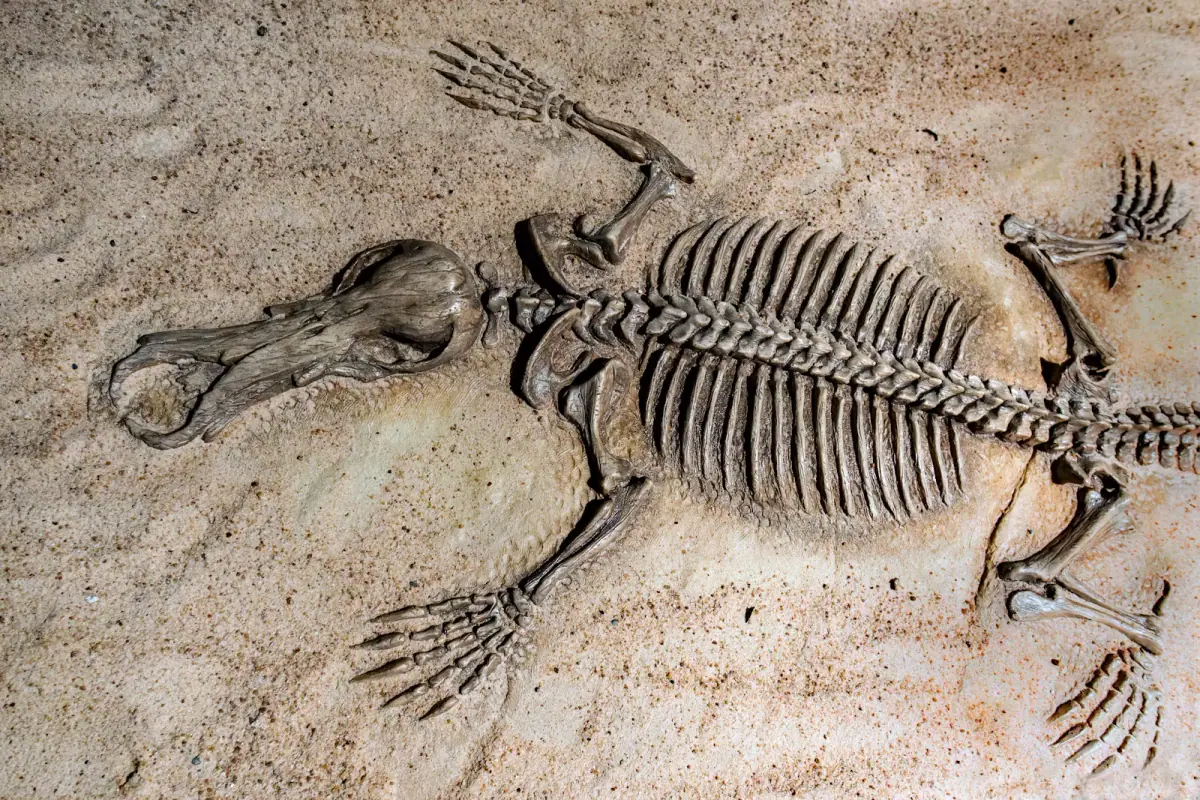
Paleontological evidence. Fossils are remains of hard parts of life forms found in rocks. Different-aged rock layers hold fossils of different life forms, so life forms varied over time. Dinosaurs are NCERT's example of extinct organisms.
Embryological evidence. Ernst Haeckel (spelt "Heckel" in NCERT) proposed that all vertebrate embryos, including humans, develop a row of vestigial gill slits behind the head. Karl Ernst von Baer disapproved this: embryos never pass through the adult stages of other animals. This is a classic trap, because the proposal is in the book but was rejected.
Industrial melanism. In England, moths collected in the 1850s, before industrialisation, were mostly white-winged. By 1920, in the same area, dark-winged (melanised) moths were more common. Soot darkened tree trunks and killed the white lichen, so predators picked off the moths that no longer matched the background. In rural areas, melanic moths stayed rare. NCERT adds that no variant is completely wiped out.
Evolution by anthropogenic action. Herbicides, pesticides and antibiotics select resistant varieties in months or years, not centuries. The scale is real: the WHO antimicrobial resistance fact sheet of 16 July 2026 reports that about 1 in 6 laboratory-confirmed bacterial infections worldwide were resistant to antibiotics in 2023, and 1 in 3 in the WHO South-East Asia and Eastern Mediterranean Regions. That is natural selection you can measure, and it answers NCERT Exercise 1 on antibiotic resistance. For the medical side, see our human health and disease guide.
Homologous and analogous organs, side by side
Homologous organs have the same basic structure but different functions, and they come from divergent evolution. Analogous organs look alike and do the same job but have different structures, and they come from convergent evolution. Homology points to common ancestry; analogy points to a similar habitat.
| Homologous organs | Analogous organs | |
|---|---|---|
| Structure | Same anatomical pattern | Different anatomy |
| Function | Different | Same |
| Type of evolution | Divergent | Convergent |
| What it shows | Common ancestry | Similar habitat selecting similar features |
| NCERT animal examples | Forelimbs of whale, bat, cheetah and human (humerus, radius, ulna, carpals, metacarpals, phalanges); vertebrate hearts and brains | Wings of butterfly and bird; eye of octopus and mammals; flippers of penguins and dolphins |
| NCERT plant examples | Thorn of Bougainvillea and tendril of Cucurbita | Sweet potato (root modification) and potato (stem modification) |
The plant row is where evolution class 12 marks go. Sweet potato and potato sound like the same thing, but one is a root and the other a stem, so they are analogous. Thorn and tendril look different but are both modified stems, so they are homologous.
What is adaptive radiation?
Adaptive radiation is the evolution of different species in a given geographical area starting from one point and radiating into other habitats. Darwin's finches on the Galapagos Islands are NCERT's best example: from seed-eating ancestors, finches with altered beaks became insectivorous and vegetarian. Australian marsupials are the second example.
One line in 6.4 of evolution class 12 is easy to miss. When more than one adaptive radiation happens in an isolated area, NCERT says you can call it convergent evolution. Placental mammals in Australia show this: the placental wolf and the Tasmanian wolf (a marsupial) evolved separately but look similar. Figure 6.7 shows the pairs.
Darwin, Lamarck and de Vries compared
Darwin explained evolution by natural selection of small heritable variations, Lamarck by use and disuse of organs, and Hugo de Vries by large sudden mutations. Questions on evolution class 12 often give one example and ask whose theory it supports.
| Lamarck | Darwin | de Vries | |
|---|---|---|---|
| Driving force | Use and disuse of organs, acquired characters passed on | Natural selection of heritable variation | Mutation |
| Size of change | Gradual | Small, directional, gradual | Large, sudden, random, directionless |
| Key example | Giraffe's long neck | Finches, branching descent | Evening primrose |
| Key term | Inheritance of acquired characters | Fitness (reproductive fitness) | Saltation (single step large mutation) |
| Status in NCERT | "Nobody believes this conjecture any more" | Natural selection plus branching descent | Later clarified by population genetics |
Two names come with Darwin. Alfred Wallace, working in the Malay Archipelago, reached similar conclusions around the same time. Thomas Malthus's work on populations possibly influenced Darwin. And remember NCERT's definition: for Darwin, fitness refers "ultimately and only to reproductive fitness". The fit leave more progeny.
How does the Hardy-Weinberg principle work?
The Hardy-Weinberg principle says that allele frequencies in a population stay constant from generation to generation. This stable gene pool is called genetic equilibrium. For a gene with alleles A (frequency p) and a (frequency q), p + q = 1, and the genotype frequencies are p squared for AA, 2pq for Aa and q squared for aa.
So p squared + 2pq + q squared = 1, which is the binomial expansion of (p + q) squared. When measured frequencies differ from these expected values, the difference shows the extent of evolutionary change.
A worked example, the way NEET asks it. In a population, 16% of individuals show a recessive trait (aa). Find the other frequencies.
- q squared = 0.16, so q = 0.4.
- p = 1 minus 0.4 = 0.6.
- AA = p squared = 0.36, so 36% are homozygous dominant.
- Aa = 2pq = 2 x 0.6 x 0.4 = 0.48, so 48% are carriers.
- Check: 0.36 + 0.48 + 0.16 = 1.
This is the only real calculation in evolution class 12, so practise it until it takes you under a minute.
The five factors. NCERT names five factors that affect Hardy-Weinberg equilibrium: gene migration or gene flow, genetic drift, mutation, genetic recombination and natural selection. Many AI answers and general websites instead list five "conditions" (no mutation, random mating, no selection, large population, no gene flow). For NEET, use NCERT's list. Genetic recombination is the one students forget.
Gene flow, drift and founder effect. Gene migration that happens many times is gene flow. When the same change in allele frequency happens by chance, it is genetic drift. If the drifted sample becomes so different that it forms a new species, the original drifted population are the founders, and this is the founder effect.
Types of natural selection. Figure 6.8 shows three. Stabilising: more individuals take the mean character value. Directional: more individuals take a value other than the mean. Disruptive: more individuals take values at both ends of the curve.
How did humans evolve?
Human evolution, the last section of evolution class 12, runs from Dryopithecus and Ramapithecus about 15 mya, through Australopithecines and Homo habilis about 2 mya and Homo erectus about 1.5 mya, to Neanderthal man and modern Homo sapiens. Brain size grew from 650 to 800cc in Homo habilis to 1400cc in Neanderthal man.
| Stage | When (NCERT) | Key facts |
|---|---|---|
| Dryopithecus and Ramapithecus | About 15 mya | Hairy, walked like gorillas and chimpanzees; Ramapithecus more man-like, Dryopithecus more ape-like |
| Man-like primates in eastern Africa | About 3 to 4 mya | Not taller than 4 feet, walked upright; fossils from Ethiopia and Tanzania |
| Australopithecines | About 2 mya | East African grasslands, stone weapons, ate mainly fruit |
| Homo habilis | About 2 mya | First human-like being, brain 650 to 800cc, probably did not eat meat |
| Homo erectus | About 1.5 mya | Fossils found in Java in 1891, brain about 900cc, probably ate meat |
| Neanderthal man | 1,00,000 to 40,000 years ago | Brain 1400cc, near east and central Asia, used hides, buried their dead |
| Modern Homo sapiens | During the ice age, 75,000 to 10,000 years ago | Arose in Africa, moved across continents |
| Cave art | About 18,000 years ago | Bhimbetka rock shelter, Raisen district, Madhya Pradesh |
| Agriculture | About 10,000 years ago | Human settlements began |
Figure 6.11, the last figure in evolution class 12, adds a neat point: the skull of a baby chimpanzee is more like an adult human skull than an adult chimpanzee skull.
The history of life in one table
Section 6.8 of evolution class 12 is a run of dates. These are NCERT's approximate figures, so learn them as the book gives them.
| Event | When (NCERT 6.8) |
|---|---|
| First cellular forms of life | About 2,000 mya |
| Invertebrates formed and active | By about 500 mya |
| Jawless fish | Around 350 mya |
| Sea weeds and a few plants | Around 320 mya |
| Lobefins move between land and water | About 350 mya |
| Fish-like reptiles such as Ichthyosaurs | Probably 200 mya |
| Dinosaurs disappear | About 65 mya |
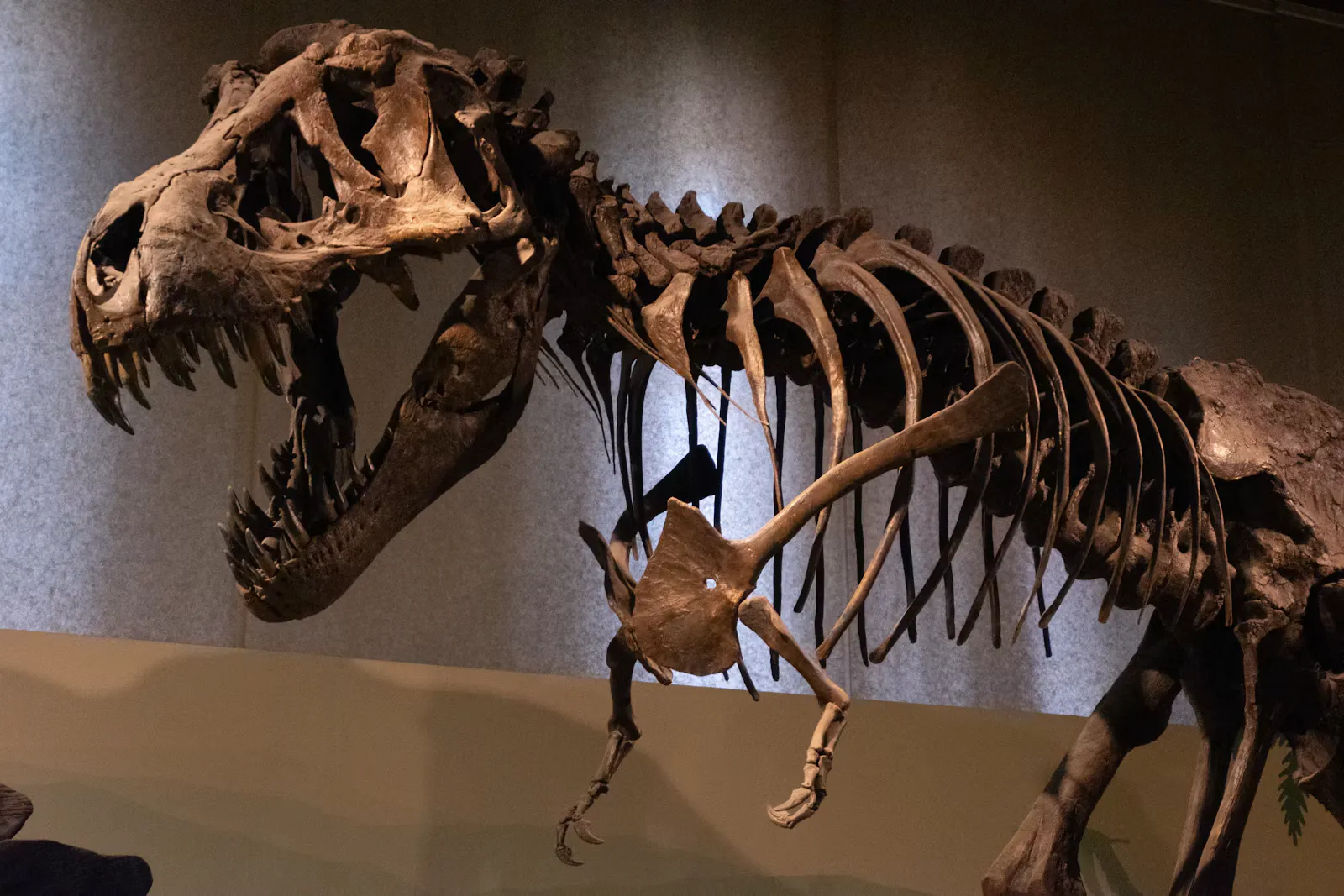
Also from 6.8: plants invaded land before animals; a Coelacanth, thought to be extinct, was caught in South Africa in 1938; lobefins evolved into the first amphibians; reptiles lay thick-shelled eggs that do not dry up; Tyrannosaurus rex was about 20 feet tall; giant ferns (pteridophytes) fell to form coal deposits; and pouched mammals survived in Australia because of continental drift and a lack of competition.
Ten traps in evolution class 12 questions
Most wrong answers in evolution class 12 come from the same ten swaps.
- Sweet potato and potato are analogous, not homologous: one is a root, the other a stem.
- Thorn of Bougainvillea and tendril of Cucurbita are homologous. Both are modified stems.
- Haeckel's embryological evidence was disapproved by Karl Ernst von Baer. It is in the chapter, but as a rejected idea.
- Ramapithecus was more man-like; Dryopithecus was more ape-like. Students swap them every year.
- Homo habilis probably did not eat meat; Homo erectus probably did.
- NCERT lists five factors for Hardy-Weinberg, and genetic recombination is one of them.
- Saltation belongs to de Vries, not Darwin. Darwin's variations were small and directional.
- More than one adaptive radiation in an isolated area can be called convergent evolution (Australian marsupials and placental mammals).
- Fitness for Darwin is reproductive fitness, not strength or size.
- Miller used CH4, H2, NH3 and water vapour, with an electric discharge, at 800°C, in 1953. Oxygen was not in the flask.
A three-day revision plan
Evolution class 12 fits into three focused days if you already know basic genetics.
- Day 1, sections 6.1 to 6.4. Read origin of life, the theory and the evidences. Make the homology and analogy table from memory, then check it against Figure 6.3. Redraw Figure 6.1, Miller's apparatus.
- Day 2, sections 6.5 to 6.7. Write the Darwin, Lamarck and de Vries table from memory. Solve five Hardy-Weinberg problems by hand, starting from q squared. Sketch the three curves of Figure 6.8.
- Day 3, sections 6.8 and 6.9. Write both timelines without looking, then fill the gaps. Finish with 40 to 50 timed MCQs on the whole chapter and log every wrong answer by trap number.
With negative marking at minus one for each wrong answer, a guess on two confusable options costs more than it looks; our NEET negative marking guide shows when guessing pays. For the full Biology map, our NEET Biology syllabus guide puts Unit 7 next to the other nine units, and the NEET 2027 deleted syllabus explainer covers what is in and out. Figures 6.1 to 6.11 are worth a look in our NEET Biology diagrams guide, and a steady set of NEET Biology MCQ practice keeps the chapter fresh.
For the bigger picture, the NEET 2027 chapter-wise weightage guide on futureMBBS shows where Genetics and Evolution stands next to the other Biology units. Its NEET syllabus overview lays out all three subjects on one page, and its explainer what is an NCERT book helps if you are deciding how far beyond the textbook to read.
If evolution class 12 is where easy Zoology marks keep slipping, NEETsheet's chapter-wise practice and timed mocks show whether the gap is homology, the hominid order or Hardy-Weinberg, so your next hour goes to the right place. Start at neetsheet.in.
Sources
All links were checked on 10 November 2026.
- National Medical Commission (UGMEB), Syllabus for NEET (UG) 2026, public notice of 22 December 2025 (Biology Unit 7, Genetics and Evolution, third bullet: origin of life, evidences, Darwin's contribution, Modern Synthetic theory, mechanism of evolution, types of natural selection, gene flow and genetic drift, Hardy-Weinberg's principle, adaptive radiation, human evolution): https://cdnbbsr.s3waas.gov.in/s37bc1ec1d9c3426357e69acd5bf320061/uploads/2026/01/202601081066816297.pdf
- National Testing Agency, Information Bulletin NEET (UG) 2026 (pattern: Biology 90 questions and 360 of 720 marks; plus four, minus one and zero marking): https://cdnbbsr.s3waas.gov.in/s37bc1ec1d9c3426357e69acd5bf320061/uploads/2026/02/202602231394640855.pdf
- NCERT, Biology Class 12, Chapter 6 Evolution, reprint 2026-27 (sections 6.1 to 6.9, Figures 6.1 to 6.11, Summary and Exercises): https://ncert.nic.in/textbook/pdf/lebo106.pdf
- World Health Organization, Antimicrobial resistance fact sheet, 16 July 2026 (about 1 in 6 laboratory-confirmed bacterial infections resistant to antibiotics in 2023; 1 in 3 in the South-East Asia and Eastern Mediterranean Regions): https://www.who.int/news-room/fact-sheets/detail/antimicrobial-resistance
Frequently Asked Questions
Evolution class 12 is Chapter 6 of NCERT Class 12 Biology. It covers the origin of life, the evidences for evolution, adaptive radiation, Darwin's natural selection, the mechanism of evolution, the Hardy-Weinberg principle and human evolution. In NEET it is the third part of Biology Unit 7, Genetics and Evolution.
Charles Darwin is usually called the father of evolution. After his voyage on H.M.S. Beagle, he proposed natural selection and branching descent as the key ideas of evolution. NCERT also credits Alfred Wallace, who reached similar conclusions in the Malay Archipelago at about the same time.
NCERT names five factors that affect Hardy-Weinberg equilibrium: gene migration or gene flow, genetic drift, mutation, genetic recombination and natural selection. Each one changes allele frequencies in a population. A change in these frequencies away from the expected p squared, 2pq and q squared values is read as evolution.
Homologous organs share the same basic structure but do different jobs, like the forelimbs of whales, bats, cheetahs and humans, and they show divergent evolution. Analogous organs do the same job with different structures, like butterfly and bird wings, and they show convergent evolution.
Yes. Evolution is a named bullet of Unit 7 in the NMC syllabus, and its fixed examples and dates suit short factual questions. NTA does not publish chapter-wise question counts, so no exact number is official. Biology as a whole carries 90 questions and 360 of the 720 marks.