
Chemical Coordination and Integration: NEET Chapter 19
Chemical coordination and integration is Chapter 19 of NCERT Class 11 Biology: the way hormones from endocrine glands regulate the body's functions together with the neural system. For NEET it sits in Unit 5, Human Physiology, where the syllabus calls it "chemical coordination and regulation". This guide takes you gland by gland, lists the disorders the syllabus names, explains how hormones act on cells, and flags the swaps that cost marks.
What is chemical coordination and integration?
Chemical coordination and integration is the control of body functions by hormones, which NCERT defines as non-nutrient chemicals that act as intercellular messengers and are produced in trace amounts. Endocrine glands release them without ducts. The neural system gives fast, short-lived, point-to-point control; hormones give the slower, continuous regulation that nerve fibres cannot reach.
The NCERT Chapter 19 PDF opens exactly where the previous chapter stops. Nerve fibres do not reach every cell of the body, and cellular functions need constant regulation. So a second system is needed, and the two work jointly. If you have just finished our neural control and coordination guide, you already have half of the story.
Two definitions in that first page are exam material. Endocrine glands lack ducts, which is why they are called ductless glands. And the old definition of a hormone (made by a gland, carried in blood to a distant target) has been replaced by the wider one above, because many molecules that act as hormones do not come from organised glands at all.
Is chemical coordination and integration important for NEET?
Yes. Chemical coordination and integration is a named bullet of Unit 5, Human Physiology, in the NMC syllabus for NEET (UG) 2026, and the syllabus even lists the disorders to know. NTA does not publish chapter-wise question counts, so no honest source can give you a number. What is fixed is the subject weight: Biology carries 90 of the 180 questions.
The NMC syllabus for NEET (UG) 2026, sent out on 22 December 2025, reads: endocrine glands and hormones; the human endocrine system (hypothalamus, pituitary, pineal, thyroid, parathyroid, adrenal, pancreas, gonads); mechanism of hormone action (elementary idea); role of hormones as messengers and regulators; and hypo- and hyperactivity with related disorders. A note under it says the diseases are "to be dealt in brief". That tells you the level: the cause and the main signs, not clinical detail.
Where the syllabus and the NCERT chapter differ
The syllabus line and the chapter do not match word for word, and the gaps decide what you can safely skim. Use this table as a checklist.
| Syllabus phrase | Where NCERT teaches it | What to do with it |
|---|---|---|
| Endocrine glands and hormones | 19.1 | Learn the modern hormone definition word for word |
| Hypothalamus, pituitary, pineal | 19.2.1 to 19.2.3 | Releasing vs inhibiting hormones; six anterior pituitary hormones; melatonin |
| Thyroid, parathyroid | 19.2.4, 19.2.5 | T3, T4, TCT, PTH; goitre, cretinism, Graves' disease |
| Adrenal, pancreas, gonads | 19.2.7 to 19.2.10 | Cortex layers, catecholamines, insulin and glucagon, androgens, estrogen, progesterone |
| Mechanism of hormone action (elementary idea) | 19.4 | Four chemical groups; membrane vs intracellular receptors |
| Not named in this line: thymus | 19.2.6 | Still study it: thymosins and T-lymphocytes are an easy option |
| Not named in this line: heart, kidney, GI tract | 19.3 | Study it: ANF appears again in the excretion line of the same unit |
Two more checks are worth a minute. The syllabus and NCERT both spell it "exopthalmic", while the usual medical spelling is exophthalmic; NCERT also prints "sella tursica" for what anatomy books call the sella turcica. Do not let a corrected spelling in an option throw you. And diabetes insipidus is not in this syllabus bullet at all: it sits under excretory products, though NCERT teaches it here with ADH. Our excretory products guide covers that link from the kidney side.
How does the hypothalamus control the pituitary?
The hypothalamus controls the pituitary in two different ways. It sends releasing and inhibiting hormones through a portal circulation to the anterior pituitary, which then speeds up or slows its own secretion. The posterior pituitary is under direct neural control: hypothalamic neurons carry oxytocin and vasopressin down their axons, and the posterior lobe only stores and releases them.
NCERT gives one example of each kind. Gonadotrophin releasing hormone (GnRH) stimulates the pituitary to make gonadotrophins. Somatostatin inhibits the release of growth hormone. Learn both, because an option that calls somatostatin a releasing hormone looks almost right.
The pituitary sits in a bony cavity and hangs from the hypothalamus by a stalk. Its parts are where most mistakes happen:
| Part | Other name | What it does |
|---|---|---|
| Pars distalis | Anterior pituitary | Produces GH, PRL, TSH, ACTH, LH and FSH |
| Pars intermedia | Part of adenohypophysis | Secretes only MSH; in humans almost merged with pars distalis |
| Pars nervosa | Neurohypophysis, posterior pituitary | Stores and releases oxytocin and vasopressin made by the hypothalamus |
And the effects to match with each hormone:
- GH: too much in children causes gigantism, too little causes pituitary dwarfism. Excess in middle-aged adults causes acromegaly, with disfigurement mostly of the face.
- PRL: growth of the mammary glands and milk formation.
- TSH and ACTH: stimulate the thyroid and the adrenal cortex (glucocorticoids).
- LH and FSH (gonadotrophins): in males, LH drives androgen secretion and FSH with androgens regulates spermatogenesis. In females, LH induces ovulation and maintains the corpus luteum, and FSH drives follicle growth.
- MSH: acts on melanocytes and regulates skin pigmentation.
- Oxytocin: contraction of smooth muscle, the uterus at childbirth and milk ejection.
- Vasopressin (ADH): water and electrolyte reabsorption in the distal tubules. Impaired ADH causes diabetes insipidus.
Acromegaly is rarer than its exam frequency suggests. The US National Institute of Diabetes and Digestive and Kidney Diseases reports that about 3 to 14 of every 100,000 people have been diagnosed with it, and that in more than 9 out of 10 cases the cause is a tumour of the pituitary gland called a pituitary adenoma. NCERT stresses that it is hard to diagnose early and can go unnoticed for years.
Which hormones does each endocrine gland secrete?
Every gland in this chapter has one or two hormones you must name and one effect that options twist. The pituitary is covered above; here is the rest of the human endocrine system in the order NCERT teaches it, with the detail most often swapped.
| Gland | Hormone(s) | Main action in NCERT | Detail that gets swapped |
|---|---|---|---|
| Pineal | Melatonin | 24-hour (diurnal) rhythm: sleep-wake cycle, body temperature | On the dorsal side of the forebrain |
| Thyroid | T4 (thyroxine), T3 | Basal metabolic rate, RBC formation, carbohydrate, protein and fat metabolism | Two lobes joined by the isthmus; needs iodine |
| Thyroid | Thyrocalcitonin (TCT) | Lowers blood calcium | A protein hormone, not an iodothyronine |
| Parathyroid | PTH | Raises blood calcium (hypercalcemic) | Four glands on the back of the thyroid |
| Thymus | Thymosins | Differentiation of T-lymphocytes; also antibody production | Degenerates in old age, so immunity weakens |
| Adrenal medulla | Adrenaline, noradrenaline | Fight or flight: alertness, pupil dilation, heart rate, glycogen breakdown | Called catecholamines; medulla is central |
| Adrenal cortex | Cortisol, aldosterone, small amounts of androgens | Gluconeogenesis and anti-inflammation; Na+ and water reabsorption | Layers inside out: reticularis, fasciculata, glomerulosa |
| Pancreas (islets) | Glucagon (alpha cells), insulin (beta cells) | Raise and lower blood glucose | Glucagon acts mainly on the liver |
| Testis | Androgens, mainly testosterone | Accessory sex organs, spermatogenesis, secondary sex characters | Made by Leydig (interstitial) cells |
| Ovary | Estrogen, progesterone | Female sex organs and characters; pregnancy and milk alveoli | Progesterone mainly from the corpus luteum |
The thyroid has the most disorders packed into one gland, and the syllabus names three of them. Iodine deficiency causes hypothyroidism and an enlarged thyroid, goitre. Hypothyroidism during pregnancy causes cretinism in the baby: stunted growth, mental retardation, low IQ, abnormal skin and deaf-mutism. Exophthalmic goitre is a form of hyperthyroidism with an enlarged thyroid, protruding eyeballs, higher basal metabolic rate and weight loss, also called Graves' disease. The NIDDK page on Graves' disease adds a useful scale: about 4 in 5 cases of hyperthyroidism in the United States are caused by it, and more than 1 in 3 patients develop the eye disease.
The adrenal cortex gives the last named disorder. Underproduction of cortical hormones alters carbohydrate metabolism and causes acute weakness and fatigue: Addison's disease.
Which disorders does the syllabus name for this chapter?
The syllabus names seven disorders under chemical coordination and integration: dwarfism, acromegaly, cretinism, goitre, exophthalmic goitre, diabetes and Addison's disease. Each one is either too much or too little of one hormone. Learn them as pairs of gland and direction, and most disorder questions become one-step recall.
| Disorder | Gland and hormone | Too much or too little |
|---|---|---|
| Pituitary dwarfism | Pituitary, GH (in childhood) | Too little |
| Gigantism | Pituitary, GH (in childhood) | Too much |
| Acromegaly | Pituitary, GH (in adults) | Too much |
| Goitre | Thyroid, due to iodine deficiency | Too little hormone, enlarged gland |
| Cretinism | Thyroid, during pregnancy | Too little |
| Exophthalmic goitre (Graves' disease) | Thyroid | Too much |
| Addison's disease | Adrenal cortex | Too little |
| Diabetes mellitus | Pancreas, insulin | Too little insulin or insulin resistance |
Gigantism is not in the syllabus list, but NCERT puts it in the same sentence as dwarfism, so it is the obvious distractor. The same goes for diabetes: the syllabus says only "diabetes", while the chapter separates diabetes mellitus (pancreas) from diabetes insipidus (ADH). Read the gland in the question before you pick.
How do insulin and glucagon keep blood glucose steady?
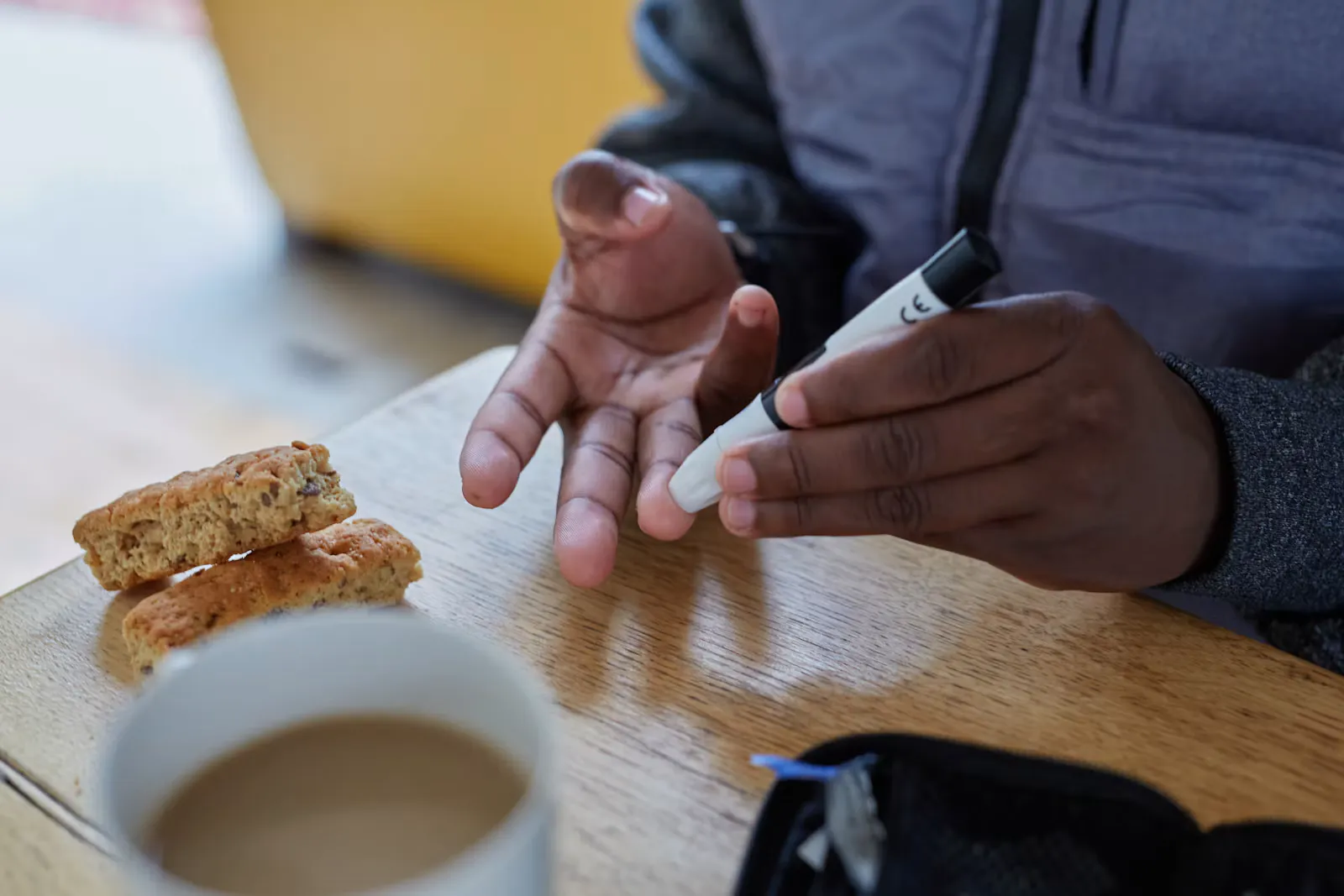
Insulin and glucagon keep blood glucose steady by pulling in opposite directions. Glucagon from alpha cells acts mainly on liver cells and raises blood sugar through glycogenolysis and gluconeogenesis, so it is hyperglycemic. Insulin from beta cells acts on liver and fat cells, increases glucose uptake and glycogenesis, and lowers blood sugar, so it is hypoglycemic.
Both are peptide hormones, which matters for the mechanism section below. When insulin is missing or the body resists it, prolonged hyperglycemia leads to diabetes mellitus, with glucose lost in the urine and harmful ketone bodies formed. NCERT notes that patients are treated with insulin therapy.
The numbers outside the book show why this pair gets so much attention. The WHO diabetes fact sheet reports that the number of people living with diabetes rose from 200 million in 1990 to 830 million in 2022, and that 14 percent of adults aged 18 and older were living with it in 2022. If insulin interests you as a molecule, our biotechnology and its applications guide shows how human insulin is produced with recombinant DNA.
How do hormones act on target cells?
Hormones act by binding to specific receptor proteins found only in their target tissues, forming a hormone-receptor complex that changes the cell's biochemistry. Membrane-bound receptors serve hormones that stay outside the cell and work through second messengers. Intracellular receptors, mostly in the nucleus, serve steroids and iodothyronines, which regulate gene expression directly.
First, the four chemical groups NCERT lists. NEET loves to ask which group a named hormone belongs to:
- Peptide, polypeptide and protein hormones: insulin, glucagon, pituitary hormones, hypothalamic hormones.
- Steroids: cortisol, testosterone, estradiol, progesterone.
- Iodothyronines: the thyroid hormones.
- Amino-acid derivatives: epinephrine.
Then the two routes, side by side:
| Feature | Membrane-bound receptor (Figure 19.5a) | Intracellular receptor (Figure 19.5b) |
|---|---|---|
| Example hormones | Protein hormones such as FSH and insulin | Steroid hormones, iodothyronines |
| Does the hormone enter the cell? | Normally no | Yes |
| What carries the signal | Second messengers: cyclic AMP, IP3, Ca++ | Hormone-receptor complex acting on the genome |
| End result | Change in cellular metabolism | Change in gene expression or chromosome function |
Exercise 8 of the chapter asks you to briefly mention the mechanism of action of FSH. Use the left column: FSH is a protein hormone, binds a membrane receptor and works through a second messenger. Draw both halves of Figure 19.5 once; it is a common diagram question, and our NEET Biology diagrams guide lists it with the other figures worth practising.
Ten traps in chemical coordination and integration questions
These are the swaps that turn a known fact from chemical coordination and integration into a wrong option:
- Posterior pituitary "secretes". It stores and releases oxytocin and vasopressin; the hypothalamus synthesises them.
- Calcium hormones reversed. PTH raises blood calcium. TCT lowers it.
- Adrenal layer order. Outer is zona glomerulosa, middle is fasciculata, inner is reticularis.
- Medulla vs cortex. Catecholamines come from the medulla; cortisol and aldosterone from the cortex.
- Alpha vs beta cells. Alpha cells make glucagon, beta cells make insulin.
- Two diabetes types. Mellitus is insulin; insipidus is ADH.
- GH by age. Excess in children is gigantism; in middle-aged adults it is acromegaly.
- Somatostatin. An inhibiting hormone that blocks growth hormone release, not a releasing hormone.
- Pars intermedia. Secretes only MSH, and in humans it is almost merged with the pars distalis.
- Erythropoietin source. The juxtaglomerular cells of the kidney, while ANF comes from the atrial wall of the heart and lowers blood pressure.
Every one of these is a single word or a single direction. That is exactly where negative marking hurts, so read our NEET negative marking guide before you decide to guess on a pair you are unsure of.
How should you revise chemical coordination and integration?
Three focused days are enough to revise chemical coordination and integration from the book: one for the hypothalamus and pituitary, one for the remaining glands and disorders, one for the mechanism and timed questions. Write tables from memory instead of rereading them, because the exam tests recall of pairs, not recognition.
- Day 1: read 19.1 to 19.2.3. Draw Figure 19.2 (hypothalamus, portal circulation, both pituitary lobes) and write the pituitary table above without looking.
- Day 2, morning: read 19.2.4 to 19.2.10 and 19.3. Draw Figure 19.1 and mark all the glands, including the thymus.
- Day 2, evening: fill the disorder table from memory, then check it against the chapter.
- Day 3, morning: read 19.4 and sort twenty named hormones into the four chemical groups.
- Day 3, afternoon: answer the nine NCERT exercises in two or three lines each. Exercise 6 alone covers hyperglycemic, hypoglycemic, hypercalcemic and blood pressure lowering hormones.
- Day 3, evening: 30 timed MCQs, then a 15-question recall test one week later.
For practice sets, start with our NEET Biology MCQ guide. To see where Human Physiology fits in the whole subject, our NEET Biology syllabus guide maps every unit, and the human reproduction guide picks up LH, FSH, estrogen and progesterone again in the menstrual cycle.
For a second view, futureMBBS has a NEET 2027 Biology syllabus explainer, a NEET 2027 chapter-wise weightage guide that shows where Human Physiology stands, and a short read on what an NCERT book is if you are deciding how far beyond the textbook to go. And if hormones are the part of Biology you enjoy most, our guide on how to become an endocrinologist in India shows where that interest can lead after MBBS.
If chemical coordination and integration is where your Biology marks slip, NEETsheet's chapter-wise practice and timed mocks show whether the gap is the pituitary, the calcium pair or the receptor routes, so your next hour goes to the right place. Start at neetsheet.in.
Sources
All links were checked on 23 November 2026.
- National Medical Commission (UGMEB), Syllabus for NEET (UG) 2026, letter and public notice of 22 December 2025 (Biology Unit 5, Human Physiology: chemical coordination and regulation, glands, mechanism of hormone action, named disorders, "to be dealt in brief"): https://cdnbbsr.s3waas.gov.in/s37bc1ec1d9c3426357e69acd5bf320061/uploads/2026/01/202601081066816297.pdf
- National Testing Agency, Information Bulletin NEET (UG) 2026 (pattern: Physics 45 questions and 180 marks, Chemistry 45 and 180, Biology 90 and 360, total 180 and 720 in 180 minutes; plus four, minus one marking): https://cdnbbsr.s3waas.gov.in/s37bc1ec1d9c3426357e69acd5bf320061/uploads/2026/02/202602231394640855.pdf
- NCERT, Biology Class 11, Chapter 19 Chemical Coordination and Integration, reprint 2026-27 (sections 19.1 to 19.4, Figures 19.1 to 19.5, Summary and nine Exercises, pages 239 to 251): https://ncert.nic.in/textbook/pdf/kebo119.pdf
- National Institute of Diabetes and Digestive and Kidney Diseases (NIH), Acromegaly, last reviewed January 2020 (about 3 to 14 of every 100,000 people diagnosed; more than 9 in 10 cases caused by a pituitary adenoma): https://www.niddk.nih.gov/health-information/endocrine-diseases/acromegaly
- National Institute of Diabetes and Digestive and Kidney Diseases (NIH), Graves' Disease, last reviewed November 2021 (about 4 in 5 US hyperthyroidism cases; more than 1 in 3 patients develop Graves' ophthalmopathy): https://www.niddk.nih.gov/health-information/endocrine-diseases/graves-disease
- World Health Organization, Diabetes fact sheet (830 million people with diabetes in 2022, up from 200 million in 1990; 14 percent of adults aged 18 and older in 2022): https://www.who.int/news-room/fact-sheets/detail/diabetes
Frequently Asked Questions
Yes. Chemical coordination and integration is a named topic of Unit 5, Human Physiology, in the NMC syllabus for NEET (UG) 2026, which lists the endocrine glands, the mechanism of hormone action and seven disorders by name. NTA does not publish chapter-wise question counts, but Biology carries 90 of the 180 questions in the paper.
Chemical coordination and integration is the regulation of body functions by hormones, which are non-nutrient chemicals that act as intercellular messengers and are produced in trace amounts. Endocrine glands release them without ducts. Together with the neural system, they coordinate and regulate the physiological functions of the body, more slowly but more continuously than nerves.
Chemical coordination and integration is Chapter 19 of the NCERT Class 11 Biology textbook, reprint 2026-27, running from page 239 to page 251. It comes straight after Chapter 18, Neural Control and Coordination, and has four sections, five figures and nine exercises. In the NEET syllabus it appears under Unit 5, Human Physiology.
The chapter concludes that special chemicals act as hormones and provide chemical coordination, integration and regulation in the human body. They regulate metabolism, growth and development of organs. The endocrine system is the hypothalamus, pituitary, pineal, thyroid, adrenal, pancreas, parathyroid, thymus and gonads, with the gut, kidney and heart also producing hormones.
Parathyroid hormone (PTH) increases blood calcium. It stimulates bone resorption, reabsorption of calcium by the renal tubules and calcium absorption from digested food, so it is a hypercalcemic hormone. Thyrocalcitonin (TCT), a protein hormone from the thyroid, decreases blood calcium. Together they keep calcium balance in the body.