NEET Dress Code 2026: What You Can Wear and What Gets You Stopped
The NEET dress code is the set of clothing, footwear and accessory rules the National Testing Agency (NTA) sets for everyone sitting NEET UG, the single entrance test for MBBS and BDS seats in India. Light clothes with short sleeves, and slippers or low-heeled sandals, are what NTA prefers. But here is the part most pages get wrong: full sleeves and woollens are not banned. NTA's own 2026 advisory allows them, as long as you reach the centre early enough for a proper frisking.
Why does NEET have a dress code at all?
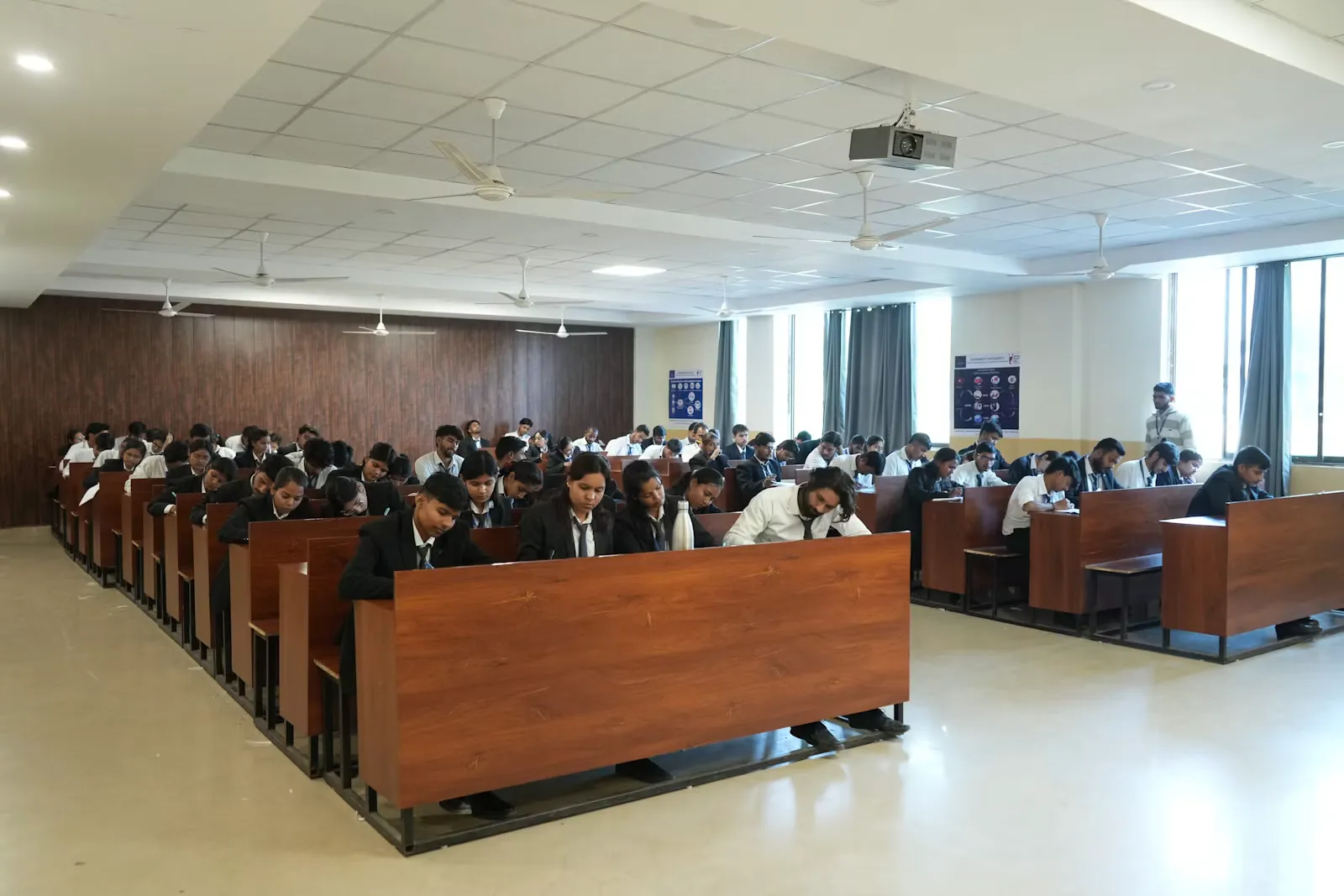
Because of scale. NTA's own data shows 22,79,743 candidates registered and 19,99,895 appeared for NEET (UG) 2026, of whom 11,21,185 qualified. Every one of them is frisked with a metal detector at the gate. A dress code exists to make that queue move without hiding places for a microchip or an earpiece.
That is the honest logic behind every rule below. Nothing here is about looking smart. It is about being quick to check. Once you read the NEET dress code that way, the odd-sounding bits — no belt, no wristwatch, no hair clip with metal in it — stop feeling arbitrary.
NTA also runs biometric checks, face authentication and videography at the centre, on top of the physical frisking. Plan for a slow entry, not a fast one.
What clothes does the NEET dress code allow?
Light clothes with short sleeves are the safe default. NTA's Information Bulletin puts it as a preference, not a ban: "heavy clothes and/or long sleeves are not preferable." Two public notices in 2026 then said plainly that candidates may wear full sleeves or woollens if they feel the need, provided they report to the centre well in advance for frisking.
So the widely repeated line that full sleeves are "not permitted" in NEET is wrong. What is true is that full sleeves cost you time at the gate, because sleeves have to be checked properly. If your exam city is cold, or you simply cannot manage short sleeves, wear what you need and leave home earlier.
A few practical calls that follow from the same rule:
- Plain fabric beats heavy embroidery, thick layers and big pockets — less to check.
- Keep pockets empty. Anything in a pocket becomes a conversation at the gate.
- No cap and no belt. Both appear on the barred-items list by name.
- If a medical condition forces a deviation from the NEET dress code, the bulletin says specific approval from NTA has to be taken before admit cards are issued — not on exam day.
What footwear is allowed in the NEET exam?
Slippers and sandals with low heels. NTA states this as the preferred category in both the Information Bulletin and the 2026 public notices, and the June notice adds that candidates in high-heeled footwear may be subjected to additional checks. Open, simple footwear is quicker to inspect than a closed shoe.
Shoes are not written down as banned anywhere in the bulletin. But a closed shoe with a thick sole is exactly the kind of thing a metal detector queue slows down for, so it is not worth the risk on a day with a hard entry cut-off. Read the footwear line in the NEET dress code as advice about speed, not fashion.
What can you not carry into the exam centre?
NTA's barred-items list is long and specific. Chapter 11 of the NEET (UG) 2026 Information Bulletin lists these, and adds that no arrangement is made at centres for storing your belongings — so anything you bring and cannot carry in, you leave outside at your own risk.
Category | What NTA names |
|---|---|
Stationery and paper | Textual material, bits of paper, geometry or pencil box, plastic pouch, pen, scale, eraser, writing pad, log table, calculator, electronic pen or scanner |
Communication devices | Mobile phone, Bluetooth device, earphones, microphone, pager, health band, smartwatch |
Personal items | Wallet, goggles, handbag, belt, cap |
Timepieces and cameras | Any watch or wristwatch, bracelet, camera |
Metal and ornaments | Any ornaments or metallic items, large belt buckles, heavy jewellery, accessories |
Food and drink | Any food item, opened or packed |
One genuine conflict is worth knowing about. The bulletin's list includes "water bottle". Both 2026 public notices then said candidates may carry transparent water bottles into the hall, and the June notice also allowed an admit card in a transparent plastic pouch because of the rains. When a public notice and the bulletin disagree, the later notice is the operative instruction — and it is the one to look for on neet.nta.nic.in in your own exam year.
The barred list is the half of the NEET dress code that catches people out, because most of it lives in a pocket or on a wrist rather than in a bag. You are allowed to bring exactly three things you actually need: your printed admit card with the passport-size photo pasted on it, one spare passport-size photograph for the attendance sheet, and a valid photo ID. Miss the admit card and you are not sitting the paper. Our guide to the NEET application form covers how that photograph gets locked in months earlier.
Can you wear a hijab, turban, kara or kirpan?
Yes. NTA's June 2026 notice names religious symbols, kalawas, turbans and hijabs as permitted articles of faith. The condition is timing, not permission: the bulletin asks candidates wearing articles of faith to report at least two hours before the last reporting time so frisking can be done properly and without a rush.
There is a second, shorter clock in the same chapter. Candidates arriving in cultural or customary dress are asked to report at least an hour before the last reporting time — 12:30 PM in the 2026 cycle. If both apply to you, use the two-hour figure and stop doing arithmetic on exam morning.
If screening turns up a suspected device hidden inside an item of faith, the bulletin says the candidate may be asked not to carry it into the hall. That is the only stated limit anywhere in the NEET dress code on articles of faith.
Exam day, hour by hour
The NEET dress code only matters because entry is timed. Here is the schedule NTA published for the NEET (UG) 2026 paper on 3 May 2026:
Step | Time |
|---|---|
Centre opens (three hours before the test) | 11:00 AM |
Report if you are wearing an article of faith | By 11:30 AM |
Last entry to the centre | 1:30 PM |
Instructions and admit card check by invigilator | 1:30 PM – 1:45 PM |
Test booklet distributed | 1:45 PM |
Paper begins | 2:00 PM |
Paper ends | 5:00 PM (6:00 PM for eligible PwBD candidates) |
The NEET dress code exists to keep the 11:00 AM to 1:30 PM entry window moving. Timings from NTA's NEET (UG) 2026 Information Bulletin.
So the night before, work backwards from the gate rather than from the paper:
- Lay out one outfit and stop deciding. Light fabric, short sleeves if you can manage them, empty pockets, no belt, no cap.
- Strip the metal. Watch, chain, bracelet, ring, metal hair clips, coins — all of it stays at home. There is nowhere at the centre to keep it.
- Print the admit card and paste the photograph on it, then put it in a transparent pouch with one spare photo and your photo ID.
- Fill the water bottle — transparent only, and check that year's public notice still allows it.
- Leave for the centre to arrive by the reporting time, not the last-entry time. If you are wearing an article of faith, make it two hours before last entry.
- Expect a slow gate — metal detector, biometric capture, face authentication. Budget for it instead of being surprised by it.
If you have not seen your centre yet, our guide to NEET exam centres explains how city allotment works and why the address on your admit card can be an hour further away than you assumed.
Is the NEET dress code different for girls?
Not in what you may wear — the same clothing and footwear rules apply to everyone. What differs is how the check is run. NTA's bulletin commits that frisking of female candidates is done inside a closed enclosure, by female staff only, and that comprehensive instructions on this go out to centre staff.
In practice the NEET dress code costs girls more planning, because more of the barred list tends to be worn rather than carried: bangles, earrings, nose pins, metal hair clips, a dupatta pin. Ornaments and metallic items are barred outright, so leave them at home rather than hoping they pass. Kara and similar articles of faith are the documented exception, on the two-hour early-reporting rule.
What happens if you ignore the NEET dress code?
NTA's June 2026 notice is blunt: non-compliance with the dress code and security protocols may result in denial of entry. There is no counter where you can pay a fine and walk in. On a paper offered once a year, being turned away at the gate over a wristwatch is an expensive way to learn a rule.
The realistic failure is softer and more common: you clear the check, but it takes twenty extra minutes, and you sit down rattled before a three-hour paper. That is the actual cost of a long-sleeved kurta and a forgotten hair clip. Fix it the night before, then spend exam morning thinking about Physics instead of your sleeves. Once you are inside, it is all about how cleanly you fill the NEET OMR sheet and how well you know the NEET exam pattern.
Sources
- National Testing Agency — Advisory for Candidates Regarding Dress Code and Permissible Items at Examination Centres for NEET (UG) 2026 Re-Examination, public notice dated 18 June 2026: https://cdnbbsr.s3waas.gov.in/s37bc1ec1d9c3426357e69acd5bf320061/uploads/2026/06/20260618310811791.pdf
- National Testing Agency — Advisory for Candidates Regarding Dress Code and Permissible Items at Examination Centres in NEET (UG)-2026, public notice dated 30 April 2026: https://cdnbbsr.s3waas.gov.in/s37bc1ec1d9c3426357e69acd5bf320061/uploads/2026/04/20260430667364505.pdf
- National Testing Agency — Information Bulletin, NEET (UG) 2026, Chapter 11 "Barred Items and Dress Code" and the exam-day schedule (published 23 February 2026): https://cdnbbsr.s3waas.gov.in/s37bc1ec1d9c3426357e69acd5bf320061/uploads/2026/02/202602231394640855.pdf
- National Testing Agency — Key Data Points of NEET (UG) Over Years, registration, appearance and qualification figures for 2026 (published 16 July 2026): https://cdnbbsr.s3waas.gov.in/s37bc1ec1d9c3426357e69acd5bf320061/uploads/2026/07/202607161539405935.pdf
- National Testing Agency — NEET (UG) public notices index (accessed 25 August 2026): https://neet.nta.nic.in/public-notices/
Frequently asked questions
Yes. NTA's public notices dated 30 April 2026 and 18 June 2026 both state that while light clothing is preferred, candidates may wear full-sleeve garments or woollens if required — subject to reporting at the centre well in advance so that thorough frisking can be done.
The NEET dress code names slippers and low-heeled sandals as the preferred footwear, and NTA warns that high heels may attract additional checks. Shoes are not listed as a barred item, but a closed shoe takes longer to inspect at the gate, so open low footwear is the safer choice on a timed entry.
A transparent water bottle was allowed in 2026. Both NTA public notices that year permitted it, even though the Information Bulletin's barred-items list still mentions water bottles. Check the public notices on neet.nta.nic.in for your own exam year before you assume it carries over.
At least two hours before the last reporting time. NTA allows articles of faith, including turbans, hijabs, kalawas and religious symbols, but asks those candidates to arrive early so frisking can be completed without a rush. In 2026 the last entry was 1:30 PM, so 11:30 AM was the target.
The core rules have been stable, but the detail moves. The 2026 cycle added transparent water bottles, transparent admit-card pouches and an explicit allowance for full sleeves. Read the current year's Information Bulletin and every public notice issued in the fortnight before your paper.
No. Any ornaments or metallic items are on NTA's barred list, and the June 2026 notice separately bars heavy jewellery, large belt buckles and accessories. Under the NEET dress code, kara, kirpan and similar articles of faith are the documented exception, subject to the early-reporting rule for frisking.
Getting the exam-day mechanics right is the easy half. NEETsheet is our NEET UG prep app — question banks, full-length mocks and revision built around the NCERT syllabus, so you can see where you are actually losing marks. Have a look.