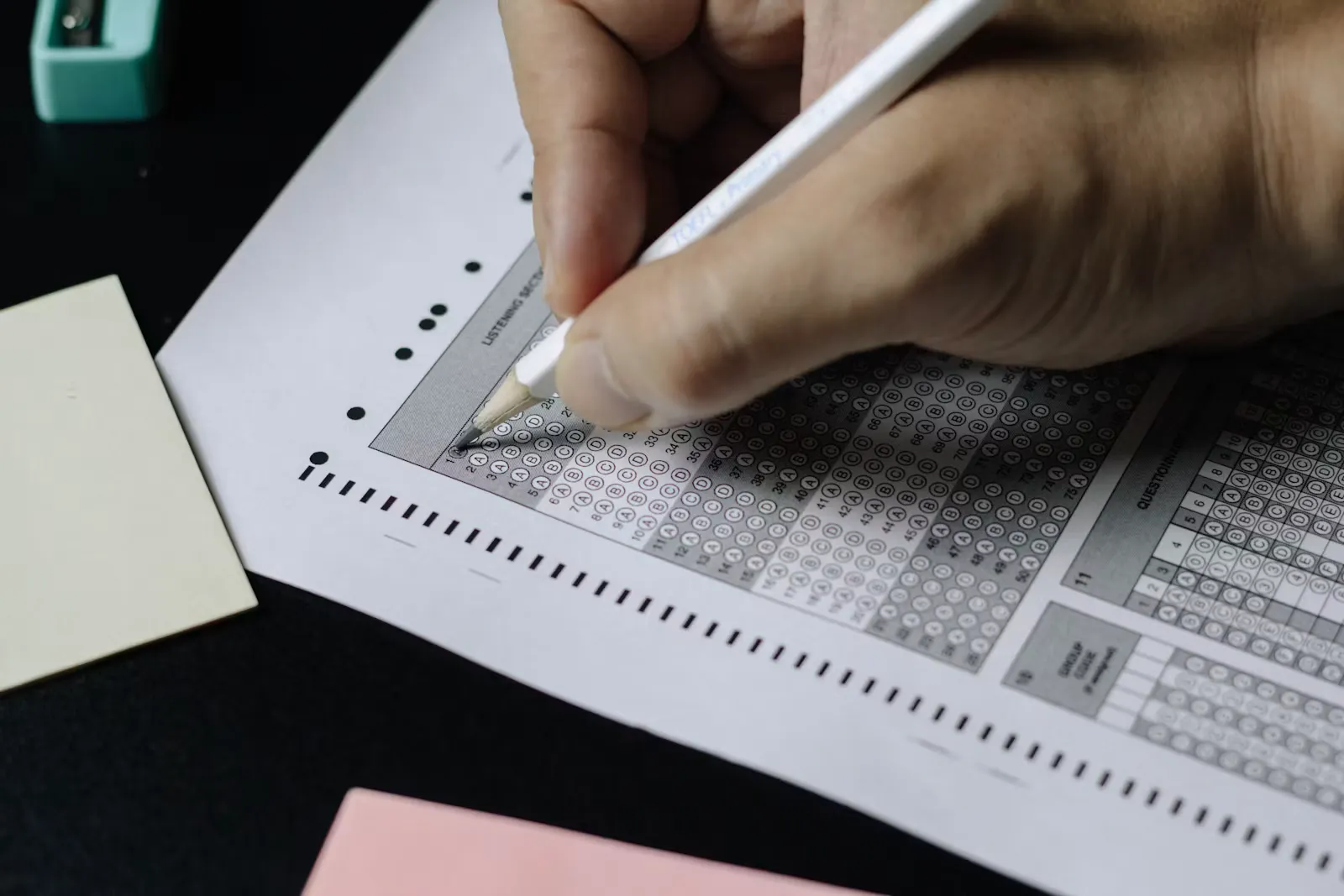

NEET 2027 Previous Year Question Papers: A Smart PYQ Plan
If you are serious about NEET 2027, working through NEET 2027 previous year question papers the right way is one of the highest-return habits you can build. Toppers and coaching mentors consistently rank previous year questions (PYQs) alongside NCERT as the two pillars of a medical-entrance plan. Yet most aspirants either hoard past papers for the "final month" or solve them once and move on. This guide fixes that: it shows which years to prioritise, when to switch from chapter-wise to full-length papers, and — most importantly — how to analyse every paper so each one lifts your score.
Key Takeaways
- NEET 2027 previous year question papers are a study tool, not just a mock. Used well, PYQs reveal recurring themes, high-yield chapters and the exact difficulty NTA sets — information no textbook gives you.
- Solve chapter-wise PYQs as you finish each chapter, then move to full-length past papers once your syllabus is largely covered — a sequence coaching mentors widely recommend.
- Prioritise recent papers (roughly 2019–2026) for pattern relevance, and treat the tougher 2025 and 2026 papers as your benchmark difficulty; extend to the last 7–10 years for chapter-level coverage.
- The score comes from analysis, not attempts — log every mistake, sort it into conceptual, silly or timing errors, and re-solve. Practice testing is one of the most robust findings in learning science (Roediger & Karpicke, 2006).
- With ~20 lakh candidates competing for about 1,36,939 MBBS seats (NEET UG 2026), the marginal edge PYQ analysis gives you is exactly what separates ranks.
Why do previous year question papers matter so much for NEET 2027?
NEET rewards pattern recognition. Across years, the National Testing Agency reuses concepts, question framings and even near-identical items — especially in Biology and Inorganic Chemistry, where the source is NCERT. Coaching analyses of past papers suggest a meaningful share of each year's questions echo themes seen before, which is why past papers are treated as a preparation resource rather than a one-off test. When you solve NEET 2027 previous year question papers systematically, you are effectively studying the examiner's own priorities.
There is a second, harder reason. The 2026 cycle showed just how tight the competition has become. Nearly 20 lakh candidates appeared for NEET UG 2026 and about 11.21 lakh qualified, according to reporting on the NTA result declared on 16 July 2026 — but the MBBS seat pool is roughly 1,36,939 seats. That works out to fierce competition for every government seat. In a paper where a handful of marks can swing thousands of ranks, the confidence and speed you build from analysed PYQs is a genuine advantage.
About 20 lakh candidates appeared for NEET UG 2026, about 11.21 lakh qualified, and roughly 1,36,939 MBBS seats are available nationwide. NEET UG 2026: appeared, qualified, MBBS seats Appeared ~20 lakh Qualified 11.21 lakh MBBS seats ~1,36,939 Seat bar scaled to ~1.37 lakh vs ~20 lakh appeared.
Which years of NEET previous year question papers should you solve?
Not all past papers carry equal value, so spend your time where the pattern is closest to today's exam.
- Recent papers (roughly 2019–2026) best reflect the current NTA style and the rationalised NCERT syllabus. Make these your core set.
- The 2025 and 2026 papers are your difficulty benchmark. Both cycles were widely described as tougher, so treat them as the standard you must be comfortable with — not as outliers to be waved away.
- The last 7–10 years (roughly 2016 onwards) are still worth mining at the chapter level, because a hard question from an older paper is still a hard question on the same concept.
A sensible rule: solve full-length papers from about 2019 onwards under exam conditions, and use chapter-wise PYQ banks going back 7–10 years to drill individual topics. Because the NEET syllabus was rationalised, double-check that older questions still fall inside the current scope — our guide to the NEET 2027 deleted syllabus explains what to skip so you do not waste time on removed topics.
Chapter-wise vs full-length: how should you sequence PYQ practice?
The most common mistake is jumping straight to full papers before the syllabus is ready. Sequence it instead:
- Finish a chapter → immediately solve that chapter's PYQs. This is retrieval practice at its most efficient: you test the concept while it is fresh and expose the exact way NEET frames it. Pair it with the reading technique in our how to study NCERT for NEET 2027 guide.
- Build a running error log per chapter. Every wrong or guessed question goes in, with the reason.
- Once ~70–80% of your syllabus is covered, start full-length past papers under a strict 3-hour clock, one paper at a time.
- Alternate PYQ papers with fresh mocks so you are not only memorising old answers — new questions test whether the concept actually transferred. Our NEET 2027 mock test strategy covers how to space these.
- Re-solve your error log every fortnight until those questions become automatic.
This chapter-first, full-length-later order matters more than any single paper you pick.
Biology carries 360 marks, Physics 180 marks and Chemistry 180 marks, out of a total of 720 marks. NEET marks by subject (out of 720) Biology 360 Physics 180 Chemistry 180 Allocate PYQ time in the same proportion: Biology first.
Source: NEET exam pattern, 180 questions / 720 marks (Biology 90 Q, Physics 45 Q, Chemistry 45 Q; +4 / −1). Verify on the NTA 2027 bulletin when released.
Because Biology is 360 of the 720 marks, weight your PYQ time toward it — it is where recurring, NCERT-anchored questions pay off fastest. Then split the remaining time between Physics and Chemistry. Subject-specific method lives in our NEET 2027 Biology preparation strategy, Physics preparation strategy and Chemistry preparation strategy.
Turn every chapter into instant PYQ practice. NEETsheet gives you NCERT-aligned, previous-year-style MCQs the moment you finish a topic — with instant analysis so you see your weak areas immediately. Start practising on NEETsheet and make PYQs a daily habit, not a final-month panic.
How do you actually analyse a NEET past paper?
Solving is the easy part. The rank is hidden in the analysis. After every full-length paper, spend at least as long reviewing it as you spent solving it, and work through this order:
- Score honestly with the +4 / −1 scheme so your number reflects real exam conditions, negative marking included.
- Tag every wrong or guessed question as one of three types: conceptual (you did not know it), silly (you knew it but slipped), or timing (you rushed or ran out of time).
- Fix conceptual errors at the source — go back to the NCERT line or diagram, not just the solution key.
- Attack silly errors as a pattern, not one-offs: unit mistakes, misread "incorrect/except" stems, wrong option transfer.
- Track timing per section so you learn where you bleed minutes, then rehearse a pacing target of roughly a minute per question.
- Add every miss to your error log and re-solve it later until it is automatic.
This "test, analyse, re-test" loop is not just coaching folklore. In a landmark study, students who took practice tests on study material retained substantially more over the long term than students who simply re-read it — the testing effect (Roediger & Karpicke, 2006). Every analysed PYQ is one more retrieval rep working in your favour.

When should PYQ practice peak in your NEET 2027 timeline?
Think of PYQs as running through your whole plan, not as a final-month sprint:
- Now until the syllabus is largely done: chapter-wise PYQs as you complete each topic.
- Once ~70–80% is covered (typically the middle phase): begin full-length past papers, one or two a week, each fully analysed.
- Final 8–10 weeks: ramp to a higher cadence of full-length papers and mocks, mixing PYQs with fresh tests, and re-solving your error log on repeat.
If you are a fresh starter, sync this with the phases in our NEET 2027 Class 11 study plan; if you are repeating the year, the dropper strategy after the 2026 result sets the pace. And because NEET 2027 is reported to move to a computer-based test, practise at least some PYQs on a screen — our NEET 2027 CBT mode preparation guide explains why on-screen rehearsal matters.
What are the biggest PYQ mistakes to avoid?
- Hoarding papers for the "last month." By then you have no time to fix what they reveal. Start now.
- Solving without analysis. An unanalysed paper is a wasted paper.
- Memorising answers instead of concepts. If you recognise the answer but not the reasoning, a reworded question will still catch you.
- Ignoring negative marking in review. Always score with −1 so your accuracy is honest.
- Skipping older papers entirely. Even removed-syllabus questions can teach a live concept — just confirm scope against the current syllabus and the NEET exam pattern{rel="nofollow noopener"} reference.
For the broader roadmap and official-style structure, futureMBBS keeps a helpful how to prepare for NEET{rel="nofollow noopener"} guide, a NEET syllabus{rel="nofollow noopener"} overview and a NEET mock test strategy{rel="nofollow noopener"} explainer. If you are also weighing a backup plan while you prepare, their MBBS abroad{rel="nofollow noopener"} pillar is worth a read.
Frequently Asked Questions
For full-length practice under exam conditions, prioritise papers from roughly 2019 to 2026, since these best match the current NTA pattern and rationalised syllabus. For chapter-wise drilling, extend back to the last 7–10 years. Treat the tougher 2025 and 2026 papers as your benchmark difficulty.
Chapter-wise first. Solve a chapter's previous year questions the moment you finish studying it, while the concept is fresh. Move to full-length past papers only once about 70–80% of your syllabus is covered, so you can sit them under a realistic 3-hour clock.
Not verbatim every time, but concepts, framings and near-identical questions recur — especially in Biology and Inorganic Chemistry, which are NCERT-based. Coaching analyses treat PYQs as a preparation resource precisely because they reveal the examiner's recurring priorities. New questions still appear, so PYQs supplement full syllabus coverage rather than replace it.
Score with the +4 / −1 scheme, then tag every wrong or guessed question as conceptual, silly or timing. Fix conceptual gaps at the NCERT source, treat silly errors as patterns to eliminate, and track your pace per section. Log every miss and re-solve it until it is automatic — analysis, not attempts, is where the marks come from.
No — use both. PYQs teach you the exam's real patterns and difficulty; fresh mocks test whether those concepts transfer to unseen questions. Alternate them, and analyse each the same way. Because NEET 2027 is reported to be a computer-based test, take some of both on a screen to build on-screen exam habits.
Immediately, at the chapter level. Begin chapter-wise PYQs as you complete each topic, start full-length papers once most of the syllabus is done, and ramp to a higher cadence in the final 8–10 weeks. Hoarding papers for the last month leaves no time to fix what they expose.