
Biomolecules for NEET: Biology and Chemistry in One Guide
Biomolecules are the carbon compounds found in living tissues: carbohydrates, proteins, lipids and nucleic acids, together with enzymes, vitamins and hormones. In NEET (UG) they are the only topic examined in two subjects at once, as part of Biology Unit 3 (Class 11, NCERT Chapter 9) and as the whole of Chemistry Unit 19 (Class 12, NCERT Unit 10). This guide maps both syllabus lines to both books, shows where they overlap, lists the facts NCERT prints and ends with a 7-day plan.
Where do biomolecules appear in the NEET syllabus?
Biomolecules appear in two places in the NMC syllabus for NEET (UG) 2026, released by the Undergraduate Medical Education Board on 22 December 2025. Biology names them inside Unit 3, and Chemistry gives them a unit of their own. The two lines ask for different things, so read them side by side.
| Syllabus | Wording (punctuation simplified) | What it means for you |
|---|---|---|
| Biology Unit 3, Cell Structure and Function | "Chemical constituents of living cells: Biomolecules-structure and function of proteins, carbodydrates, lipids, nucleic acids; Enzymes-types, properties, enzyme action, classification and nomenclature of anzymes" (the spelling is the syllabus's own) | Structure and function of the four classes, plus the full enzyme story |
| Chemistry Unit 19, Biomolecules | "General introduction and importance of biomolecules" | The opening ideas of NCERT Unit 10 |
| Chemistry Unit 19 | "CARBOHYDRATES: Classification; aldoses and ketoses: monosaccharides (glucose and fructose) and constituent monosaccharides of oligosaccharides (sucrose, lactose, and maltose)" | Classification, glucose and fructose, and what each disaccharide is made of |
| Chemistry Unit 19 | "PROTEINS: Elementary Idea of α-amino acids, peptide bond, polypeptides. Proteins: primary, secondary, tertiary, and quaternary structure (qualitative idea only), denaturation of proteins, enzymes" | Amino acids, the four levels of structure and denaturation |
| Chemistry Unit 19 | "VITAMINS: Classification and functions" | Fat soluble vs water soluble, and the deficiency table |
| Chemistry Unit 19 | "NUCLEIC ACIDS: Chemical constitution of DNA and RNA. Biological functions of nucleic acids" | Sugar, base and phosphate; DNA vs RNA |
| Chemistry Unit 19 | "Hormones (General introduction)" | The chemical classes of hormones and a few examples |
Notice the gaps. Lipids appear only in the Biology line, and vitamins and hormones only in the Chemistry line. Enzymes are in both. Our NEET Biology syllabus guide sets Unit 3 among all ten Biology units if you want the wider picture.
Are biomolecules still in NEET 2027? As far as anyone can say today, yes. The NEET (UG) 2026 Information Bulletin answers its own FAQ with "there is no change in the syllabus of NEET (UG) 2026 with respect to the previous year", and the NEET public notices page showed no 2027 notice when we checked on 4 November 2026. If anything moves, our NEET 2027 deleted syllabus guide is where we will flag it.
How many marks can biomolecules decide?
Nobody can give you an official number for biomolecules, because NTA does not publish chapter-wise counts. The bulletin fixes only the subject split: Physics 45 questions, Chemistry 45 and Biology (Botany and Zoology) 90, which is 180 questions and 720 marks in all. A right answer earns plus four, a wrong one costs one, and a blank scores zero.
What you can say is that biomolecules can reach you from either side of the paper. A question on enzyme classes sits in Biology; a question on why sucrose is non-reducing sits in Chemistry. Both are short recall questions, so accuracy matters more than speed. Our NEET negative marking guide explains when a guess is worth the risk.
Which NCERT chapters cover biomolecules, and how do they differ?
Two chapters cover biomolecules: Biology Class 11 Chapter 9 and Chemistry Class 12 Part II Unit 10, both reprint 2026-27. Biology asks what the molecules do in a cell. Chemistry asks how they are built and how they react. The overlap is real, but neither book is a full substitute for the other.
| Topic | Biology Chapter 9 (Class 11) | Chemistry Unit 10 (Class 12) |
|---|---|---|
| How tissues are analysed | Acid-soluble and acid-insoluble fractions, ash, Tables 9.1 to 9.4 | Not covered |
| Primary and secondary metabolites | Yes, Table 9.3 | Not covered |
| Carbohydrates | Polysaccharides: cellulose, starch, glycogen, inulin, chitin, the starch iodine test | Full chemistry: classification, glucose structure and evidence, fructose, sucrose, maltose, lactose, starch, cellulose, glycogen |
| Amino acids and proteins | Twenty amino acids, zwitterion, four levels of structure, haemoglobin | Table 10.2 with essential amino acids, peptide bond, fibrous vs globular, four levels, denaturation |
| Lipids | Fatty acids, glycerides, phospholipids, lecithin | Not covered |
| Enzymes | Full section 9.8: active site, activation energy, ES complex, factors, inhibition, six classes, cofactors | Short section 10.3: specificity, naming, lower activation energy |
| Nucleic acids | Bases, nucleosides, nucleotides, DNA and RNA | Chemical composition, nucleoside vs nucleotide, phosphodiester link, double helix, three RNA types |
| Vitamins | Only as coenzyme parts (NAD contains niacin) | Classification and Table 10.3 of deficiency diseases |
| Hormones | Not in this chapter | Section 10.6: steroids, polypeptides, amino acid derivatives |
The practical rule: learn enzymes from Biology, because its section is the complete one, and learn sugars and vitamins from Chemistry. The molecular biology of DNA (replication, transcription, the lac operon) belongs to Class 12 Biology, which our genetics for NEET guide covers.
How much of a cell is made of biomolecules?
Water is the most abundant chemical in living organisms. By NCERT's Table 9.4, water makes up 70 to 90% of a cell's total mass, proteins 10 to 15%, nucleic acids 5 to 7%, carbohydrates 3%, lipids 2% and ions 1%. Proteins are the largest class of biomolecules by mass, and the Chemistry unit calls them the most abundant biomolecules of the living system.
The same chapter compares living matter with the Earth's crust, and the contrast is a favourite one-liner question. Carbon is 0.03% of the crust's weight but 18.5% of the human body; silicon is 27.7% of the crust and negligible in the body.
One more distinction NCERT draws in section 9.3: compounds of the acid-soluble pool weigh about 18 to 800 daltons, while proteins, nucleic acids and polysaccharides in the acid-insoluble fraction weigh ten thousand daltons and above. Lipids also end up in the insoluble fraction, but only because they form membranes. NCERT's own words are "Lipids are not strictly macromolecules."
Which sugars are reducing, and why is sucrose not?
A reducing sugar is one that reduces Fehling's solution and Tollens' reagent, which needs a free aldehyde or keto group. Every monosaccharide is reducing. In a disaccharide, the answer depends on whether the glycosidic linkage uses up both reducing groups. In sucrose it does, so sucrose is non-reducing; in maltose and lactose one group stays free.
| Sugar | Made of | Linkage | Reducing? |
|---|---|---|---|
| Sucrose | α-D-glucose + β-D-fructose | C1 of glucose to C2 of fructose | No |
| Maltose | Two α-D-glucose units | C1 to C4 | Yes |
| Lactose (milk sugar) | β-D-galactose + β-D-glucose | C1 of galactose to C4 of glucose | Yes |
| Starch | α-D-glucose: amylose (15 to 20%, water soluble, unbranched) and amylopectin (80 to 85%, insoluble, branched) | C1 to C4 chains, C1 to C6 branches in amylopectin | Polysaccharide |
| Cellulose | β-D-glucose only | C1 to C4, straight chain | Polysaccharide |
| Glycogen | α-D-glucose, "animal starch" | Like amylopectin, more highly branched | Polysaccharide |
Sucrose also explains "invert sugar". It is dextrorotatory, but hydrolysis gives an equimolar mix of glucose (+52.5°) and fructose (-92.4°). Fructose's laevorotation is larger, so the mixture turns laevorotatory and the sign of rotation inverts.
Glucose itself is an aldohexose, and NCERT lists six pieces of evidence for its open-chain structure. Learn them as reagent and conclusion pairs:
- Molecular formula C6H12O6.
- Prolonged heating with HI gives n-hexane, so the six carbons form a straight chain.
- Hydroxylamine gives an oxime and HCN gives a cyanohydrin, so there is a carbonyl group.
- Bromine water oxidises it to gluconic acid, so the carbonyl is an aldehyde.
- Acetic anhydride gives a pentaacetate, so there are five OH groups on different carbons.
- Nitric acid gives saccharic acid, so there is a primary alcohol group.
Then come the facts the open chain cannot explain: no Schiff's test, no hydrogensulphite addition, a pentaacetate that ignores hydroxylamine, and two crystalline forms (α, m.p. 419 K, and β, m.p. 423 K). The answer is a six-membered pyranose ring, with the OH at C5 closing it, and α and β are anomers that differ only at C1. Fructose closes a five-membered furanose ring instead.
Proteins: from amino acids to quaternary structure
A protein is a polymer of α-amino acids joined by peptide bonds, the amide link -CO-NH- formed when a water molecule is lost. Chemistry Unit 10 says a polypeptide with more than a hundred amino acid residues and a molecular mass above 10,000 u is called a protein, though the line is not sharp: insulin has only 51 amino acids and still counts as a protein.
NCERT's Table 10.2 lists twenty amino acids and stars ten as essential, meaning your body cannot make them: valine, leucine, isoleucine, arginine, lysine, threonine, methionine, phenylalanine, tryptophan and histidine. In water an amino acid exists as a zwitter ion, which is why it behaves like a salt with a high melting point and reacts with both acids and bases. Every natural α-amino acid except glycine is optically active, and most have the L configuration.
| Level | What it is | What holds it |
|---|---|---|
| Primary | The sequence of amino acids | Peptide bonds |
| Secondary | α-helix (always right-handed in proteins) or β-pleated sheet | Hydrogen bonds between -CO- and -NH- of peptide bonds |
| Tertiary | Overall folding into fibrous or globular shapes | Hydrogen bonds, disulphide links, van der Waals and electrostatic forces |
| Quaternary | Arrangement of two or more subunits | Example: adult haemoglobin has 2 α and 2 β subunits |
Fibrous proteins such as keratin and myosin are usually insoluble in water; globular proteins such as insulin and albumins are usually soluble. Biology adds two "most abundant" facts that are asked often: collagen is the most abundant protein in the animal world, and RuBisCO is the most abundant protein in the whole biosphere.
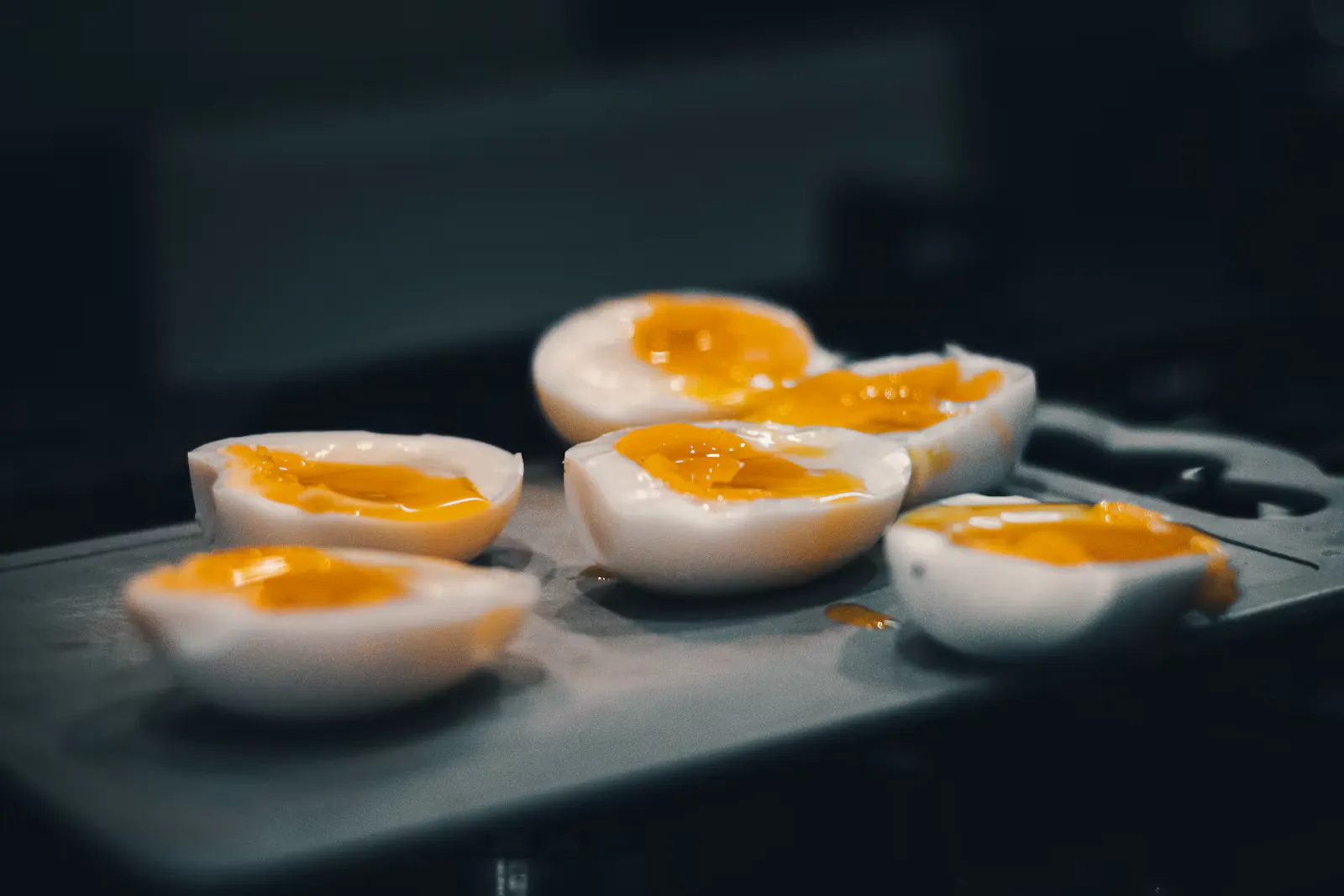
Denaturation is what happens when you boil an egg. Heat or a change in pH breaks the hydrogen bonds, the globules unfold, helices uncoil and the protein loses its biological activity. The secondary and tertiary structures are destroyed, but the primary structure, the amino acid sequence, stays intact. NCERT's two examples are egg white coagulating on boiling and milk curdling as bacteria make lactic acid.
How do enzymes work?
An enzyme is a biological catalyst, and almost all enzymes are proteins; a few nucleic acids, called ribozymes, also act as enzymes. The substrate binds in a pocket called the active site, forms a short-lived enzyme substrate complex, passes through a transition state and leaves as product. The enzyme lowers the activation energy, so the reaction runs far faster.
NCERT's numbers show how much faster. Without an enzyme, carbon dioxide and water form about 200 molecules of carbonic acid in an hour. With carbonic anhydrase, about 600,000 molecules form every second, a speed-up of about 10 million times. Chemistry gives a second example: the activation energy NCERT prints for hydrolysing sucrose is 6.22 kJ mol^-1 with acid and 2.15 kJ mol^-1 with the enzyme sucrase.
The catalytic cycle, in NCERT's four steps:
- The substrate binds to the active site of the enzyme.
- The binding makes the enzyme change shape and fit more tightly around the substrate.
- The active site breaks the substrate's bonds and an enzyme product complex forms.
- The enzyme releases the product and is free to bind the next substrate molecule.
Four things change enzyme activity: temperature, pH, substrate concentration and specific chemicals. Each enzyme has an optimum temperature and pH. Low temperature makes an enzyme temporarily inactive, while high temperature denatures it; NCERT says enzymes get damaged at high temperatures ("say above 40°C"), but those from thermophilic organisms stay active up to 80 to 90°C. As substrate concentration rises, the rate climbs to a maximum, Vmax, because every enzyme molecule is busy. NCERT's Figure 9.5 marks Km on the substrate axis at the point where the rate is half of Vmax. A competitive inhibitor looks like the substrate and blocks the active site, as malonate does to succinic dehydrogenase.
| Enzyme class | What it catalyses |
|---|---|
| Oxidoreductases (dehydrogenases) | Oxidation and reduction between two substrates |
| Transferases | Transfer of a group, other than hydrogen, from one substrate to another |
| Hydrolases | Hydrolysis of ester, ether, peptide, glycosidic, C-C, C-halide or P-N bonds |
| Lyases | Removal of groups by means other than hydrolysis, leaving double bonds |
| Isomerases | Inter-conversion of optical, geometric or positional isomers |
| Ligases | Joining two compounds through C-O, C-S, C-N or P-O bonds |
Some enzymes need a non-protein cofactor, and the protein part alone is the apoenzyme. A prosthetic group is tightly bound (haem in peroxidase and catalase), a coenzyme binds only during catalysis (NAD and NADP contain the vitamin niacin), and a metal ion forms coordination bonds (zinc in carboxypeptidase). Remove the cofactor and catalysis stops.
What do DNA and RNA look like to a chemist?
A nucleic acid is a polymer of nucleotides, and complete hydrolysis gives a pentose sugar, phosphoric acid and nitrogen bases. A base joined to the 1' carbon of the sugar is a nucleoside; add a phosphate at the 5' carbon and it becomes a nucleotide. Nucleotides link through phosphodiester bonds between the 5' and 3' carbons.
| Feature | DNA | RNA |
|---|---|---|
| Sugar | β-D-2-deoxyribose | β-D-ribose |
| Bases | A, G, C and thymine | A, G, C and uracil |
| Structure | Double helix, A pairs with T and C with G by hydrogen bonds | Single strand that can fold back on itself |
| Main job | Reserve of genetic information, copies itself in cell division | Three types (mRNA, rRNA and tRNA) carry out protein synthesis from DNA's message |
Adenine and guanine are purines; cytosine, thymine and uracil are pyrimidines. Biology adds the names you must not mix up: adenosine and uridine are nucleosides, while adenylic acid and uridylic acid are nucleotides.
Vitamins and hormones: the Chemistry-only part
Vitamins are organic compounds needed in small amounts in the diet, whose deficiency causes specific diseases. Chemistry Unit 10 sorts them by solubility: A, D, E and K are fat soluble and stored in the liver and adipose tissue; the B group and C are water soluble and must be eaten regularly because they leave in urine. Vitamin B12 is the one water-soluble vitamin the body can store.
| Vitamin | Deficiency disease in NCERT Table 10.3 |
|---|---|
| A | Xerophthalmia (hardening of the cornea) and night blindness |
| B1 (thiamine) | Beri beri |
| B2 (riboflavin) | Cheilosis, digestive disorders and burning sensation of the skin |
| B6 (pyridoxine) | Convulsions |
| B12 | Pernicious anaemia |
| C (ascorbic acid) | Scurvy (bleeding gums) |
| D | Rickets in children, osteomalacia in adults |
| E | Increased fragility of red blood cells and muscular weakness |
| K | Increased blood clotting time |
Hormones get a "general introduction" only. Learn the three chemical classes with NCERT's examples: steroids (estrogens and androgens), polypeptides (insulin and endorphins) and amino acid derivatives (epinephrine and norepinephrine). Thyroxine is an iodinated derivative of tyrosine. Insulin is released when blood glucose rises and glucagon tends to raise it, so the two together keep it in a narrow range.
Lipids and metabolites: the Biology-only part
Lipids are generally water insoluble. A fatty acid is a carboxyl group on an R group: palmitic acid has 16 carbons and arachidonic acid 20, counting the carboxyl carbon. Saturated fatty acids have no C=C double bond and unsaturated ones have one or more. Glycerol is trihydroxy propane, and fatty acids esterified with it give mono-, di- and triglycerides, which are fats or oils depending on melting point. Phospholipids such as lecithin contain phosphorus and are found in cell membranes.
Biology also separates primary metabolites, which have known roles in normal physiology, from secondary metabolites, whose role in the host is often unknown but which are useful to us. NCERT's Table 9.3 lists pigments (carotenoids, anthocyanins), alkaloids (morphine, codeine), toxins (abrin, ricin), lectins (concanavalin A) and drugs (vinblastin, curcumin). Match-the-column questions love this table.
Eight traps in biomolecules questions
Most marks lost on biomolecules come from one word read too fast. These are the traps worth a second look:
- Sucrose is non-reducing; maltose and lactose are reducing. Both reducing groups are tied up in sucrose's C1 to C2 linkage.
- Cellulose is β-glucose; starch and glycogen are α-glucose. Same monomer, different linkage.
- Amylose is the soluble part of starch, amylopectin the insoluble, branched part. The 15 to 20% vs 80 to 85% split is often reversed in options.
- Glycine is the one natural α-amino acid that is not optically active.
- Denaturation keeps the primary structure. Only the secondary and tertiary structures are lost.
- Ribozymes are enzymes that are not proteins. "All enzymes are proteins" is false.
- Vitamin B12 is the stored water-soluble vitamin. Vitamin C cannot be stored.
- Lipids are not strictly macromolecules, even though they appear in the acid-insoluble fraction.
A 7-day revision plan for biomolecules
Biomolecules reward short, mixed practice, because Biology asks for functions and Chemistry asks for structures and reactions. NCERT gives 11 exercises at the end of Biology Chapter 9 and 25 at the end of Chemistry Unit 10.
- Day 1: Biology sections 9.1 to 9.3. Redraw Tables 9.1 and 9.4 from memory and explain why lipids land in the macromolecular fraction.
- Day 2: Carbohydrates from Chemistry 10.1. The six pieces of evidence for glucose, the ring structure and the sugar table above.
- Day 3: Proteins from both books. Ten essential amino acids, the four levels, fibrous vs globular, denaturation.
- Day 4: Enzymes from Biology 9.8. The four-step cycle, the three graphs of Figure 9.5, competitive inhibition, six classes and three cofactors.
- Day 5: Nucleic acids from both books, then vitamins and hormones from Chemistry 10.4 and 10.6.
- Day 6: All 36 NCERT exercises, Biology and Chemistry, in one sitting.
- Day 7: A timed mixed set of 30 questions, then a list of every mistake and which trap above it was.
Once the theory is in place, practise with our NEET Biology MCQ guide for the Biology side and our NEET Chemistry questions guide for the Chemistry side. Biomolecules is one of the organic units in our NEET 2027 Chemistry preparation strategy, and our guide on how to study NCERT for NEET 2027 shows how to read a chapter like this one line by line.
To decide where biomolecules fits in your overall revision order, futureMBBS's NEET 2027 chapter-wise weightage guide is a useful next read, and its NEET syllabus overview puts every unit of all three subjects on one page. If you are choosing books beyond NCERT, its list of the best books for NEET 2027 compares the options.
Want to know whether biomolecules is costing you marks in Biology, in Chemistry or in both? NEETsheet's chapter-wise question sets and timed mocks show which trap you keep falling into, so your next revision goes there first. Start at neetsheet.in.
Sources
All links were checked on 4 November 2026.
- National Medical Commission (UGMEB), Syllabus for NEET (UG) 2026, public notice of 22 December 2025 (Biology Unit 3; Chemistry Unit 19 Biomolecules): https://cdnbbsr.s3waas.gov.in/s37bc1ec1d9c3426357e69acd5bf320061/uploads/2026/01/202601081066816297.pdf
- National Testing Agency, Information Bulletin NEET (UG) 2026 (pattern: Physics 45, Chemistry 45 and Biology 90 questions, 720 marks; plus four and minus one marking; syllabus FAQ): https://cdnbbsr.s3waas.gov.in/s37bc1ec1d9c3426357e69acd5bf320061/uploads/2026/02/202602231394640855.pdf
- National Testing Agency, NEET (UG) public notices, checked on 4 November 2026 for any NEET (UG) 2027 notice: https://neet.nta.nic.in/public-notices/
- NCERT, Biology Class 11, Chapter 9 Biomolecules, reprint 2026-27 (Tables 9.1 to 9.5, sections 9.1 to 9.8, Figure 9.5, 11 exercises): https://ncert.nic.in/textbook/pdf/kebo109.pdf
- NCERT, Chemistry Class 12 Part II, Unit 10 Biomolecules, reprint 2026-27 (sections 10.1 to 10.6, Tables 10.1 to 10.3, exercises 10.1 to 10.25): https://ncert.nic.in/textbook/pdf/lech205.pdf
Frequently Asked Questions
Biomolecules are the carbon compounds found in living tissues. The main classes are carbohydrates, proteins, lipids and nucleic acids, and NEET also asks about enzymes, vitamins and hormones. Small ones such as amino acids and sugars weigh under 1,000 daltons; proteins, nucleic acids and polysaccharides are macromolecules of ten thousand daltons and above.
Yes, as far as anyone can say today. Biomolecules are in Biology Unit 3 and form Chemistry Unit 19 of the NMC syllabus for NEET (UG) 2026, and the 2026 bulletin says the syllabus did not change from the previous year. No NEET (UG) 2027 syllabus had been published by 4 November 2026.
Both. Biomolecules is Chapter 9 of NCERT Biology Class 11 and Unit 10 of NCERT Chemistry Class 12 Part II, in the 2026-27 reprints. The Biology chapter covers functions and the full enzyme section; the Chemistry unit covers sugar chemistry, protein structure, vitamins, nucleic acid chemistry and hormones.
NCERT publishes both chapters free on its website. The Biology chapter is the file kebo109.pdf and the Chemistry unit is lech205.pdf, both at ncert.nic.in/textbook/pdf/ and both in the 2026-27 reprint. Study from the current reprint, because that is the text the syllabus is read against.
Sucrose is non-reducing because its glycosidic linkage joins C1 of α-D-glucose to C2 of β-D-fructose, so both reducing groups are used up. Nothing is left free to reduce Fehling's solution or Tollens' reagent. Maltose and lactose each keep one free reducing group, so they are reducing sugars.